As climate change accelerates water scarcity across Central Asia, individual gardeners, ecologists, and local communities are stepping in to fill the regulatory and funding gaps left by regional governments. In Kyrgyzstan and the wider region, groundwater reserves are under severe stress, driven by rising temperatures that are melting local glaciers at four times the global average. With glaciers feeding key rivers and streams, experts warn of a future where these water sources could run dry, forcing entire cities to rely solely on seasonal rainfall collected over just a few months. In this challenging landscape, the ability to retain water locally has become a matter of survival.
To address these challenges, experts are looking to the concept of "sponge cities," a set of urban planning principles first coined by architect Kongjian Yu during a public lecture in 2003. Developed to manage water in flood-prone areas of China, the sponge city framework has since been integrated into Chinese public policy to mandate climate-resilient development. In contrast, Bishkek, the capital of Kyrgyzstan, has experienced a massive loss of green space since the Soviet era. While Bishkek's own Green Cities Action Plan recognizes the need for climate resilience and adequate green areas, the rapid scale of new development in the city continues to dwarf efforts to preserve and retrofit urban spaces for water efficiency.
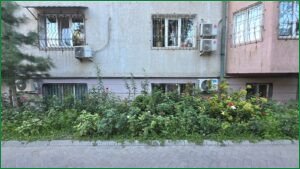
Currently, water management in Bishkek’s residential areas remains highly inefficient. Many condominium complexes and private dachas utilize scarce potable water to maintain non-native, water-intensive plants. Bakyt, a groundskeeper at a Bishkek condominium, admitted that the building relies on drinking water to irrigate its rose gardens. Similarly, Asel, a local dacha owner, shared that she had never considered climate change when designing her garden, choosing species recommended by a landscape designer who prioritized aesthetics over water conservation. However, there is growing local interest in sustainable alternatives. Zarina, another dacha owner, expressed a strong interest in obtaining a list of climate-appropriate plants, suggesting that coordinated educational campaigns could successfully motivate residents to adopt sustainable habits.
To optimize residential water use, artist and designer Walt Ohnesorge suggested that condominium buildings could attach catchment systems to their gutters. By doing so, residents could collect rainwater to sustain perennial, food-bearing plants, thereby conserving drinking water and supplementing their groceries. Currently, Bishkek lacks immediately identifiable grassroots collectives piloting alternative or sustainable agriculture within the city, making individual initiatives and local coordination even more critical.
Nuraiym Syrgak, a Kyrgyzstani social researcher, ecologist, and board member of the Green Alliance of Kyrgyzstan, has extensive experience implementing ecological projects to help the land adapt. Syrgak, who previously served as the executive director of the El-Too Public Foundation, pointed out that water distribution patterns in rural villages often disadvantage small-scale growers. Irrigation water is primarily allocated to large agricultural plots, leaving residential gardens and village zones with very little water. To address this, El-Too focused its efforts on these smaller plots, finding that local women were exceptionally effective "change agents" who were eager to test and apply new sustainable methods, eventually bringing skeptical men into a family-based agricultural approach.
Syrgak also emphasized the need to reform urban park management. Many trees currently planted in public parks are poorly adapted to the local climate, requiring intensive maintenance while failing to provide sufficient shade. She advocates for permaculture, a philosophy centered on cooperating with nature to minimize human labor. Syrgak recommends prioritizing native species, such as local elms and desert shrubs, which are naturally adapted to the environment and do not require regular watering.
The ecological risks of ignoring native flora are particularly evident in construction zones. This year, members of El-Too attempted to contact construction companies building guesthouses in the Issyk-kul region, where workers routinely clear native vegetation. Syrgak warned that this practice is highly dangerous. Native shrubs have deep root systems extending up to 10 meters that secure the soil. Removing these roots destroys the natural environment, causing the soil to crumble and significantly increasing the risk of devastating mudflows and floods. Furthermore, developers frequently plant decorative species like spruces and arborvitae, which quickly die off without meticulous, high-cost maintenance. Syrgak argues that developers should instead plant local deciduous trees that naturally provide shade and stabilize the soil.
In the absence of clear national guidelines and enforcement, a coordinated effort between individuals, urban planners, designers, and local authorities is essential. Potential initiatives could include public tool-sharing programs, grant funding for cisterns and catchment systems, educational outreach, and the allocation of unused public land to local gardeners for remediation. These efforts are supported by the Central Asia Climate Campaign 2026, which is implemented by the MediaNet International Centre for Journalism and n-ost, with funding from the Federal Ministry for Economic Cooperation and Development of the Federal Republic of Germany as part of the "Communicating Climate in Central Asia" project.
You have reached the limit of 2 free articles this month.
“We need to think more broadly,” Syrgak said, explaining that attention should be paid to specific conditions when considering what to plant. “For example, you can plant sun-loving plants precisely on the sunny side. Then, those that require more moisture, precisely on the shady side. Before that, you can simply map out and analyze the site to see where there is more shade. Attention should be paid to native species.”