Voters across the eastern German state of Mecklenburg-Vorpommern headed to the polls on Sunday to elect a new state parliament in a race defined by intense competition. Approximately 1.3 million residents are eligible to cast ballots, with polling stations open from 8 a.m. until 6 p.m. local time. This election is notable for including 16- and 17-year-olds, who are participating in a state vote for the first time.
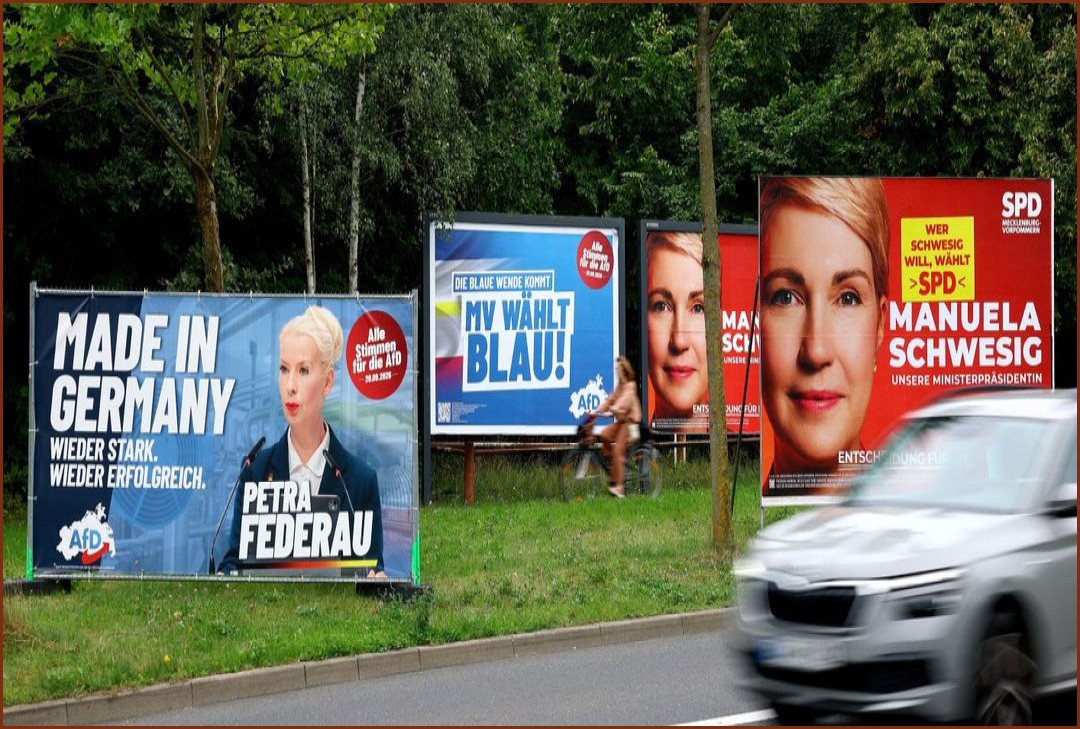
The campaign has been dominated by a neck-and-neck battle between Premier Manuela Schwesig’s centre-left Social Democrats (SPD) and the far-right Alternative for Germany (AfD). The contest follows the AfD’s record-breaking 43.8 percent performance in Saxony-Anhalt just two weeks earlier. A final poll from public broadcaster ZDF positioned the SPD slightly ahead at 37 percent, with the AfD trailing by only one point at 36 percent. Other parties also face a critical test, with the socialist Left Party polling at 9 percent, the Greens at 5 percent, and the left-wing Sahra Wagenkhnecht Alliance (BSW) at 4 percent. Chancellor Friedrich Merz’s conservative CDU is hovering near the 5 percent entry threshold at 6 percent, as 21 percent of voters remained undecided.
Mecklenburg-Vorpommern, a thinly populated Baltic Sea state, has been governed by the SPD since 1998. Premier Schwesig, who has held office since 2017, secured 39.6 percent of the vote in 2021 and has since led a government alongside the Left Party. While a recent ZDF survey suggested 61 percent of voters would support Schwesig in a direct vote compared to 30 percent for her AfD challenger, federal lawmaker Leif-Erik Holm, the path to forming a government remains complex. Neither the SPD nor the AfD is expected to win an outright majority, and all mainstream parties have ruled out a coalition with the AfD, making a potential three-way alliance between the SPD, the Left Party, and the Greens the most likely outcome.
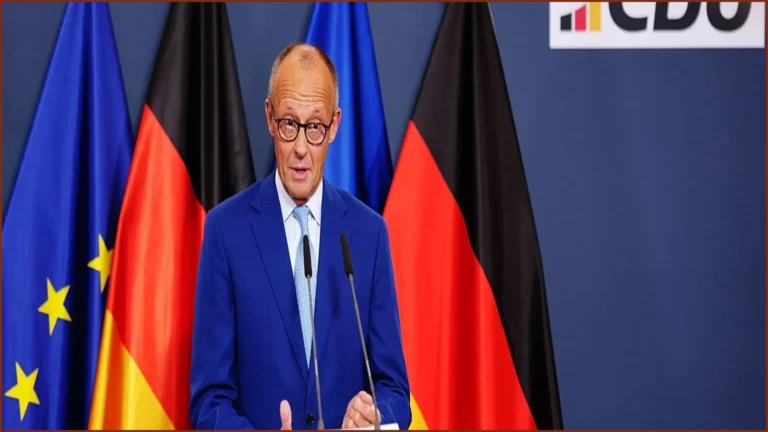
Beyond the local dynamics in Schwerin, the vote serves as a significant barometer for Chancellor Friedrich Merz, whose support has declined to historic lows. Merz cancelled a planned UN trip to New York to remain in Berlin to monitor the situation. Should the CDU fall below the 5 percent threshold, it would be excluded from the state parliament for the first time since reunification. While all 18 CDU state premiers have expressed support for Merz, observers warn that a combination of a strong AfD performance and a CDU defeat could trigger a leadership fight within his party.