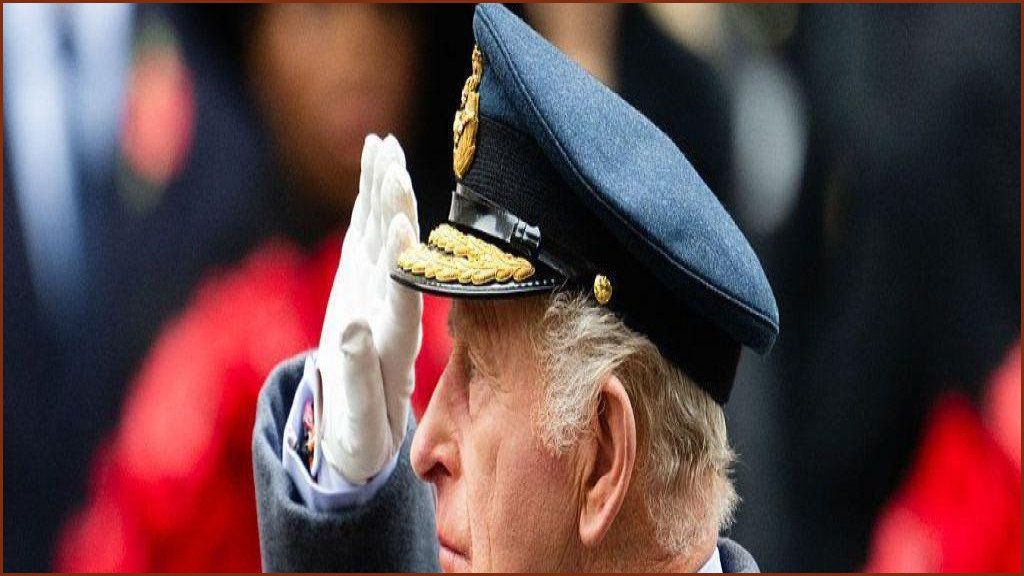
King Charles III led the United Kingdom in a solemn two-minute silence on Remembrance Sunday at the Cenotaph in London, honoring military veterans and service personnel who lost their lives in conflict. Standing on Whitehall on a stone-grey autumn morning, the monarch laid a wreath before a procession of 10,000 armed forces veterans marched past the monument.
The annual gathering at the nation's primary war memorial saw a record-high attendance of political figures, including nine former prime ministers lined up to lay wreaths. Tony Blair, John Major, Gordon Brown, David Cameron, Theresa May, and Boris Johnson were among the former leaders present. Prime Minister Andy Burnham laid a wreath at the Cenotaph for the first time as the current occupant of 10 Downing Street, while Reform UK leader Nigel Farage also qualified to lay a wreath alongside other parliamentary party leaders after securing enough seats in Parliament.
Members of the Royal Family, military commanders, senior politicians, diplomats, and faith leaders gathered around Whitehall, observed by large crowds packed behind security railings. The Prince of Wales and the Princess Royal attended the ceremony below, while Queen Camilla and Catherine, Princess of Wales, watched the proceedings from a balcony at the nearby Foreign and Commonwealth Office building. Flying above the building's roof among other flags was the blue and yellow flag of Ukraine, which was raised following Russia's invasion four years ago and now appears visibly frayed—a stark symbol of the ongoing conflict and contemporary global security threats.
The traditional silence began precisely at 11:00 GMT as Big Ben struck from the Houses of Parliament, bringing stillness to the capital's usually bustling streets. King Charles stood with his eyes closed during the two-minute quiet, which was followed by the sounding of the Last Post. Prayers for those assembled were subsequently led by Archbishop of Canterbury Dame Sarah Mullally.
The subsequent march-past featured representatives from roughly 340 military and civilian organizations, including the Royal Naval Association, the Royal Marines Association, Transport for London, and the Royal National Lifeboat Institution. The procession included flotillas of disability scooters as well as families assisting veterans in wheelchairs, illustrating the broad community involvement in the annual tribute.
This year's parade highlighted the shrinking number of surviving World War Two veterans, with only 12 participating compared to 20 the previous year. The oldest marching veteran was 105 years old. Among those making their first appearance was 103-year-old Annie Duplock, who served in the Women's Land Army helping to maintain the nation's food supply during wartime. Having lied about her age to join the Land Army at 16 in 1940, she worked on a farm in Leicestershire. Duplock expressed her deep gratitude for the opportunity to march, describing the event as a "very emotional day."
"I feel very honoured to be taking part in the parade and to represent the Land Girls. I'm very excited, although a little apprehensive as I don't quite know what to expect," Duplock said ahead of the parade. She added, "I think it will be a very emotional day, bringing back memories of all those who didn't return home. It will be lovely to be there and remember them."
Marking the occasion, Prime Minister Andy Burnham remarked that Remembrance Sunday provides an essential opportunity to "reflect on the selflessness and courage it takes to commit your life to protecting others." Burnham also announced a new government commitment to combat homelessness among former service personnel, aiming to "ensure that any veteran sleeping rough is offered appropriate accommodation before Christmas." Mark Atkinson, director general of the Royal British Legion, emphasized the significance of the national gathering, stating, "As we come together on Remembrance Sunday, we pay tribute to all those who have served and sacrificed, from generations past to those still serving today."
The Remembrance Sunday ceremony has centered on the Cenotaph in Whitehall for more than a century. Originally erected following World War One, the monument was designed to honor the fallen, particularly those with no known grave, and to give grieving families a local site to mourn when traveling to overseas military cemeteries was not possible. Designed by architect Sir Edwin Lutyens, the word "cenotaph" derives from the Greek for "empty tomb." Built in a simple, austere style without decoration or triumphalism, the monument was officially unveiled at 11:00 on November 11, 1920, by King George V. On an overcast morning 106 years later, his great-grandson, King Charles III, continued that tradition of national tribute.