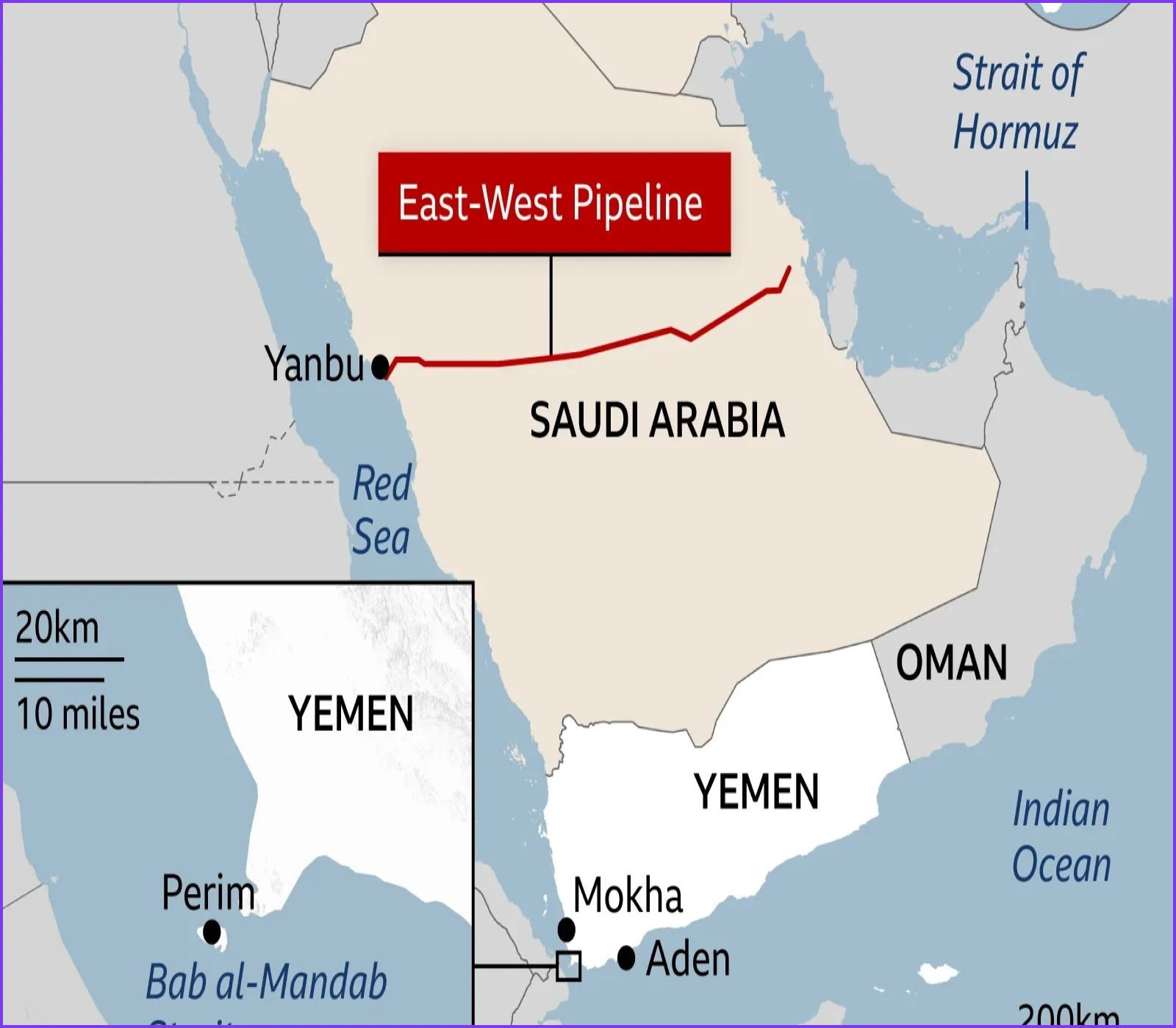
Saudi Arabia has shut down its vital 1,200km (745-mile) East-West oil pipeline as a precautionary measure following a drone strike launched from Iraq. The attack, which targeted critical infrastructure allowing the world's largest crude exporter to bypass the Strait of Hormuz, has escalated tensions across a widening Middle East conflict and pushed global oil prices past $100 a barrel.
In a swift response, the Iraqi government admitted that the drone strike originated from its Maysan governorate, a province bordering Iran. Following this confirmation, the office of the Iraqi prime minister announced the dismissal of the operations commander in Maysan, and Baghdad has launched an official investigation into the incident. The development follows a phone call between Iraq's prime minister and Saudi leadership. Saudi Arabia has previously accused Iran-backed militias in Iraq of targeting its oil facilities.
Despite having previously launched joint military strikes with the United States against Iran-backed militias in Iraq, Riyadh has decided not to retaliate at this stage. The Saudi foreign ministry stated that the kingdom would instead "support the efforts of the Iraqi government" to prevent future cross-border attacks. However, the ministry emphasized that "the Kingdom of Saudi Arabia affirms that it reserves its right to take all necessary measures to safeguard its sovereignty and security, protect its facilities, and ensure the safety of its citizens and residents." The foreign ministry confirmed that the strike caused some injuries and damage, which are currently being assessed. Satellite imagery has also revealed scorched ground and plumes of smoke near the pipeline site.
The East-West pipeline is a cornerstone of global energy security, moving approximately 4% to 5% of the world's oil supply. By shutting it down, Saudi Arabia's primary alternative to the vulnerable Strait of Hormuz has been temporarily severed. This disruption, coupled with a dramatic Houthi rebel offensive in Yemen, has driven crude oil prices over $100 per barrel for the first time since July. Analysts warn that if the dual crises persist, the lack of market buffers could push oil prices back to the war-time peak of $120 per barrel or even higher. This spike is already fueling inflation fears and driving up government borrowing costs, with particular strain felt in diesel markets, where record prices threaten to inflate manufacturing and transport costs globally.
The Gulf Co-operation Council (GCC)—comprising Saudi Arabia, the United Arab Emirates, Bahrain, Oman, Qatar, and Kuwait—issued a strong joint condemnation of the drone strike. GCC Secretary General Jasem Mohamed Albudaiwi characterized the attack as "a dangerous escalation and an unacceptable threat to the security of the Kingdom of Saudi Arabia, its territorial integrity, and its vital installations, as well as a flagrant violation of the principles of international law."
The pipeline shutdown coincides with a major escalation on the southern front of the Arabian Peninsula, where the US-Iran war has entered its seventh month. Iran-backed Houthi rebels have conducted a rapid advance in Yemen, seizing control of most of the country's Red Sea coastline, including the strategic Bab al-Mandab Strait. While the Houthis claimed that maritime navigation remains safe for all shipping companies except for Saudi-flagged vessels, the advance has severely squeezed shipping routes.
In response to the Houthi gains, Saudi-backed Yemeni government forces launched counter-strikes. Military spokesman Majid al-Nuzaili announced on Friday that government forces had targeted Houthi positions in and around the strategic coastal city of Mokha, which the rebels had captured on Thursday. Al-Nuzaili reported that the counter-offensive destroyed rebel vehicles and weapons and killed a number of Houthi fighters. Mokha sits about 80km (50 miles) north of the Bab al-Mandab Strait. The rebel takeover of the city had previously forced a mass displacement of residents fleeing toward Aden, the southern city serving as the temporary base for Yemen's internationally recognized government and its Presidential Leadership Council. Local sources also reported government airstrikes targeting Houthi forces in the coastal Taiz governorate and the neighboring inland province of Ibb.
The pipeline has been moving 4% to 5% of global oil supply, news agency Reuters has reported, citing ship tracking companies and analysts.
Challenges were particularly acute in diesel markets, he said, where prices have already reached record levels that would in turn push up the costs of a range of goods as diesel is widely used in manufacturing and transportation.