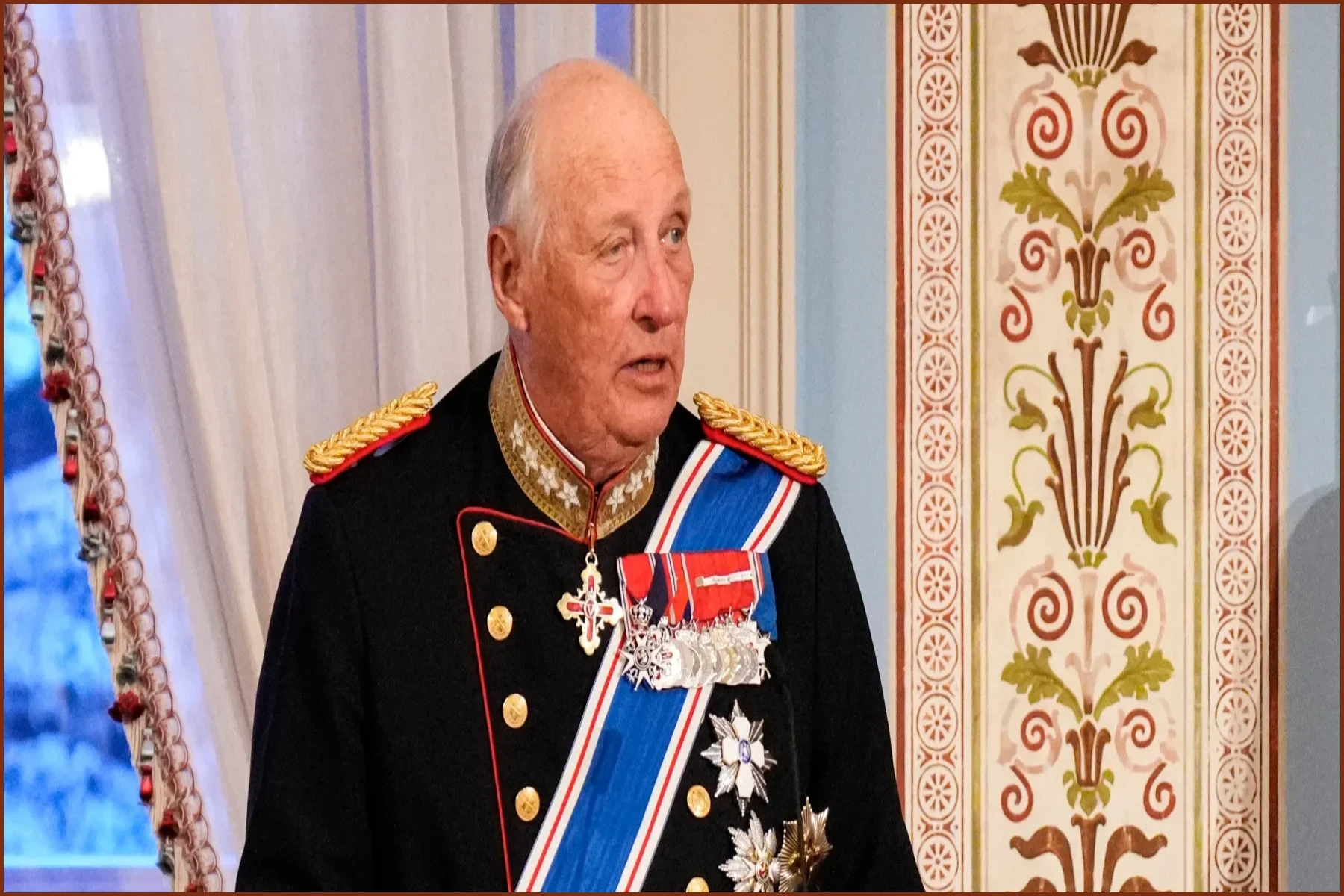
King Harald V of Norway, a monarch whose life spanned from the tumult of World War II to a period of modern prosperity for his nation, died Friday at the age of 89. The Royal Palace confirmed that the King passed away at the National Hospital in Oslo at 6:35 a.m.
Born in 1937 in Asker, near Oslo, Harald held the distinction of being the first Norwegian prince born within the country since King Olav IV in 1370. His early childhood was defined by the Nazi occupation of Norway during World War II. To ensure his safety, he fled with his mother and sisters, Ragnhild and Astrid, first to Sweden and subsequently by boat to the United States. Meanwhile, his father, Olav V, and his grandfather, King Haakon VII, led the Norwegian government-in-exile from Britain. Haakon VII’s steadfast refusal to yield to German demands earned him enduring respect among the Norwegian populace.
During their time in the U.S., the young royals were frequent guests at the White House. Harald performed his first official duty at age 6, christening warplanes at a Norwegian air base in Canada. The family returned to Norway in June 1945. Harald later attended public schools, the Norwegian military college, and Oxford University. Like his father, an Olympic champion sailor in 1928, Harald possessed a deep passion for the sea. He represented Norway in several Olympic Games and famously skippered his yacht to a gold medal at the 1987 World Championships.
His personal life often captured public attention, particularly his nine-year wait to marry his school sweetheart, Sonja Haraldsen, the daughter of a successful businessman. Despite pressure to marry a European noblewoman, Harald shunned a series of candidates until he finally secured his father’s permission to wed Sonja on August 29, 1968. The marriage was met with widespread jubilation, and the couple went on to have two children, Haakon and his older sister, Märtha Louise. Although the Norwegian Constitution was updated in 1990 to allow the firstborn child to succeed to the throne regardless of gender, the change was not applied retroactively, maintaining Haakon’s position as heir over his sister.
Harald ascended the throne on January 21, 1991, following the death of his British-born father, King Olav V. He adopted the royal motto, "All for Norway," and spent his reign navigating an oil-and-gas-driven economic boom while focusing on modernizing the monarchy. He often expressed that the monarchy remained strong because his predecessors had "done most things right." His leadership was marked by his ability to connect with the public during times of crisis, notably following the 2011 attacks by extremist Anders Behring Breivik, where he spoke of the strength of democracy and freedom. In 2016, he delivered a widely praised speech advocating for diversity, LGBTQ+ equality, and religious tolerance, noting that Norwegians are "girls who love girls, boys who love boys, and girls and boys who love each other."
While the royal family largely avoided the scandals seen in other European houses, recent years brought challenges. His daughter, Märtha Louise, stepped back from official duties following controversies surrounding her claims of communicating with angels and her engagement to an American man who identifies as a shaman. Additionally, in early 2026, Crown Princess Mette-Marit faced public scrutiny regarding her past connections to the late sex offender Jeffrey Epstein, for which she apologized. Simultaneously, her eldest son, Marius Borg Høiby, was convicted of rape in a high-profile case. Høiby, who has no royal titles or official duties, was sentenced to four years in prison.
Despite declining health, including hospitalizations in Malaysia in 2024 and Spain in 2026, Harald remained committed to his lifelong oath. Following the abdication of his cousin, Queen Margrethe of Denmark, in 2024, he reaffirmed that his service was for life. With his passing, his son now succeeds him as King Haakon VIII.