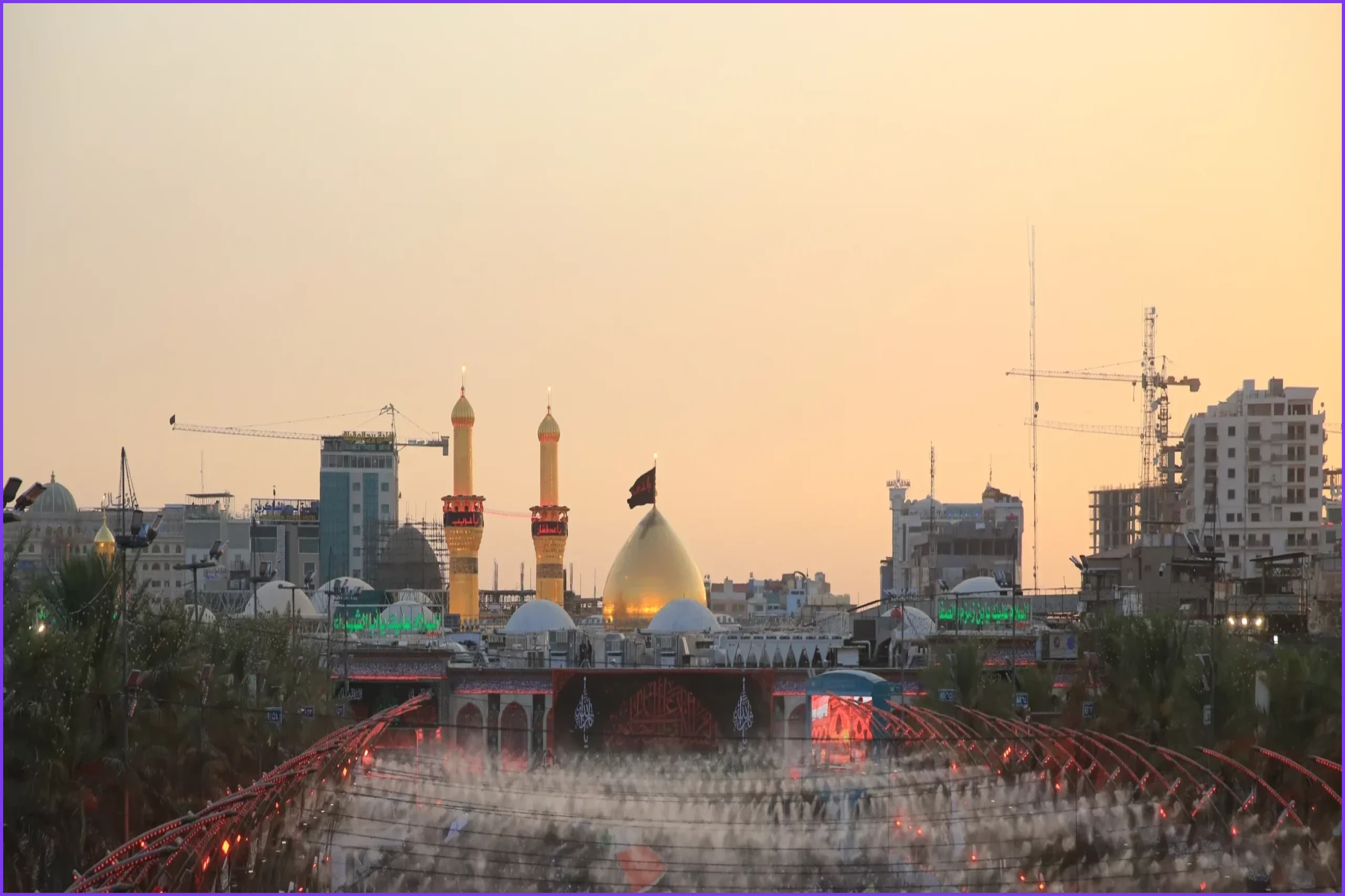
KARBALA, IRAQ – An estimated 20 million pilgrims have converged on the holy city of Karbala in Iraq to commemorate Arbaeen, a pivotal event in Shia Islam. The annual gathering, which honors the killing of Imam Hussein 1,400 years ago, took place against a backdrop of ongoing Middle East wars and recent geopolitical events that have intensified sentiments among the Shia community.
The commemoration centers on the story of Imam Hussein, the grandson of the Prophet Mohammed, who was beheaded in 680 C.E. in the Battle of Karbala. This event led to the schism between Shia and Sunni Muslims. Pilgrims observe the commemoration by remembering the thirst and suffering of Imam Hussein and his followers, symbolized by the distribution of cold water, a stark reminder of the water denied to them before their deaths.
This year's Arbaeen saw a significant turnout, with many pilgrims viewing recent events, such as the killing of Iran's supreme leader, Ayatollah Ali Khamenei, and his family by Israel and the United States, as a profound injustice echoing the historical grievances of Shia Muslims. Iran reported that over three million of its citizens participated in the ceremonies in Karbala.
Some devotees, like Maryam Ghanbari, a municipal worker from Mazandaran province, demonstrated their commitment by undertaking a 200-mile walk from the Iranian border. Ghanbari stated, "More people came to Arbaeen this year because they want to avenge Agha's blood," referring to the slain Iranian leader with a Persian honorific. This marked her ninth pilgrimage.
The Arbaeen festival is observed by the world's approximately 200 million mainstream Shia Muslims. Iran, the most populous Shia-majority nation, plays a significant role in the pilgrimage.
Following years of suppression under Saddam Hussein's regime, the 2003 U.S. invasion of Iraq paved the way for Iraq's Shia majority to gain political power and revive central Shia religious ceremonies. Iran, once an adversary during the devastating eight-year war with Iraq in the 1980s, has since become an ally of the new Iraqi government.
Two decades after the U.S. overthrew Saddam Hussein, Iran maintains a strong influence over the Iraqi government and security forces. Amidst ongoing U.S. military actions in the region, Iran-backed militias, now integrated into Iraqi security forces, have targeted U.S. interests with rockets and drones in Baghdad and the Kurdistan region.
Many Iraqis and Iranians perceive the current U.S. and Israeli actions as a war against Shia Islam. Ali Aadi Khairi and his cousin Sajjad Haitham Latif, both 18, walked five days from the Iraqi city of Kut to reach Karbala. They recounted an incident where a stick on a large image of Imam Hussein they were carrying broke, forcing them to carefully support it for the remainder of their journey. The image also featured portraits of Qassem Soleimani, former commander of Iran's Islamic Revolutionary Guard Corps, and Abdul Mehdi al-Muhandas, former head of Iraq's Iran-backed forces, both killed by a U.S. airstrike near Baghdad airport six years prior.
Khairi also referenced an incident where he claimed, "In Iran the U.S. attacked the schools and the granddaughter of Khamenei," referring to a U.S. Tomahawk missile strike on an Iranian elementary school in southern Iran in February that Iranian health authorities reported killed 120 children. Khamenei's 14-month-old grandchild was reportedly among the family members killed in a U.S.-Israel strike on his home.
Inside the Imam Hussein shrine, pilgrims, separated by gender, pressed against the ornate latticework surrounding the site of his martyrdom, many striking their foreheads in grief. The shrine's interior, adorned with mirrored tiles, crystal chandeliers, and gilded walls, was illuminated with red lights and flags, symbolizing vengeance during Arbaeen.
The atmosphere within the shrine was underscored by the sound of sobbing, interwoven with chants in various dialects expressing sorrow for Imam Hussein and his companions. Iranian pilgrims were observed adding a Persian suffix of endearment, "Husseinjan," as they cried out to him.
Outside, processions of young men braved temperatures reaching 120 degrees Fahrenheit, carrying images of Ayatollah Khamenei. Some displayed combined Iraqi and Iranian flags. Religious chants often referenced the journey back to Karbala from Damascus by Imam Hussein's companions and relatives to reunite his severed head with his body 40 days after his death. The Battle of Karbala is a widely known event in Iraq and Iran, often re-enacted annually with period costumes, horses, and camels.
On a covered walkway between the Imam Hussein and Imam Abbas shrines, metal fans provided mist for cooling, while shrine guards managed the flow of pilgrims. Medics treated individuals suffering from heat stroke and other ailments, and an announcer broadcast the names of those separated from their families.
While many Iraqis remain grateful to the U.S. for overthrowing Saddam Hussein and aiding in the fight against ISIS, a significant portion now believes that the U.S. and its Gulf Arab allies aim to destabilize the region.
Naser Zadih, a 38-year-old teacher from Tabriz, commented that Khamenei's killing has strengthened resolve for resistance against the U.S. and Israel. "It helped this movement get more depth. It got deeper and more targeted. It has helped us flaunt the power of Shia more to the face of the world to show that the Shia are building their own civilization," he stated.
Zadih echoed the Iranian government's sentiment, suggesting the U.S. is not interested in genuine negotiations. "We can talk to someone who actually wants to talk," he remarked.
Iranian pilgrims attending Arbaeen are often supporters of the country's Islamic regime. In upscale hotels in Karbala, wealthier Iranians dressed in black were observed in lobbies, though many declined to speak with U.S. media, citing fear of repercussions in Iran.
Mohammad Yasin Ahmadi, a 15-year-old from Qom, Iran, attending his second pilgrimage, noted that many Iranians came this year specifically because of Ayatollah Khamenei. Khamenei had visited Iraq in the 1950s but never as Iran's supreme leader. His body was brought to Karbala and Najaf before his burial in July. Ahmadi added, "Most people came for him this year. This Arbaeen has the scent and the feeling of the Ayatollah."