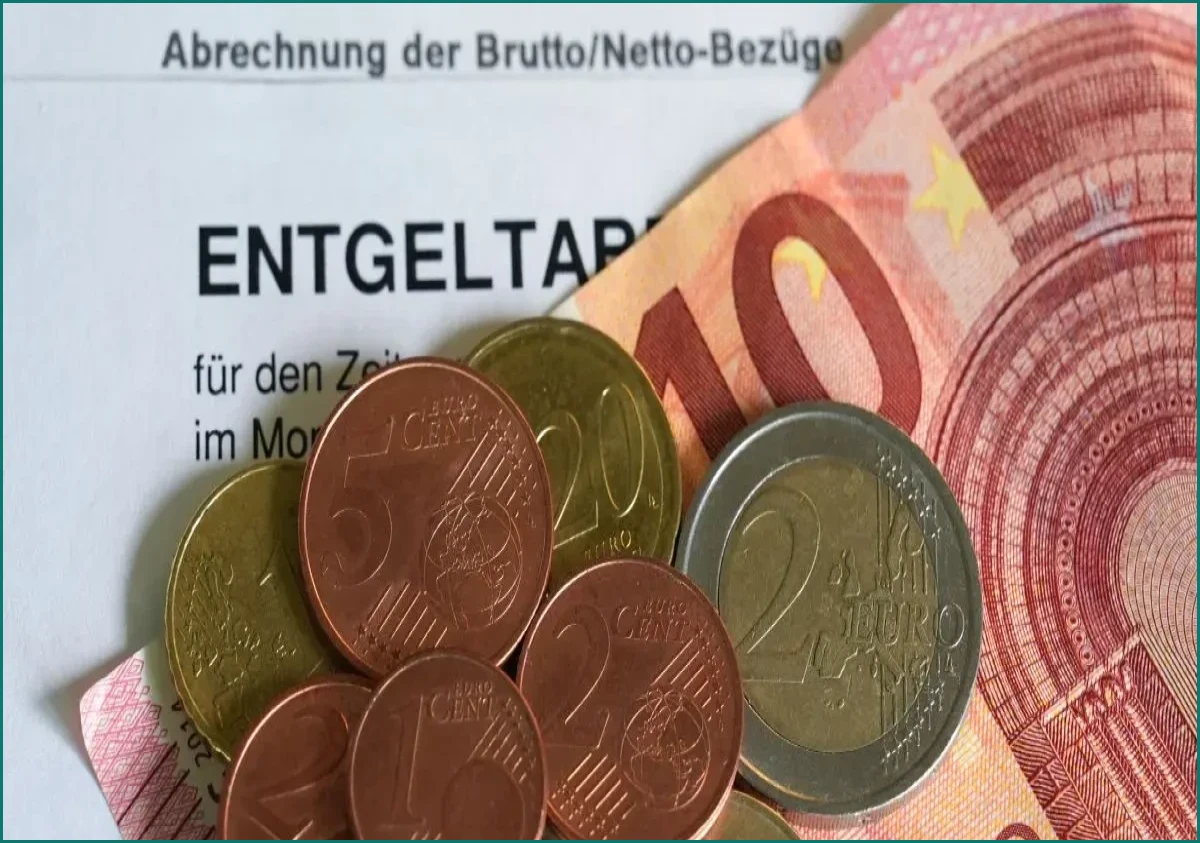
Over the last ten years, minimum wage violations in Germany have cost employees, social security funds, and tax authorities up to €64 billion. According to calculations by the German Trade Union Confederation (DGB), approximately two million workers each year fail to receive the legal pay they are entitled to, highlighting significant gaps in the enforcement of the country's labor protections.
Germany first introduced a statutory minimum wage in 2015, which currently stands at €13.90 per hour. While the law is designed to cover almost all workers across the country, with only a few exceptions such as interns, the reality for millions of employees is quite different. Out of an estimated six million minimum wage earners in Germany—primarily employed in the restaurant, trade, and agricultural sectors—about one-third are effectively underpaid.
The DGB reached these conclusions by analyzing data from an annual survey of approximately 30,000 individuals across 20,000 households. By examining reported working hours and actual earnings, researchers determined that affected employees were shortchanged by an average of €1.70 to €2.40 per hour. This systemic underpayment often stems from illegal employer practices, such as failing to record employees' actual working hours in full.
Between 2015 and 2024, this wage withholding accumulated to an estimated €64 billion. Had the law been fully complied with, affected workers would have taken home an additional €35 billion in wages. Furthermore, €22 billion would have been paid into social security funds, and €7 billion would have been collected in income taxes.
The analysis shows that immigrants and newly arrived foreigners are particularly vulnerable to these violations. This group is more likely to work in low-wage sectors and is often unfamiliar with German labor laws, a trend corroborated by research from the German Institute for Economic Research (DIW) and the Institute for Applied Economic Research (IAW). Gig workers and subcontracted staff, such as delivery drivers, face similar high risks. Many are paid per delivery or unit rather than by the hour, which can ultimately average out to less than the €13.90 hourly minimum. While failing to guarantee the minimum wage through such payment structures is illegal, some businesses evade accountability by outsourcing hiring to middleman firms that are quickly dissolved if legal disputes arise.
Additionally, a study by the Friedrich-Alexander University (FAU) in Erlangen / Nuremberg, published in the journal Nature, found that first-generation immigrants in Germany experience a 19.6 percent pay gap. The study indicated that three-quarters of this discrepancy is because immigrants are less frequently employed in high-paying roles.
Stefan Körzell, Vice President of the DGB, directly attributed a portion of the missing wages to deliberate wage theft. He emphasized that minimum wage violations are criminal actions by employers who ignore their legal obligations, stating that these infractions are not trivial offenses and must be rigorously prosecuted and severely punished.
Primary responsibility for policing these wage violations lies with the Financial Control of Undeclared Employment (FKS), an office under the Federal Customs Administration. However, the DGB points out that the FKS suffers from chronic understaffing. According to the Minimum Wage Commission, approximately 2,500 positions approved by the Bundestag remain vacant at the FKS. Statistically, this lack of resources means a company in Germany can expect an inspection only once every 140 years. In response, the General Customs Directorate in Bonn stated that the FKS prioritizes quality over quantity, focusing its resources on targeted controls to yield more substantial investigative outcomes.
Employees who suspect their employers are violating the Minimum Wage Act can seek guidance and report violations by calling the official Minimum Wage Hotline at +49 30 60 28 00 28. Affected individuals also have the option to file a complaint directly with the labor court without requiring a lawyer, and members of trade unions or works councils can often secure legal and administrative support through their organizations.
READ ALSO: How Indians in Germany are being exploited in the workforce
READ ALSO: How generous is Germany's minimum wage really?