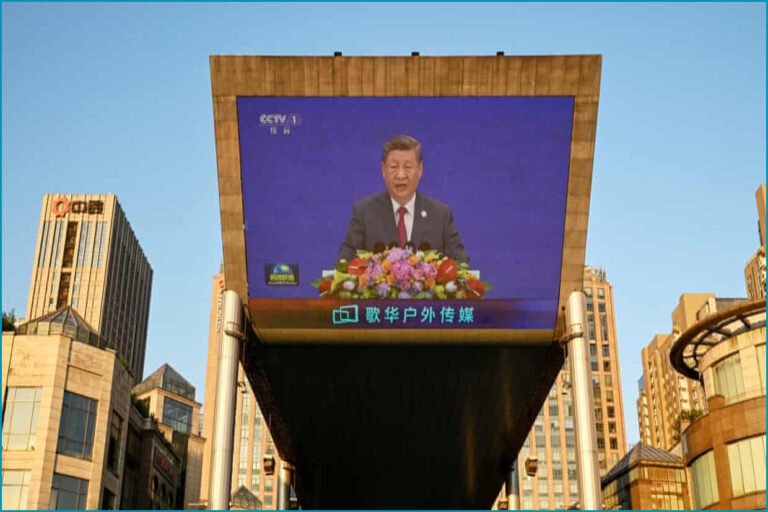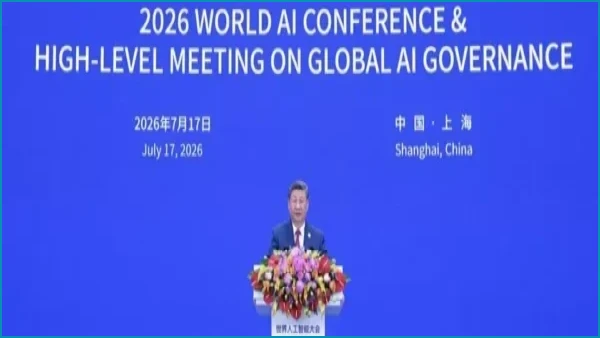
During a mid-July trip to Shanghai, Chinese President Xi Jinping broke from established protocol by personally delivering the opening remarks at the 2026 World Artificial Intelligence Conference. While his message was addressed to the event participants, the speech served as a clear signal to the international community and the United States, representing China’s primary competitor in the rapidly evolving field of artificial intelligence.
In an unusual acknowledgment for a Chinese leader, Xi began his address by crediting the foreign origins of the technology. He noted that seventy years ago, a group of young scholars at the Dartmouth Workshop in New Hampshire, United States, first proposed the concept of artificial intelligence. Xi drew parallels between AI and other historical milestones, such as the steam engine, electricity, and the internet, all of which originated in Europe or the United States.
Despite this nod to Western innovation, the core of Xi’s message centered on the necessity of state control. He acknowledged that while AI holds immense potential, its capabilities remain largely unknown, posing challenges that require urgent attention. Xi articulated four critical questions for the global community: how to interact with thinking machines, how to ensure security when algorithms influence decision-making, how to address ethical challenges through governance, and how to bridge the widening digital divide.
For the Chinese Communist Party (CCP), the unpredictable nature of AI presents a unique challenge to its political model. Xi emphasized that China prioritizes safety and security, aiming to ensure that AI remains a stable and controllable tool. He stated that the government is continuously refining laws, regulations, and ethical principles to ensure that AI development proceeds with both speed and stability. According to Xi, this includes implementing technological monitoring, early warning systems, and emergency response protocols to keep AI under firm human control and prevent potential abuse.
The president’s vision extends beyond China’s borders, as he advocated for a consensus-based global governance framework. Xi expressed a desire for China to lead in aligning international AI development strategies and technical standards. He further emphasized the importance of international cooperation, specifically mentioning assistance for Global South countries to ensure that the transition to an AI-driven world does not create new historical injustices. As China seeks to position itself as a central architect of these global protocols, policymakers in open societies are being encouraged to carefully consider the implications of an AI future shaped by nations with fundamentally different political values.
China’s President Xi Jinping delivers opening remarks at the 2026 World AI Conference in Shanghai, China, July 17, 2026.
Breaking from the norm established since the first World Artificial Intelligence Conference was held in Shanghai in 2018, Xi himself, rather than a leader from the inner circles of the CCP, took the helm on July 17 and opened the conference with his thoughts. And his speech left no doubt that he has decided to take a l