United Nations High Commissioner for Human Rights Volker Türk has officially secured a second four-year term in office. While his reappointment was supported by 144 governments, including China, the process faced objections from several other nations. The decision arrives at a critical juncture for the UN's human rights mandate, particularly regarding Beijing's record.
Over the past four years, Chinese authorities have intensified internal repression, including the use of collective punishment against the families of prisoners of conscience and human rights defenders. There is a documented history of activists dying while in state detention, alongside a growing trend of transnational repression aimed at silencing critics living abroad. Furthermore, China has frequently obstructed scrutiny from UN bodies, ranking among the world's most aggressive states in targeting those who engage with international human rights mechanisms.
Although Türk has occasionally criticized specific abuses—such as calling for the repeal of restrictive laws or highlighting the plight of individual prisoners—critics argue that these efforts have failed to keep pace with the scale of the regime’s violations or cause any significant discomfort to Beijing. Notably, in October 2022, just before Türk assumed his role, the Office of the High Commissioner for Human Rights (OHCHR) released a landmark report detailing mass arbitrary detention, torture, and family separations of Uyghurs and other Turkic communities. The report concluded that these policies might constitute crimes against humanity.
Despite expressing total alignment with the report’s findings, Türk has been criticized for relying on diplomatic dialogues with Chinese officials rather than engaging directly with victims and survivors. Observers suggest that the standard diplomatic playbook has not yielded results and that the upcoming session of the UN Human Rights Council in September offers a vital opportunity for a new approach. Experts urge the High Commissioner to brief member states on his past efforts, update the findings of the 2022 report, and conduct direct interviews with witnesses.
Additional recommendations for his second term include establishing a clear legal pathway for accountability regarding crimes against humanity and addressing the long-standing concerns of UN “special procedures” experts. These experts have spent six years documenting Beijing’s manipulation of international law and have specifically requested a special session at the Human Rights Council and the appointment of an expert dedicated to the China portfolio. As Türk enters his second term, the international community remains focused on whether he will prioritize the protection of victims and ensure accountability, or if the UN will risk further irrelevance on the global human rights stage.
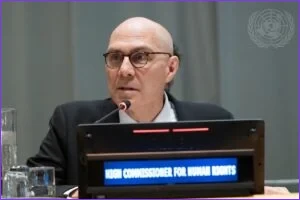
Volker Türk, United Nations High Commissioner for Human Rights, addresses the informal meeting of the General Assembly plenary to hear a briefing on missing persons, Apr. 2, 2025.
You have reached the limit of 2 free articles this month.