Missile alerts are imposing a substantial economic burden on Ukraine, costing businesses an estimated $45 million (£34 million) for every hour they are forced to cease operations, according to Oleksandr Kravchenko, Ukraine's economy minister. Speaking from a heavily protected government building in Kyiv, Kravchenko, who also serves as the Minister for Economy and the Environment, underscored the challenges Kyiv faces in sustaining its economy amidst escalating Russian attacks.
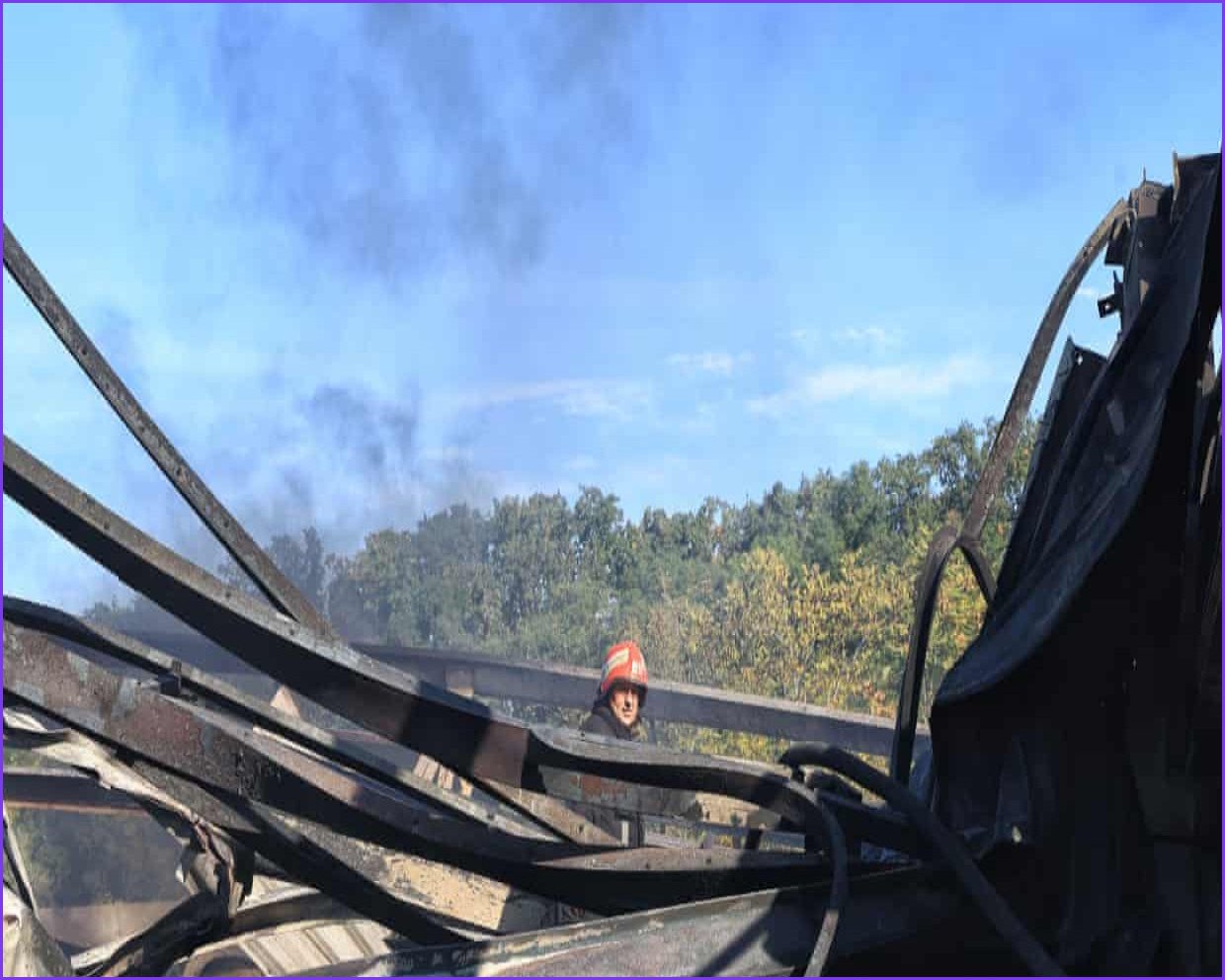
Russian forces have increasingly targeted critical infrastructure, including industrial sites, warehouses, logistics hubs, and datacentres, in what Kravchenko described as an effort to “destroy pretty much the entire economy.” He noted that the rapid development and deployment of jet-powered drones by Russia, which have recently pounded Kyiv, were not fully anticipated. These attacks compel large sectors of the economy into repeated standstills as workers seek shelter, with sirens sometimes lasting up to 10 hours daily. “If people are in a bunker, business stops,” Kravchenko stated.
In response to these economic costs, the Ukrainian government has implemented a new two-tier warning system. A “red” alert signifies a missile threat, requiring individuals to seek shelter, while a “yellow” warning is issued for drone threats, allowing many businesses to continue operating. Kravchenko reported that over half of businesses now remain open during yellow alerts. However, the inherent danger of these warnings was starkly demonstrated on Monday when a Russian jet-powered drone struck the National Academy of Sciences in central Kyiv during a yellow alert, killing two staff members who were still working inside.
This incident exemplifies the difficult trade-offs Ukraine must make to balance protecting its citizens with maintaining some semblance of normal life. Russian attacks this year alone have caused an estimated $10 billion in damage to fixed assets, with targets including steel plants, warehouses, logistics infrastructure, and datacentres. Furthermore, Russia has effectively blockaded Ukraine’s Black Sea ports, which historically handled the majority of the country’s exports.
Looking ahead, Kravchenko expressed belief that the government is better prepared for what could be the “hardest, the harshest winter” of the war, anticipating further pressure on energy supplies, infrastructure, and businesses already weakened by months of strikes. To bolster defenses, the government is exploring options to allow more private companies to acquire Ukraine’s air-defence system, though the minister cautioned that businesses could never achieve full protection from Russian missiles and drones.
The ongoing damage from strikes has exacerbated the severe strain on Ukraine's state finances. President Volodymyr Zelenskyy recently cited a remaining budget shortfall of approximately $27 billion for this year. This figure has prompted inquiries from some European governments regarding its emergence, despite the EU having already approved a €90 billion loan package for Ukraine covering 2026 and 2027. Kravchenko confirmed that the government has since reduced the shortfall to $20 billion through spending cuts and by identifying additional domestic reserves.
Kyiv is now actively seeking further financial support from the EU, Japan, Canada, and the UK, including potentially accelerating loans initially earmarked for next year. “There is very active work with all our international partners to get additional sources of funding,” Kravchenko affirmed.
The minister dismissed suggestions that the shortfall stemmed from mismanagement or corruption, or from excessive spending under former defence minister Mykhailo Fedorov, whose efforts to overhaul military procurement and expand Ukraine’s drone program made him a prominent reformer before his dismissal in July, which triggered street protests. Instead, Kravchenko attributed the gap to weaker-than-expected state revenues and the increasing cost of waging war, citing the need for more air-defence systems and accelerated development of drones capable of intercepting Russia’s new jet-powered weapons. “The cost of war is simply increasing,” he said.
However, high-profile corruption scandals have affected Zelenskyy’s inner circle, eroding trust both domestically and among Western donors. A recent poll by the Kyiv International Institute of Sociology indicated that corruption in government was the most pressing concern for 50% of Ukrainians, surpassing mass missile and drone strikes at 40%. The same survey revealed that 72% believed Zelenskyy bore personal responsibility for corrupt actions by those around him.
Kravchenko acknowledged progress in tackling corruption but admitted Ukraine faces both the reality of corruption and a persistent perception problem at home and abroad. “I very much appreciate the pressure of European partners on reforms,” he stated, emphasizing the need to address perceptions of corruption. Ukraine’s external financing needs for 2027 are estimated at $52.6 billion, with only about $20 billion secured so far, and further tax rises and spending cuts under discussion. When asked about potential weakening of Western commitment due to the rise of skeptical parties in France and Germany, Kravchenko responded, “Am I worried? I think I should be, probably,” adding that “The overall fatigue is increasing in Europe.”