The sudden arrest of Dr. Ikboljon Qoraboyev, a prominent Uzbek international relations professor working in Kazakhstan, has sent profound shockwaves through Central Asia's academic community. Accused of espionage, the 46-year-old scholar was quietly detained in Astana, raising severe concerns about academic freedom, due process, and the safety of international research in the region.
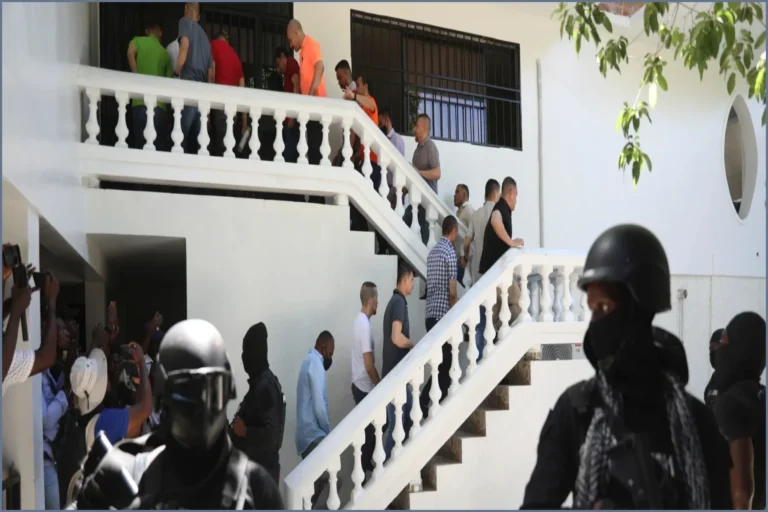
On July 3, Qoraboyev was taken from his home in Astana, where he lived with his wife and three children, by individuals dressed in civilian clothes. News of his detention only began to circulate in late August, following reports from independent media outlets. Both Kazakh and Uzbek authorities have maintained absolute silence in response to media inquiries regarding the case.
For those trying to follow the case online, the lack of official information is so severe that it can feel as though you have reached the limit of free articles this month, with public updates completely blocked. Qoraboyev, originally from Andijan, Uzbekistan, is reportedly being charged with espionage under Article 176 of Kazakhstan's Criminal Code. The article defines espionage as the collection, theft, or storage of state secrets by a foreign national for transfer to a foreign state or international organization to be used against the national interests of Kazakhstan. A conviction under this charge carries a prison sentence of 10 to 15 years.
In the wake of the arrest, Maksut Narikbayev University (MNU) in Astana, where Qoraboyev served as a professor and headed the Center for Global and Regional Governance, has distanced itself from him. The university stated that Qoraboyev is not currently a professor at the institution and referred all inquiries to competent authorities. The university also removed his name from its website and the center's online pages.
The legal process surrounding Qoraboyev's detention has drawn intense criticism. According to his relatives, the professor was initially assigned a state-appointed lawyer who subsequently disappeared. The family has since hired a private lawyer, but the attorney has been unable to access Qoraboyev. Because the case involves state secrets, any legal representative must obtain permission from the National Security Committee of Kazakhstan, which is reportedly delaying the necessary permit. Uzbekistan has not publicly responded to the arrest of its citizen.
Qoraboyev is a highly distinguished scholar within the region's academic sector. He holds a PhD from the University of Toulouse in France, master's degrees in international law and European law from the University of Montpellier 1, and a bachelor's degree in international relations from the University of World Economy and Diplomacy in Tashkent. He also holds current affiliations with the United Nations University Institute on Comparative Regional Integration Studies and the Hague Research Institute, which recognizes him as an expert in comparative regionalism, international law, and Eurasian studies.
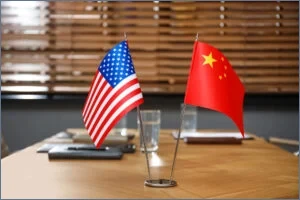
Before his arrest, Qoraboyev's research focused heavily on critical minerals in Kazakhstan and Uzbekistan. In April, he authored an unpublished paper titled "Comparative legal, political and strategic narratives around important minerals in Kazakhstan and Uzbekistan." Colleagues emphasize that this work was compiled entirely from publicly available information. On April 27, Qoraboyev hosted a major workshop on critical minerals and connectivity through his center at MNU, bringing together diplomats, policymakers, and scholars from Kazakhstan, Uzbekistan, the Netherlands, France, and the European Union. In June, he co-hosted a roundtable discussion on China-Central Asia relations in partnership with Fudan University and welcomed Dr. Johannes Baur, the head of cooperation at the EU Delegation to Kazakhstan, for a guest lecture.
The secrecy surrounding his detention has alarmed international peers. Maia Chankseliani, a professor of comparative and international education at the University of Oxford, who co-authored a paper with Qoraboyev in 2020 on the contributions of higher education to development, expressed deep shock upon learning of his arrest on August 27. She noted that academic freedom is heavily shaped by the actual working conditions of scholars. Chankseliani emphasized that her primary concern is the respect of Qoraboyev's rights, particularly his access to independent legal representation and a fair judicial process.
Local scholars have also voiced their alarm under conditions of anonymity, fearing professional and personal repercussions. One researcher, Amina, whose work overlaps with Qoraboyev's, heard about the arrest through a group chat on August 27 and met with other scholars that evening. According to Amina, the initial reaction among peers was horror. The first announcement only included the detail that a professor working on critical minerals had been arrested, which was particularly concerning for those who work in this field and were concerned about their own research. Amina also noted that several colleagues who had upcoming trips to Uzbekistan scheduled were actively considering cancelling them, raising concerns about how this would affect regionalism in academia and whether academics would be afraid to work together.
Amina, who has an upcoming presentation on critical minerals competition in the region, mentioned joking with colleagues about being arrested to make light of the situation because they are horrified. Amina added that while the incident will silence some, more established scholars who could possibly leave or are already working abroad are fighting back. Another anonymous scholar, Bekzod, said the news came as a surprise and shock because Qoraboyev did not have access to state secrets. Bekzod warned that prosecuting academics for compiling publicly available materials puts many local and international scholars at risk and creates an atmosphere of fear. Bekzod noted that limited press freedoms in Kazakhstan correlate with academic freedoms, and this case may further exacerbate fears and limit academic freedoms through institutional policies and self-censorship. Bekzod is already receiving questions from concerned international scholars who were considering coming to Kazakhstan.
This incident is not unprecedented in Kazakhstan. In February 2019, Konstantin Syroezhkin, a prominent Sinologist and chief research officer at the Kazakhstan Institute for Strategic Studies, was arrested on treason charges under Article 175 of the criminal code. His arrest was kept secret until May of that year, and he was subsequently sentenced to 10 years in prison following a closed trial. Syroezhkin, who was prosecuted as a Kazakhstani citizen despite speculation regarding dual Russian citizenship, was eventually pardoned by President Tokayev in 2024. Although the exact details of Syroezhkin's case remain unknown, reporting at the time suggested that he may have passed classified documents to people connected to Chinese intelligence.
The arrest of Qoraboyev exposes a painful contradiction in Central Asia. Over the last decade, regional governments, particularly under Uzbek President Shavkat Mirziyoyev, have heavily promoted regional integration, annual summits, and international academic partnerships. Both Kazakhstan and Uzbekistan have invested heavily in internationalizing their universities to build trust and exchange knowledge across borders. However, this high-profile arrest threatens to undermine the very openness and international collaboration that these nations have worked hard to foster.
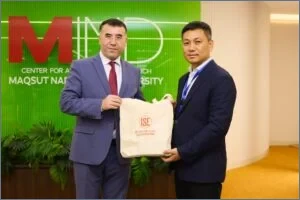
Dr. Ikboljon Qoraboyev (left) poses for a photo in June 2026 while co-hosting a roundtable discussion at MNU on China-Central Asia relations in partnership with the Center for Russian and Central Asian Studies of Fudan University.
You have reached the limit of 2 free articles this month.