The United States military has announced that it will commence a blockade of Iranian ships navigating the Strait of Hormuz beginning Tuesday at 4 p.m. ET. This decision follows an intense weekend of military strikes that have pushed the region closer to full-scale war and disrupted a fragile ceasefire. The U.S. previously conducted a similar operation to restrict maritime traffic to and from Iranian ports between April 13 and June 18.
On Monday, the U.S. launched a new wave of strikes against Iranian defense systems, including drone and missile sites, as well as maritime infrastructure, in an effort to degrade Iran's capacity to threaten commercial shipping. In retaliation, Iran's Revolutionary Guard reported on Tuesday that it had struck two non-compliant supertankers in the Strait of Hormuz. Furthermore, Iran stated it had launched drones and missiles at U.S. military infrastructure in Bahrain, which serves as the home to the U.S. Navy's 5th Fleet, and at military outposts in Jordan.
The United Arab Emirates’ Defense Ministry confirmed that two of its tankers were hit by Iranian cruise missiles while transiting the shipping lane of the Strait of Hormuz in Omani waters, resulting in one death. Meanwhile, authorities in Bahrain reported that sirens were sounded and urged citizens to head to safe places. Jordanian state media reported that the country's air defenses intercepted four Iranian missiles early Tuesday as they entered its airspace.
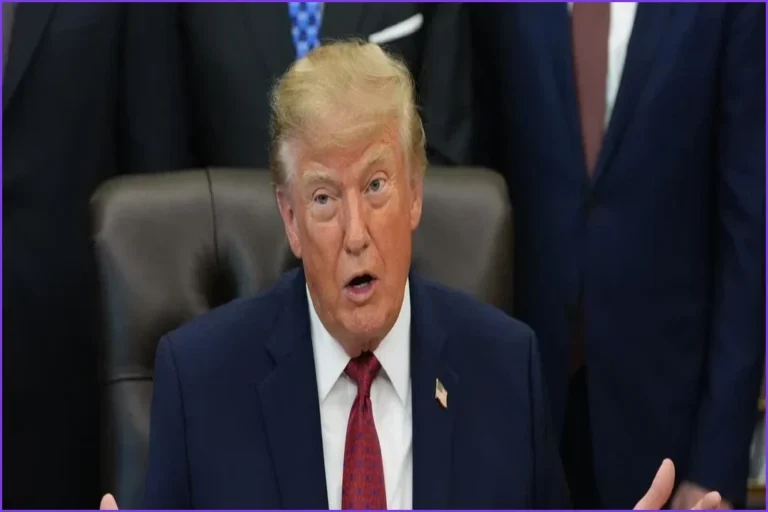
President Donald Trump declared the ceasefire over during a NATO summit in Turkey last week, though he did not entirely rule out future diplomatic engagement. The truce had already begun to crumble over the weekend following an Iranian attack on a commercial vessel moving through the strait on Saturday, which prompted U.S. retaliation. Iranian Foreign Minister Abbas Araghchi stated Monday that Tehran remains in contact with mediators from Oman, Qatar, and Pakistan to de-escalate the situation, though the status of direct negotiations with the U.S. remains unclear.
The Strait of Hormuz, a conduit for approximately 20% of global energy supplies, has become the primary point of contention. While Washington maintains that the strait is an international waterway, Tehran has claimed authority over the route since the war began on February 28, requiring ships to obtain permission and follow approved routes. Iran has been attacking ships that did not comply with its orders. President Trump announced on Monday that the U.S. would not allow Iranian ships to move through the strait, declaring, "We are reinstating THE IRANIAN BLOCKADE, so named because it is only stopping Iran's ships or customers from entering or leaving."
Trump further stated that while other countries will be able to move through the waterway, the U.S. will charge a 20% toll on cargo as reimbursement for providing safety and security to the region. He added that the U.S. will be known as "THE GUARDIAN OF THE HORMUZ STRAIT." This shift marks a departure from the administration's previous stance in June, when Secretary of State Marco Rubio argued that no country is allowed to charge tolls or fees on an international waterway under existing international law. CENTCOM did not mention fees in its announcement but instructed mariners approaching the Gulf of Oman and the Strait of Hormuz to contact U.S. naval forces on bridge-to-bridge channel 16, noting that additional information would be provided through a formal notice.
Responding to the announcement, Foreign Minister Araghchi acknowledged that safe passage deserves compensation but insisted that Iran has always been the guardian of the strait and will remain so forever. He noted that a 20% toll is "too much" and suggested that Iran would be fair in its own negotiations. Michael Singh, a managing director at the Washington Institute for Near East Policy, noted that the current deadlock stems from conflicting interpretations of a memorandum of understanding, which Iran views as granting it responsibility for the safe passage of commercial vehicles. Prior to the blockade announcement, the U.S. had urged ships to use a southern route hugging the coast of Oman, a move Iran claimed violated the memorandum of understanding. The U.S. has also accused Iran of breaching the same agreement. The conflict continues following the recent funeral of Iranian Supreme Leader Ayatollah Ali Khamenei, who was killed in U.S.-Israeli airstrikes at the start of the war in late February.
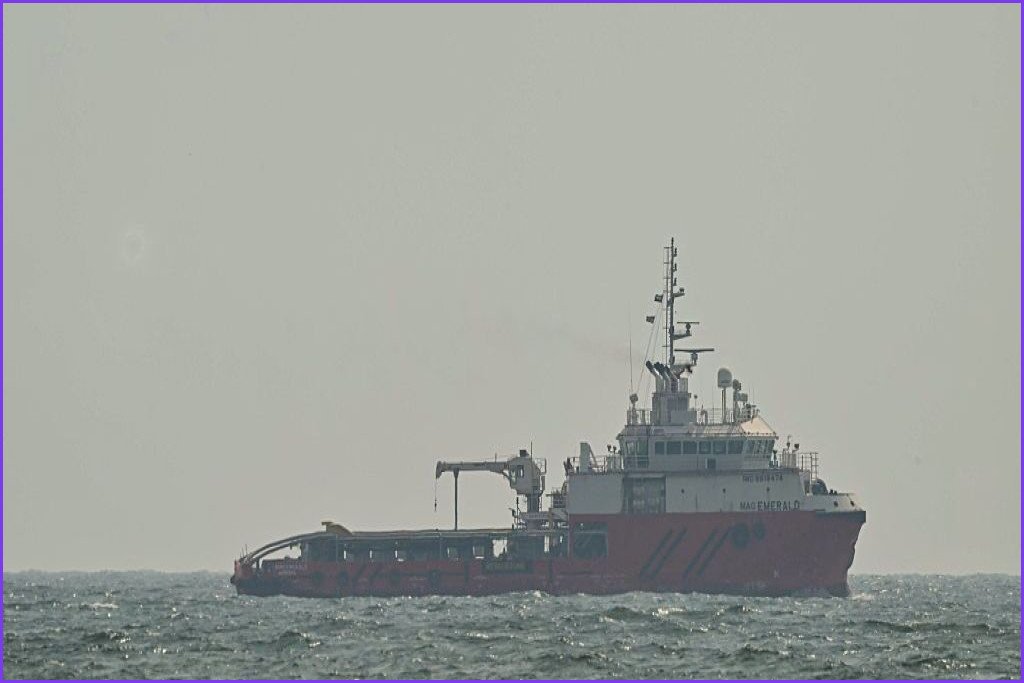
A ship sails off the coast of Ajman on Friday. AFP via Getty Images hide caption
Trump said other countries will be able to move through the waterway, but the U.S. will charge a 20% toll on cargo as reimbursement for the U.S. doing "the job of providing safety and security to this very volatile section of the World."