Taras, a four-year-old lion rescued from the war in Ukraine, is currently fighting for his life at a sanctuary near Sandstone, Minnesota, after being diagnosed with a rare and often fatal fungal infection. The lion was originally discovered as a four-month-old cub inside a duffel bag at the Odesa railway station. In November 2022, the Wildcat Sanctuary, working alongside the International Fund for Animal Welfare (IFAW), brought Taras, his sisters Lesya and Stefania, and an unrelated cub from Kyiv named Prada to the United States. Their evacuation involved a 36-hour journey from the Ukrainian capital, which was under missile and drone fire, to safety in Poland, where they waited for import permits.
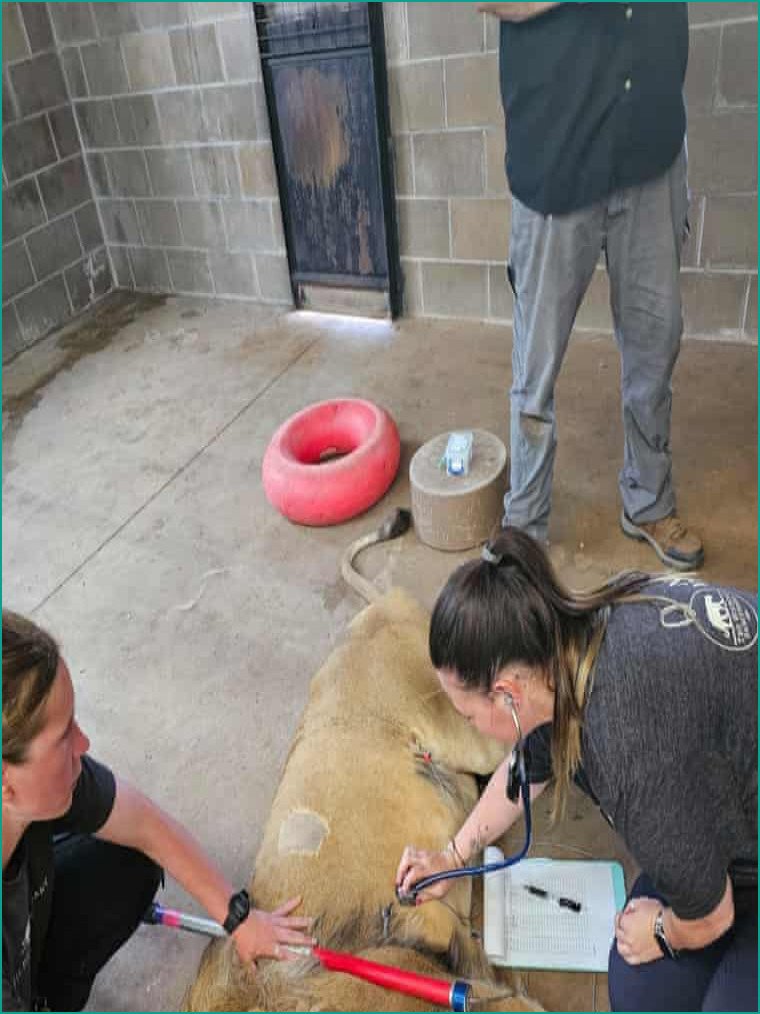
The health crisis for Taras began in May when staff at the Minnesota sanctuary noticed he was sluggish and refusing food. A 180-mile round trip to a specialist clinic in Minneapolis for a lung biopsy and scan confirmed he had contracted blastomycosis, a non-contagious fungal infection typically found in soil. The same condition was linked to the death of a white tiger in a Wisconsin sanctuary this past June. Known as Gilchrist’s disease, it is frequently fatal in both animals and humans unless detected and treated early.
Tammy Thies, the sanctuary’s chief executive and founder, noted that Taras has shown progress following intensive treatment, which initially required twice-daily injections of high-strength anti-fungal medication through an IV line. While he has rejoined his pride, he must still receive oral medication twice a day. Thies cautioned that it could be weeks or even months before staff can be certain he has fully recovered. She described the situation as an uphill battle, noting that the specialist provided a guarded prognosis, with survival rates typically very low once the disease reaches the lungs and causes respiratory distress.
For the sanctuary, Taras’s recovery is viewed as a second miracle following his escape from the war. His reunion with his siblings was described by Thies as emotional, with the pride welcoming him back with nuzzling and play. Despite this, he must be separated twice daily to ensure he consumes his medication without other lions stealing his food. Thies believes the lions were likely victims of the illegal exotic animal trade, separated from their mothers at birth and abandoned by traffickers as war-related border closures made smuggling difficult. Despite the severity of his condition, the sanctuary staff remains committed to fighting for his survival.