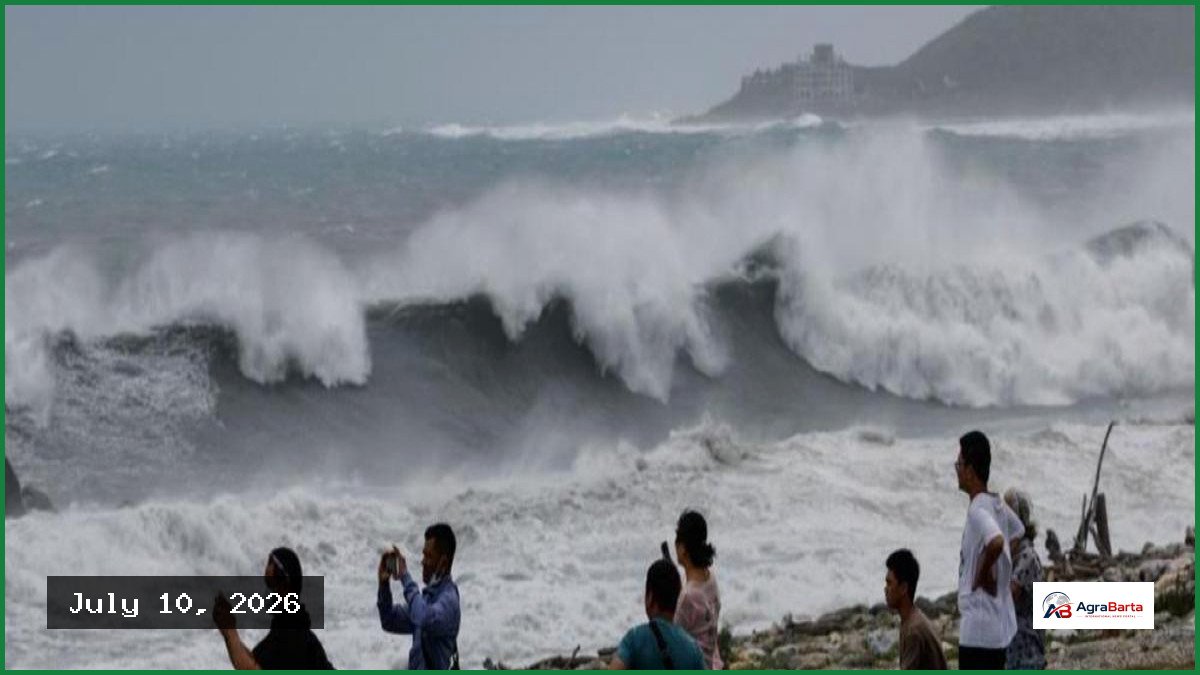
East Asia is bracing for the imminent arrival of Typhoon Bavi, a colossal storm stretching 1,000km (620 miles) at its widest point – a size comparable to the width of France. The typhoon is currently sweeping across the Pacific towards Taiwan, prompting widespread preparations and warnings across the region.
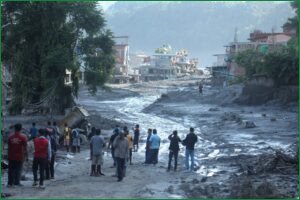
Meanwhile, the southern Philippines has been hit by deadly landslides, triggered by one of the strongest storms in decades, resulting in the deaths of at least 15 people. On the island of Mindanao, families were buried overnight, and rescuers are actively searching for those still missing. Officials anticipate moderate to heavy rains will persist across parts of the country throughout the weekend.
Typhoon Bavi is projected to bring substantial rainfall to Taiwan’s northern and eastern regions, as well as a chain of remote Japanese islands, before it is expected to make landfall in south-eastern China on Saturday. Experts warn that Bavi is anticipated to be one of the most destructive storms in decades.
Taiwanese authorities have issued warnings that Bavi could deliver up to 1m (39 inches) of rainfall. In response, the island’s defence ministry has placed approximately 29,000 soldiers on standby to assist with potential relief efforts. Taiwan’s Central Weather Administration informed Reuters that Bavi is set to be the largest storm, by size, to impact the island since 1987.
Across the region, residents are taking precautions. Dozens of flights have been cancelled, and schools have suspended classes. Supermarket shelves have been cleared as people stock up on essential supplies. Farmers rushed to harvest or protect their crops while the weather permitted on Friday, and fishermen worked to secure their vessels tightly. Fisherman Chen Ming-hui, 60, cautioned Reuters, saying, "Don’t be fooled by the nice and calm weather now. A storm like this could be the most terrifying." Additionally, thousands of sandbags have been distributed to residents and shop-owners in areas prone to flooding.
In Japan, residents on the remote Sakishima Islands are on high alert. Online photographs show individuals taping up windows and draping windproof nets over their homes and shops. Major airlines have grounded numerous flights; Japan Airlines has cancelled over 100 flights for Friday and Saturday, affecting nearly 20,000 passengers. All Nippon Airways has also cancelled more than 160 flights through Sunday, impacting approximately 20,000 people, according to Reuters. Thai Airways and Malaysia Airlines have also grounded flights to and from Taipei.
China has also issued warnings of a "significant impact" from the typhoon. The storm is expected to hit the south-eastern Fujian province and could then move northward. Ma Jun, director of China’s Institute of Public and Environmental Affairs, stated that "Bavi’s large size and abundant energy mean its remnants and outer rainbands could move from Jiangsu and Anhui provinces toward the Bohai Sea region." He urged northern provinces, which have "less experience" dealing with typhoons compared to the south, to "strengthen preparations." Some forecasts even suggest Bavi could make landfall twice in China.
The impending typhoon comes as parts of southern China are still recovering from the devastation caused by Typhoon Maysak earlier this week. Maysak resulted in at least 39 fatalities, with rescuers continuing to search for missing individuals amidst the wreckage. Over 130,000 people were evacuated, primarily in the Guangxi region. Maysak also led to significant livestock deaths, massive agricultural losses, and spurred two rare tornadoes in the central Hubei province.