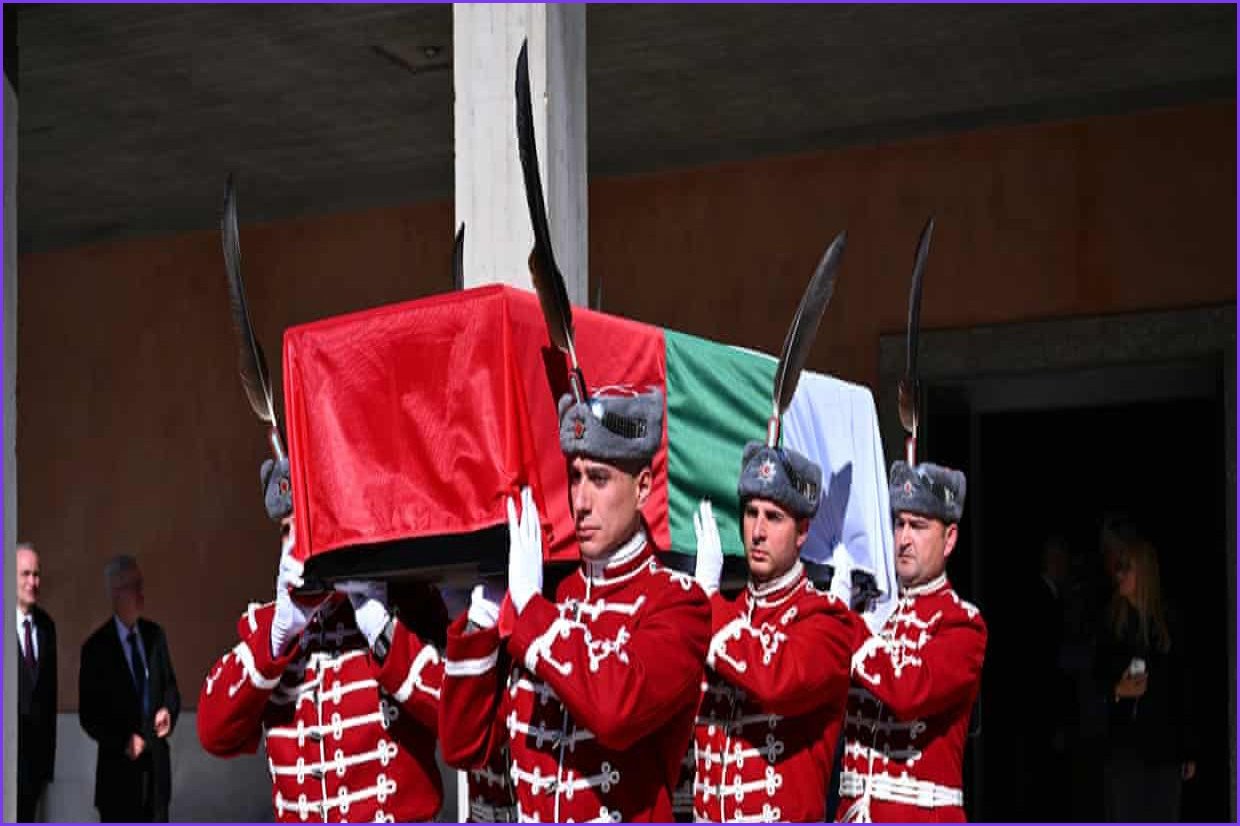
The remains of the medieval ruler Tsar Samuel are returning to Bulgaria on Saturday, concluding decades of diplomatic negotiations with neighboring Greece. The homecoming of the ancient monarch, whose remains were discovered in a Greek border region 60 years ago, will be marked by a grand state reception in the Bulgarian capital of Sofia.
After being transported aboard a military aircraft, the remains will receive a fighter jet escort, a 21-gun salute, and a formal procession to the Church of St Sophia. There, the public will be permitted to pay their respects to the ruler, who is widely regarded as a cornerstone of Bulgaria's national identity.
Tsar Samuel was a warrior king who fought against the Byzantine Empire to expand his territory. Following his defeat, he died shortly afterward in 1014.
The return is the result of an agreement reached earlier this week by the culture ministers of both nations. As part of the reciprocal deal, Bulgaria is set to return religious relics that were taken from Greek monasteries during the First World War. However, this exchange has drawn scrutiny, with several prominent Greek academics and religious leaders expressing concerns over whether Bulgaria's contributions are adequate.
Before the transfer, Greek Prime Minister Kyriakos Mitsotakis and Bulgarian President Rumen Radev attended a joint ceremony at the Museum of Byzantine Civilization in Thessaloniki, where the medieval ruler's remains had been preserved.
During the ceremony, Radev emphasized the shared heritage, stating, "These are items that belong to both our peoples; they constitute our memory and our bond, and our compatriots and future generations deserve and must have the opportunity to pay tribute to their ancestors." He added, "If in the past Tsar Samuel divided us, I can say that today he unites us. He strengthens our strategic cooperation and makes the historical relations between our states and peoples even stronger."
Meanwhile, Mitsotakis framed the handover as a precedent for international cultural restitution, expressing hope that it would support Greece's ongoing campaign to secure the return of the Parthenon marbles from the British Museum. The 2,500-year-old sculptures were taken from the Acropolis and remain in London.
"The global community is essentially re-evaluating its longstanding stance on protecting cultural heritage," Mitsotakis remarked. "This shift is embodied by today’s initiative, which rests on the obvious principle that monuments and historical heirlooms cannot be treated as spoils of war, nor as the result of circumstances subsequent to their creation."