The launch of the "America First Global Health Strategy" on October 1 marks a fundamental shift in how the United States funds healthcare programs in low- and middle-income nations. Under this new policy, the Trump administration is rewriting the rules of foreign assistance, moving away from traditional humanitarian aid toward a strictly transactional model. The core premise of the strategy is that the U.S. should not distribute billions of dollars in global health and development funding without securing concrete, reciprocal benefits for American taxpayers, while also requiring recipient governments to commit their own financial resources.
To qualify for U.S. global health funding under the new strategy, recipient nations must sign a bilateral Memorandum of Understanding (MOU). This agreement explicitly details the exact financial investment the U.S. will provide alongside a binding financial pledge from the host country. The administration argues that forcing partner nations to co-invest will foster self-reliance and eventually end their long-term dependency on American foreign assistance.
While previous administrations viewed global health spending as a form of soft power—using donations to build international goodwill, foster alliances, and exert diplomatic influence—the new strategy is explicitly transactional. Tom Bollyky, director of the global health program at the Council on Foreign Relations, notes that historically, the focus of U.S. aid was that "everybody benefits," operating on the belief that improving health and development in poorer regions "lifts all boats" and indirectly benefits the U.S. Now, Bollyky says, the U.S. is demanding clear returns for taxpayers. This includes securing preferential access to critical local minerals or obtaining direct access to foreign patient medical records and pathogen data.
Here's how the State Department describes the new strategy on its website: "It will protect the homeland by preventing infectious disease outbreaks from reaching U.S. shores; strengthen our bilateral relationships by entering into multi-year, bilateral agreements that require co-investment from recipient governments, saving millions of lives and moving countries along the path to decreased dependency on foreign assistance; and promote American health innovation around the world."
What's new is what Bollyky calls a more transactional view of health aid. He explains that the U.S. wants to be clearer about what taxpayers receive in return, beyond recipient nations simply meeting their health and development objectives. The demand for confidential patient records and pathogen data has emerged as one of the most controversial elements of the strategy. The Trump administration defends the requirement as a vital homeland security measure, asserting that direct access to international medical data enhances the U.S. government's ability to identify infectious disease outbreaks early and protect the American population.
So far, the U.S. has signed MOUs with 35 countries across the globe, including Nigeria, Rwanda, the Philippines, Tajikistan, Bolivia, and El Salvador, committing approximately $14 billion in global health investments over a five-year period. However, the rollout has faced significant resistance. Three countries—Ghana, Namibia, and Zimbabwe—have refused to sign the agreements, citing severe concerns over national sovereignty. Meanwhile, negotiations between the U.S. and Zambia stalled for months due to disagreements over provisions granting the U.S. access to Zambia's critical mineral reserves.
The public backlash became evident during a United Nations General Assembly event on September 25, where Ghana's President John Dramani Mahama detailed why his country rejected the American proposal. Mahama explained that Ghana refused to sign after reviewing clauses requiring the nation to hand over confidential patient medical records and pathogen data, as well as accept the U.S. Food and Drug Administration (FDA) as its ultimate drug authority. Mahama criticized the demands as "humiliating," declaring that "Ghana is a sovereign nation and we have our processes. We're a democratic country." He dismissed the offered funding of "100 and something million" dollars as "a pittance."
The consequences for refusing to sign the agreements have been immediate and severe. On the same day Mahama spoke at the U.N., U.S. Ambassador to Zimbabwe Pamela Tremont announced that the United States was completely cutting off all global health funding to Zimbabwe because the government declined to sign the MOU for the same sovereignty reasons as Ghana. Tremont stated that the U.S. would instead pivot its bilateral relationship with Zimbabwe away from healthcare, focusing instead on trade and economic investments. Bollyky notes that a critical question going forward is whether the administration will continue to completely cut off every nation that refuses to comply, adding that the coming months will reveal if the U.S. is truly prepared to follow through on these threats.
Global health experts are raising alarms about the speed and scale of the transition. Jocilyn Estes, a policy analyst at the Washington, D.C.-based think tank Center for Global Development, acknowledges that coordinating closely with foreign governments and encouraging them to eventually fund their own health systems is a logical goal. Yet, she says, "the scope and scale of this pivot is really unprecedented, and the pace that the administration wants to move seems pretty incompatible with the kind of careful planning required when the stakes are this high."
The implementation of the strategy has already faced delays. Originally scheduled to begin on the ground in April 2026, the administration missed its target and extended the launch date by six months to October 1. Even with the launch underway, it remains unclear if the State Department's funds will be distributed on schedule. Estes describes this rapid-fire implementation as a high-risk gamble, stating: "They're sort of building the plane while flying it, and so if this administration's bet on this new approach doesn't work, there are real patients and real people who will suffer the consequences."
Furthermore, the overall volume of U.S. aid has declined significantly compared to previous years. Stephen Morrison, who oversees global health policy at the Center for Strategic and International Studies, points out that the baseline funding brought to the table by the U.S. has been deeply reduced following the administration's dramatic 2025 funding cuts and the dismantling of USAID, America's premier aid agency. Morrison notes that countries with large populations vulnerable to HIV will be particularly affected and upset by the reductions, though many may feel they have no choice but to sign the agreements because the U.S. remains "the biggest game in town."
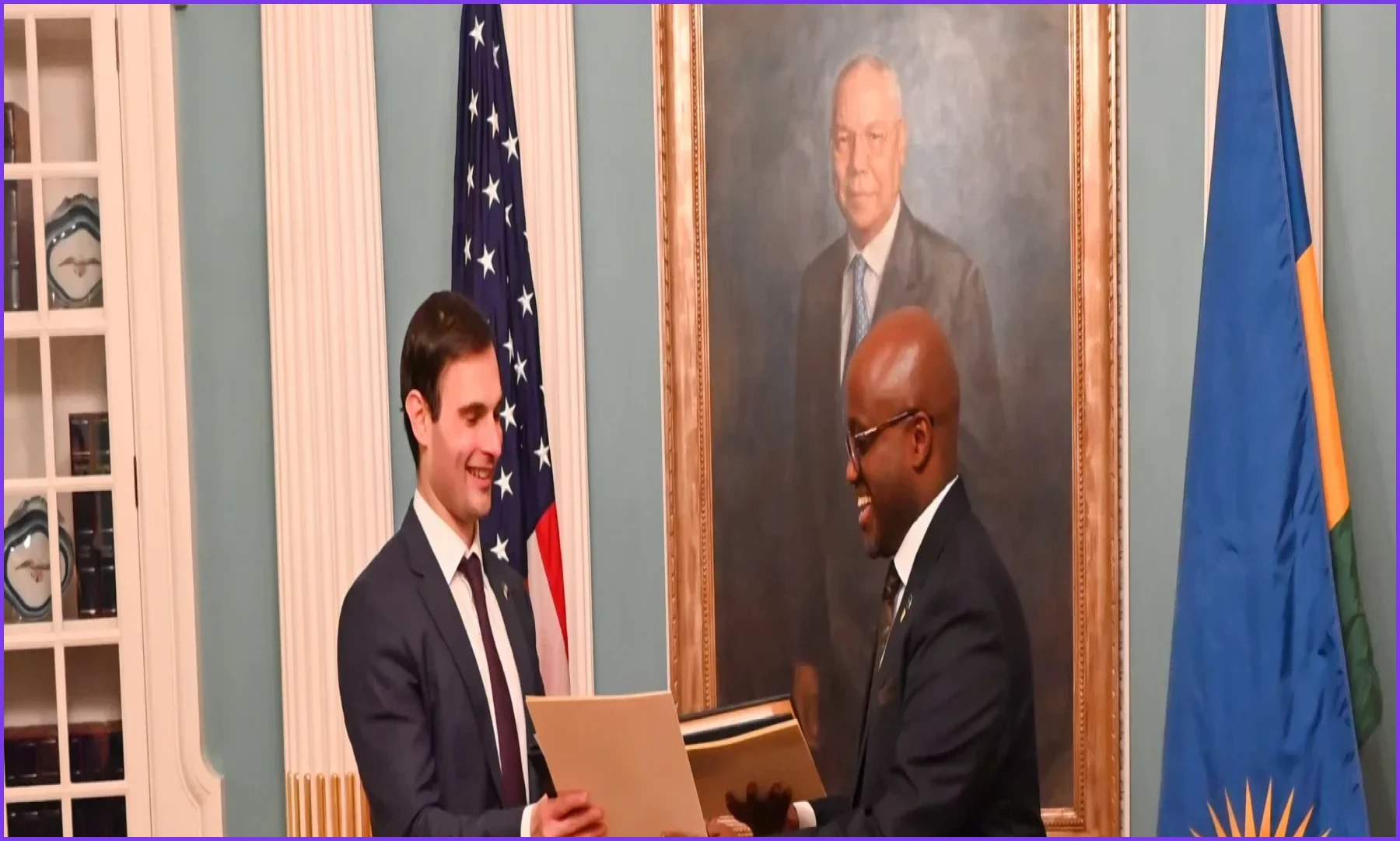
The financial strain is already apparent in countries that have signed. In December, State Department senior official Jeremy Lewin welcomed Rwanda's Foreign Minister Olivier J.P. Nduhungirehe to sign a multi-year global health MOU. Under the agreement, Rwanda is slated to receive $157 million over five years. By comparison, Rwanda received more than $200 million from the U.S. for health programs in the single year of 2024. This sharp funding drop comes as Rwanda struggles with domestic economic challenges, including high inflation and the economic ripple effects of the ongoing Iran war.
Bollyky reports that an analysis of the domestic budgets announced by recipient countries shows no evidence that these governments are increasing their own healthcare spending to compensate for the U.S. funding shortfall. He points out that the rapid rollout did not give these nations sufficient time to adjust their budgets, making it far more difficult to establish "a more stable environment for countries to assume the burden of addressing their health needs."
In response to criticisms of the "America First" strategy, the State Department defended the policy in an official statement, asserting: "Rather than investing in 'forever aid,' the United States is working directly with recipient nations to advance shared global health goals, save lives and support nations in building more locally-led, self-reliant health systems through the Trump Administration's America First Global Health Strategy (AFGHS) Memoranda of Understanding (MOUs). This is what long-term partnership looks like."