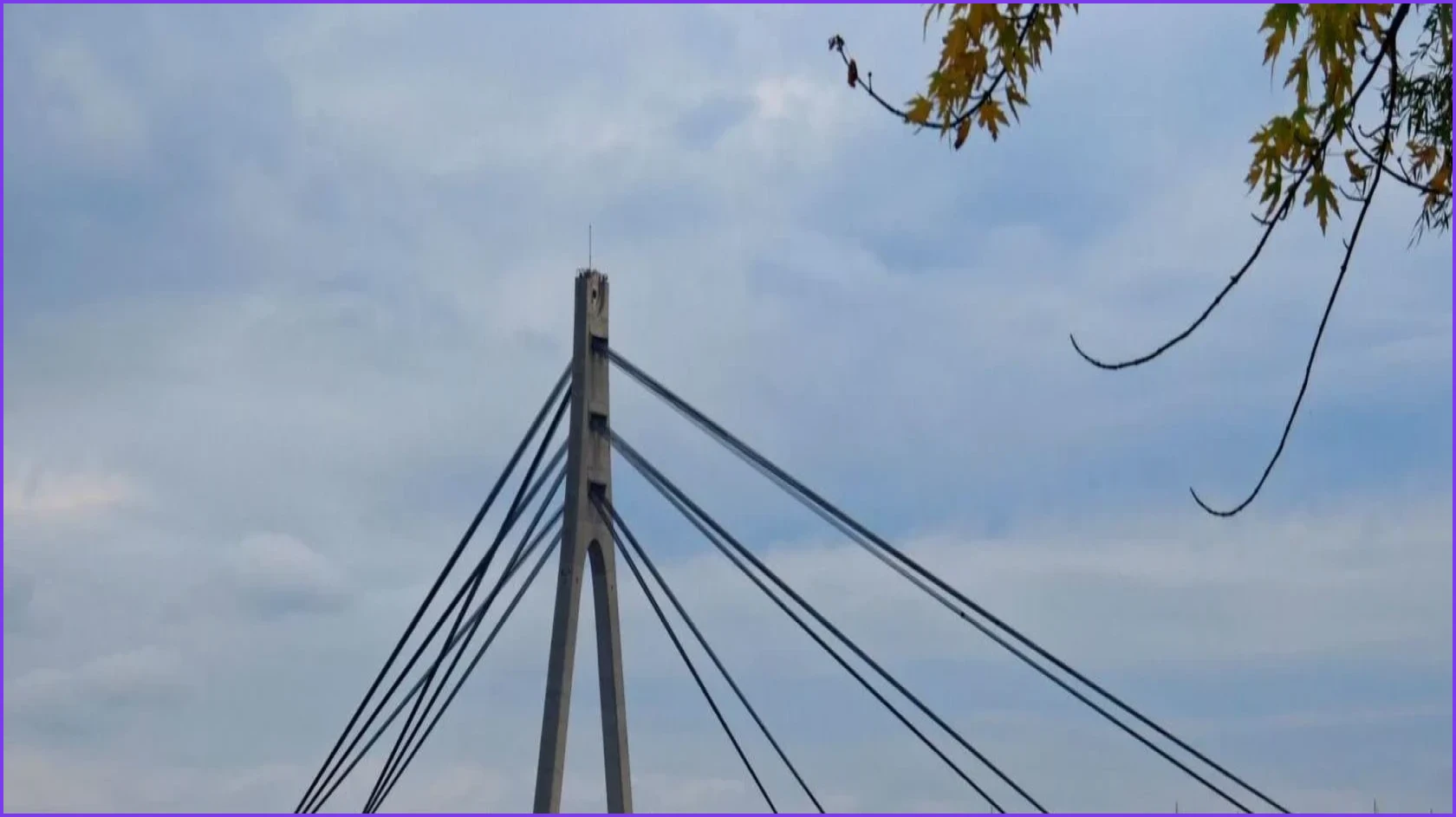
Kyiv Mayor Vitali Klitschko has announced that a Russian strike hit the Northern Bridge on Saturday morning, marking the second major bridge in the Ukrainian capital to be targeted by Moscow in recent days. The attack caused damage to the road surface and the trolleybus overhead wires, resulting in the blockage of traffic from the left to the right bank of the city. Emergency services were dispatched to the site immediately following the incident.
This strike follows multiple drone attacks on the Southern Bridge, also known as the Pivdennyi bridge, which occurred on Thursday and Friday. These earlier assaults caused significant travel disruption, forcing the suspension of both metro and car transit across the structure. The Northern and Southern bridges, which serve as vital connections between the eastern and western parts of Kyiv, had not been hit prior to Thursday, a development that signals a new stage in Moscow's military campaign.
The city's three million residents, many of whom rely on the metro for daily transit, are facing a "very dramatic situation" according to Klitschko. The mayor warned that Moscow is systematically battering the capital's critical infrastructure, logistics, and housing. Following the attacks on the Southern Bridge, Kyiv's defence council held a crisis meeting on Friday to address the escalating threat.
Ukrainian President Volodymyr Zelensky stated that the Russian leadership has decided there are "no rules now" in their approach to the conflict. In an interview with the Financial Times, Zelensky claimed that Russia is attempting to destroy bridges, data centres, mobile networks, and public facilities such as hospitals, kindergartens, schools, and universities to force residents to flee their cities. While Russian President Vladimir Putin has claimed these actions are a response to Ukrainian strikes on Russian energy facilities, Moscow had initiated such attacks on Ukrainian infrastructure first.
During the Thursday attack on the Southern Bridge, passengers reported that dust from the blast wave entered their train carriages through the ventilation system. The ongoing targeting of these key transport links has led to major traffic delays across the city, further complicating the humanitarian and logistical challenges faced by the capital.