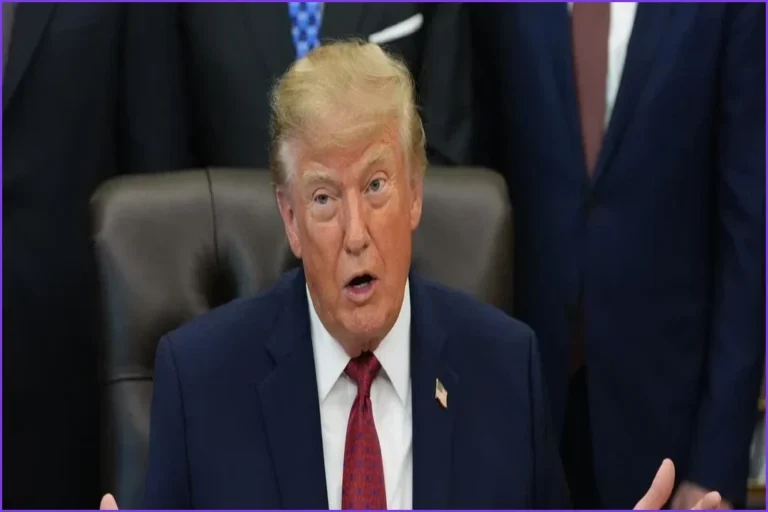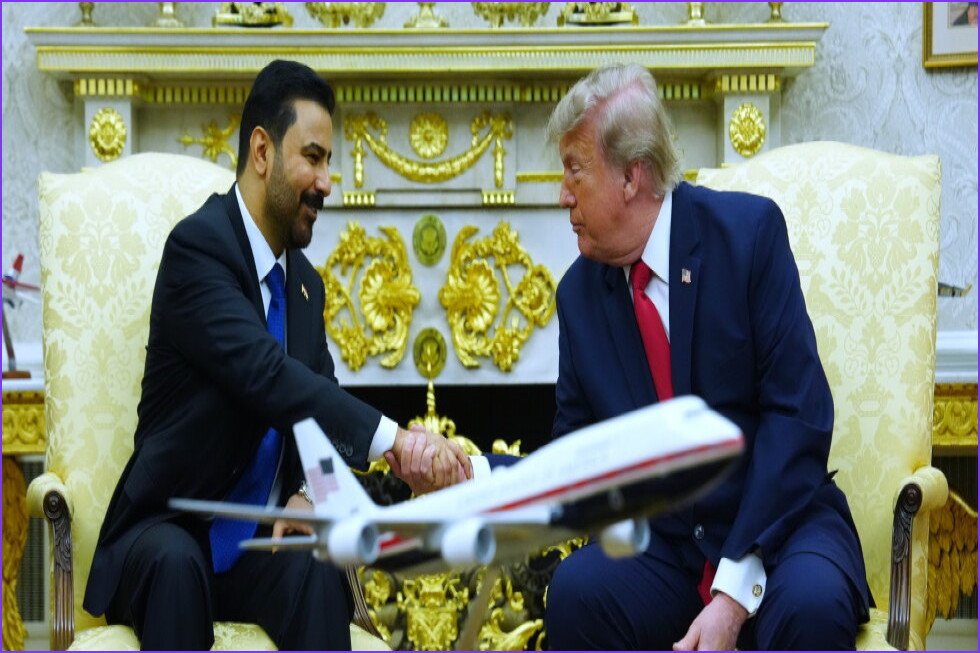
President Donald Trump hosted Iraq’s new prime minister, Ali al-Zaidi, at the White House on Tuesday, July 14, 2026, marking the Iraqi leader's first official visit outside his country since taking office. During the meeting in the Oval Office, President Trump spoke warmly of the “tremendous chemistry” between the two, drawing parallels between their shared backgrounds as wealthy businessmen who entered the political sphere without prior experience. Trump, who had previously threatened to cut off U.S. support for Iraq if a different candidate were chosen following last year’s parliamentary deadlock, expressed strong confidence in his guest. “Mark my words, I knew what I was doing,” Trump stated. “This man is going to be a great leader in the Middle East, beyond Iraq. His influence is going to spread all throughout the Middle East.”
Al-Zaidi, who emerged as a consensus candidate in April after months of political instability, spoke through an interpreter to convey greetings from what he described as the “oldest civilization in the world.” He emphasized that the primary objective of his Washington visit is to establish a robust “economic partnership” between the two nations. To this end, his delegation includes various Iraqi businessmen and government officials. The administration of the Iraqi premier is focused on attracting foreign investment, expanding the role of U.S. companies in infrastructure projects, and further developing the country’s energy sector.
A significant component of this economic agenda involves a major energy infrastructure project. Two Iraqi officials, speaking on condition of anonymity, confirmed that an agreement is scheduled to be signed on Friday between Iraq, U.S. companies Chevron and TI Capital, and Qatar’s UCC. The project entails the construction of an oil pipeline stretching from Basra in southern Iraq to Haditha in western Iraq, eventually connecting to the Ceyhan port in Turkey and the port of Baniyas on the Syrian coast. The pipeline is projected to transport approximately 2 million barrels of oil per day. A senior Trump administration official noted that the U.S. is currently “facilitating conversation” between Iraq and Syria regarding these future energy initiatives.
Despite the focus on economic development, the influence of Iran remains a central point of tension in U.S.-Iraq relations. The U.S. has been applying significant pressure on the Iraqi government to disarm a network of Iran-backed militias operating within its borders. These groups have been linked to attacks on U.S. bases and diplomatic facilities following the start of the war between the U.S., Israel, and Iran in February. While the Iraqi government has officially mandated that these non-state armed groups must disarm by September 30, some of the most powerful militias have publicly stated they have no intention of complying. Al-Zaidi asserted on Tuesday that there will be no justification for the existence of these groups after the September 30 deadline.
A senior Trump administration official stated ahead of the meeting that the U.S. will make “informed” decisions regarding its future support based on Iraq’s tangible efforts to disarm these Iranian-backed factions. The political landscape remains fraught with complexity, as al-Zaidi must navigate the interests of the Coordination Framework, a powerful coalition of Shiite parties allied with Iran that initially supported former Prime Minister Nouri al-Maliki. Analysts suggest that al-Zaidi faces a difficult path. Victoria Taylor, director of the Iraq Initiative at the Atlantic Council, noted that while al-Zaidi is often called the “Trump of the Middle East” due to his business success, he remains beholden to the existing political infrastructure that selected him. She expressed uncertainty regarding his ability to dismantle core parts of the political system or successfully challenge entrenched corruption.
Since taking office, al-Zaidi has attempted to demonstrate a commitment to reform by conducting raids and arresting dozens of current and former government officials, including some associated with former Prime Minister Mohammed Shia al-Sudani. However, his past as the chairman of Al-Janoob Islamic Bank—which was banned by Iraq’s central bank in 2024 from dealing in dollars due to U.S. pressure regarding money laundering and funding for Iran—remains a point of historical scrutiny. When questioned about Trump’s previous remarks regarding the 2020 killing of Iranian General Qassem Soleimani, al-Zaidi sidestepped the issue, stating, “At that time, I wasn’t involved in politics. Let’s talk about the future.”
Renad Mansour, director of the Iraq Initiative at the Chatham House think tank, highlighted the precarious position of the new prime minister. He noted that while the U.S. will likely demand progress on disarmament, al-Zaidi will likely request increased intelligence, technical, and armed support in return. Mansour warned that there is a significant risk that if the Iraqi government moves aggressively against these militias, the groups might retaliate against the state itself, a scenario that has caused apprehension within the Iraqi government.