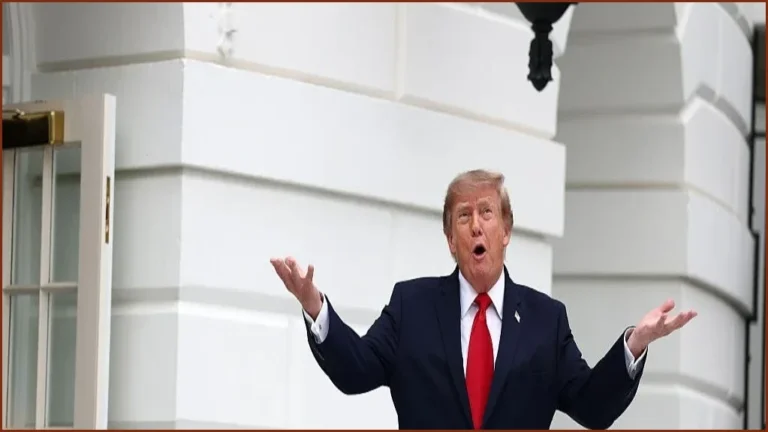
President Donald Trump has endured a humbling series of setbacks in recent days, facing adversity in both minor administrative matters and major political challenges that could define the remainder of his presidential term. From a failed renovation project at a Washington landmark to the difficult confirmation process for his pick to lead the Justice Department, and increasingly complex efforts to manage the conflict with Iran, the president is grappling with issues that are often of his own making. Despite the mounting evidence, Trump continues to rely on his familiar first-term strategy of asserting his own reality through what he calls alternative facts, often sticking to his beliefs even when confronted with contradictory information.
Unlike his first term, where his most notable conflicts were with internal dissenters, Trump is now finding himself at odds with some of his most loyal supporters. A primary example is US Attorney Jeanine Pirro, a former Fox News host and staunch ally. On Friday, Pirro moved to drop felony destruction of property charges against former Olympian David Hearn, who had been accused by federal prosecutors of intentionally damaging the Reflecting Pool near the Washington Monument. In a 20-page court filing, Pirro explained that the damage was actually the result of a botched installation rather than an act of vandalism. She further attributed her initial decision to prosecute Hearn to misleading information provided by the Department of Interior. Recognizing that the evidence would not hold up before a judge or a potentially skeptical jury, Pirro abandoned the case. Trump, who had enthusiastically supported the vandalism narrative, publicly criticized her decision on Truth Social and again in comments from the Oval Office on Monday, stating that she had folded like an umbrella.
Simultaneously, Trump's nominee for attorney general, his former criminal defense attorney Todd Blanche, encountered significant resistance on Capitol Hill. Republican senators John Cornyn of Texas and Thom Tillis of North Carolina joined Democrats to block Blanche’s nomination, demanding that he formally disavow any attempts to revive a proposed $1.8 billion fund. This fund was intended to compensate individuals who claimed to be targets of politicized government prosecution, with Senator Tillis labeling it a payout pot for punks due to concerns it could be used to compensate those prosecuted for the 2021 US Capitol riot. Although Trump initially insisted on Truth Social that he would keep Blanche as acting attorney general and continue to push for the fund, the political math in the Senate proved undeniable. By Sunday, Blanche had acceded to the senators' demands, releasing two letters that satisfied their concerns. When asked about the documents on Monday, Trump claimed he had not looked at them, noting only that he understood there had been a sign-off and maintaining that Blanche would do a great job.
While these domestic issues occupy the president's attention, they remain secondary to the growing concerns regarding the war with Iran. Trump has accused Iran of deceit amid a cycle of on-again, off-again negotiations and threats of American military action. On Monday, Trump condemned what he described as Iranian duplicity after Iran denied any new direct discussions, despite Trump’s previous claims that he had called off a massive attack—which he described as the biggest since World War II—at the request of Iranian officials and Arab intermediaries. This pattern of conflicting narratives has become a recurring theme in his diplomatic efforts.
These ongoing struggles are occurring against a backdrop of historic unpopularity. Recent public-opinion surveys from the Associated Press, CNN, Quinnipiac, and YouGov place Trump’s approval rating at 33%, a level that matches or falls below his ratings following the Capitol riot and is higher only than that of Richard Nixon among second-term presidents. Trump has repeatedly dismissed these findings, claiming on Truth Social that his real polling numbers are the best they have ever been and accusing the media of fabricating the data. With congressional midterm elections approaching in three months, the president’s ability to overcome these daunting poll numbers and internal administrative friction will serve as the ultimate measure of his political fate.
If Iranians are misrepresenting the status of talks it wouldn't be the first time – but it also wouldn't be the first time Trump has seemingly taken their assurances at face value and heralded a new diplomatic breakthrough.
The end of Trump's 'anti-weaponisation' fund is another sign Republicans are fighting back