A horrific wrong-way motorway collision in Ireland that killed five teenagers and critically injured a family of four has ignited intense public outrage and a national debate over a dangerous social media trend. The crash, which occurred on the M9 motorway, has been linked to a macabre online phenomenon where youths film highly reckless driving to gain traction and validation on platforms like TikTok.
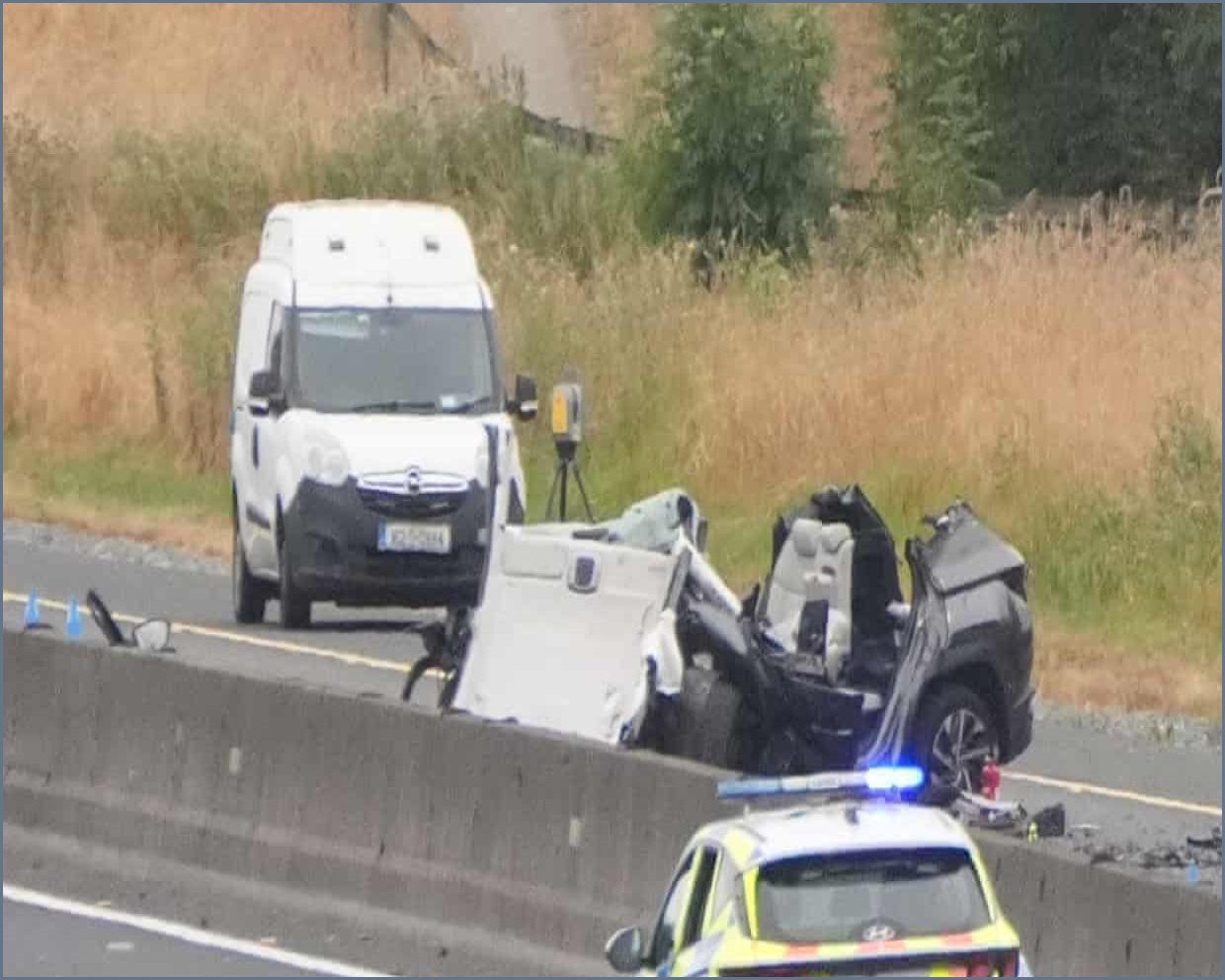
In the early hours of August 16, a group of young males broke into homes and cars in County Kildare, southwest of Dublin. Police believe the masked occupants of a BMW then attempted to bait patrol cars into a pursuit. At approximately 3:00 a.m., the BMW drove the wrong way down the M9 motorway and collided with a Hyundai. The family in the Hyundai—three sisters in their 20s and 30s, Ella Hendricken, Niamh Kinsella, and Alma Kinsella, along with Alma's seven-year-old son—suffered critical injuries. They had been traveling to Dublin airport to attend a family wedding in the UK.
The collision claimed the lives of all five boys inside the BMW: Joe Carthy, 15; Kamil Pustkowski, 17; Jack Kennedy, 17; Alex McCarthy, 17; and Jeremy O’Brien, 18. All five were known to police, and three were also known to Tusla, the national child welfare agency. Several of the teenagers had previously posted videos of reckless driving, historically referred to as joyriding.
While seeking excitement and peer admiration is not a new phenomenon, experts say social media has significantly amplified the behavior. Mary Aiken, a professor of forensic cyberpsychology at the University of East London, described it as "hybrid behavior." She explained that while driving, they are simultaneously filming and capturing content for later posting or live streaming, keeping one foot in the real world and one foot in cyberspace. According to Aiken, cyberspace is psychologically immersive and can amplify a predisposition to taking risks while ignoring consequences, as participants are primarily thinking about the likes and kudos.
The tragedy has sparked a severe political backlash against social media platforms. TikTok recently rejected an invitation to address an Irish parliamentary committee on media, citing the ongoing police investigation and a separate probe by the media regulator, Coimisiún na Meán. The platform also noted that no other social media companies had been asked to attend. Alan Kelly, the committee's chair, condemned the refusal as a "slap in the face" to the Irish public. In response to the crash, other politicians have demanded tougher penalties for dangerous driving, including classifying wrong-way driving on a motorway as attempted murder.
The incident has also highlighted long-standing frustrations regarding police pursuit capabilities. Irish police officers with An Garda Síochána are currently not trained in vehicle pursuit and can be held personally liable if a pursuit ends in disaster. Earlier this year, British driver training experts from the Devon and Cornwall police began tutoring Garda instructors. Graham Kavanagh, a recently retired Garda officer who is now developing a community safety toolkit for the voluntary organization Muintir na Tíre, noted that reckless joyriding for thrills is a decades-old issue. Kavanagh emphasized that while police can try to intercept such drivers, a broader societal intervention involving parents, teachers, and social workers must happen years earlier to stop troubled youth before they travel the wrong way in life.
The aftermath of the crash has deeply polarized public reaction. A fundraising appeal for the injured family has raised more than €660,000 (£565,000), and a community vigil was planned in County Carlow. In contrast, intense online abuse directed at the deceased teenagers prompted their families to withdraw public funeral notices. The first funeral, for Alex McCarthy, was held in Athy, where family members wore T-shirts bearing his photograph and a horse-drawn carriage transported his casket under distant police monitoring. Denis Nulty, the Bishop of Kildare and Leighlin, urged the public to show compassion and avoid wounding language, calling on society to focus on improving behavior rather than pillorying the dead.