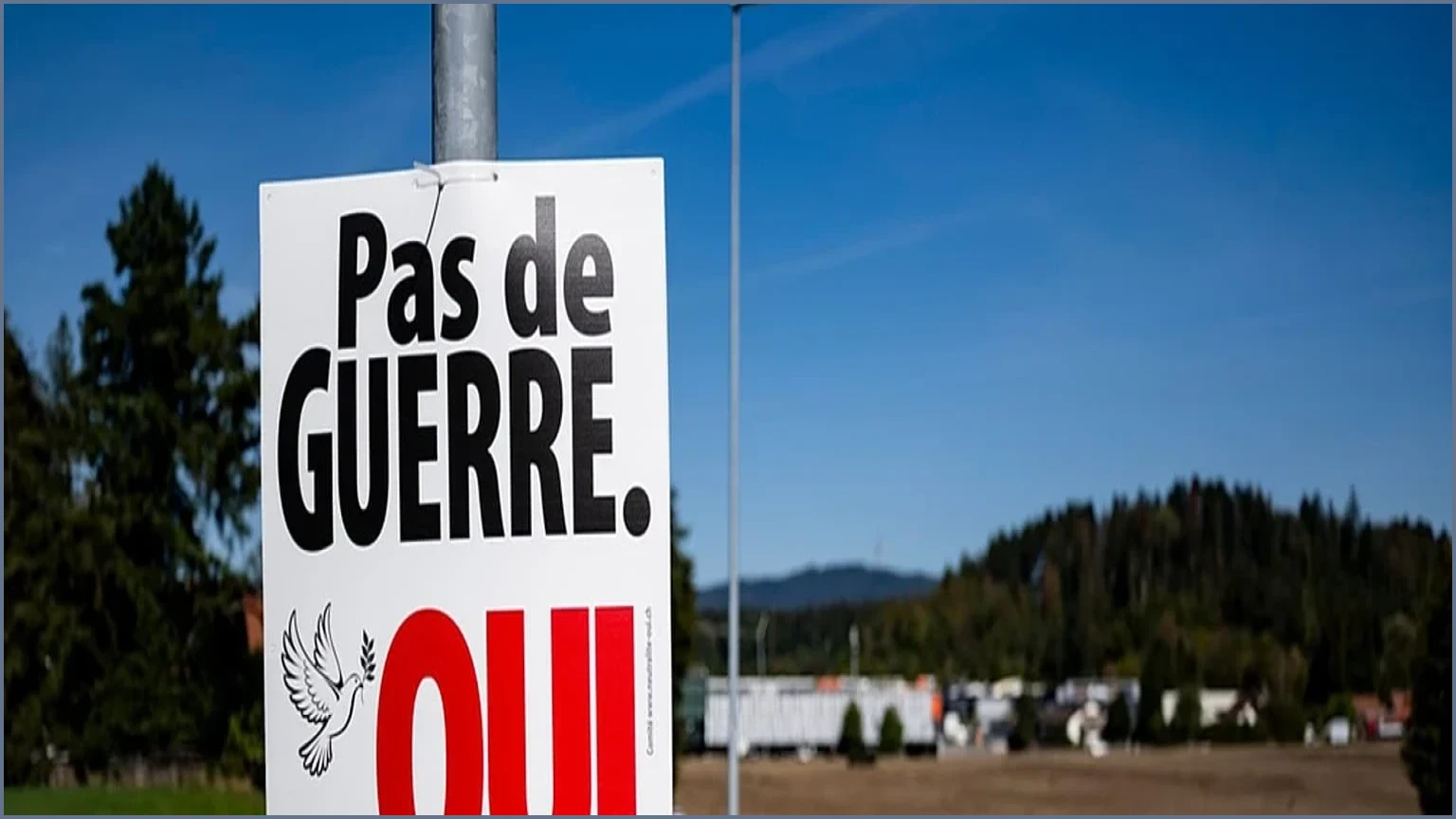
In a decisive result during Sunday’s nationwide referendum, Swiss voters overwhelmingly rejected a proposal aimed at codifying stricter neutrality for the country. Official results published by the Swiss government confirm that approximately 70% of voters opposed the measure, with the initiative failing to secure a majority in any of the 26 Swiss cantons.
The proposed "neutrality initiative," which sought to enshrine "perpetual and armed neutrality" into the Swiss constitution, was primarily championed by the far-right Swiss People's Party (SVP). Influential party figure and billionaire Christoph Blocher led the campaign, which utilized the slogan "No to war." Despite the initiative's defeat being widely anticipated—with the foreign ministry in Bern reportedly forecasting the outcome weeks in advance—Blocher contributed 3.8 million Swiss francs to the campaign, marking what is cited as the largest individual donation ever made to a Swiss referendum effort.
Had it passed, the initiative would have severely restricted Switzerland’s capacity to impose sanctions on other nations, permitting such measures only if they were approved by the United Nations. Critics, including members of the Swiss National Council, argued that this would have effectively tied the country's hands regarding its response to international aggression, specifically highlighting the ongoing war in Ukraine. Susanne Vincenz-Stauffacher warned that such rigid definitions could prevent Switzerland from sanctioning aggressors, potentially leaving the nation appearing to support them. Marianne Binder of the Centre Party also sharply criticized the initiative, suggesting that its proponents had lost their way.
Swiss Foreign Minister Ignazio Cassis addressed the results at a press conference, emphasizing that the vote was not a rejection of neutrality itself. "Switzerland was neutral yesterday, it will be neutral today and it will remain neutral," he stated. The Swiss government maintains a policy of "cooperative neutrality," which allows the country to remain militarily non-aligned while still imposing sanctions when deemed necessary to uphold international law. While the initiative also sought to limit military cooperation with NATO to instances of imminent attack, the government continues to advocate for closer cooperation with the alliance, a stance supported by Defence Minister Martin Pfister.
The referendum was part of the regular cycle of direct democracy in Switzerland, where citizens vote on legislative and constitutional questions four times annually. Despite the rejection of this specific proposal, support for the concept of neutrality remains a cornerstone of Swiss national identity.
That would have limited Switzerland's ability to adopt sanctions against Russia, which holds veto power as one of the five permanent members of the UN Security Council.
However, the interpretation of that neutrality has been the subject of political debate for years, particularly since Russia's invasion of Ukraine.