Palestinian election officials are actively preparing up to 110 polling stations in Gaza to accommodate approximately 1.25 million voters for the upcoming legislative elections scheduled for November 28. Despite severe infrastructure damage from Israeli military actions and persistent security risks, the Palestinian Central Elections Commission is moving forward with technical and logistical arrangements.
Jamil al-Khalidi, the commission's regional director in Gaza, identified security as the primary obstacle to executing the vote successfully. He emphasized that a safe environment is critical for voters, candidates, political parties, election personnel, and observers alike. Al-Khalidi called on the international community to assist in establishing conditions that would allow all participants to operate safely and freely, while expressing hope that international observers would be permitted to monitor the voting process alongside local watchdogs.
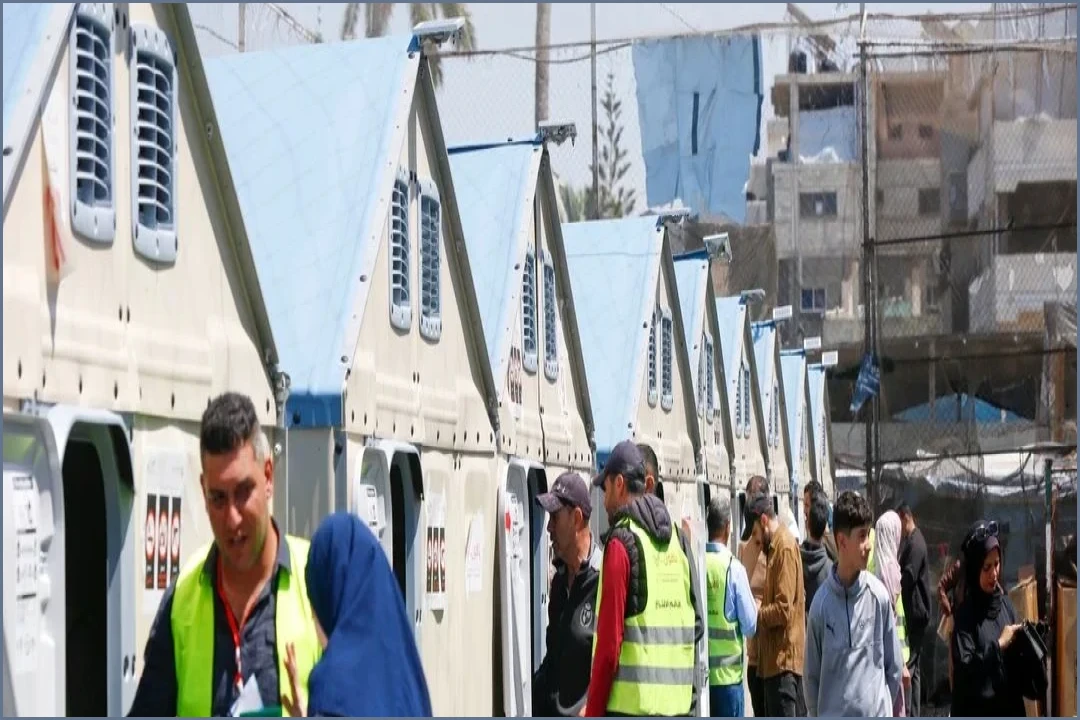
The extensive destruction across Gaza has severely complicated the selection of viable polling locations. To address this, the commission is collaborating with the Education Ministry to identify schools that remain structurally accessible and can be repurposed as polling stations. Current plans aim to establish between 100 and 110 polling centres throughout the enclave. Al-Khalidi noted that the physical devastation has not dampened public enthusiasm, pointing to a strong determination among Palestinians to vote despite years of severe hardship. He recalled that during municipal elections in April in the central Gaza city of Deir al Balah—the city's first local vote in 22 years—tents were successfully utilized as makeshift polling stations.
Anticipating potential blockades or import restrictions, the commission has formulated contingency plans for sensitive election materials. Al-Khalidi explained that if standard ballot boxes, ballot papers, or electoral ink cannot be imported into Gaza, the commission has prepared practical and acceptable alternatives that comply with international standards. He maintained that there are no insurmountable technical barriers to the election, provided that security conditions allow the process to move forward.
The scheduled November 28 vote represents the first Palestinian legislative election since 2006 and only the third since the creation of the Palestinian Legislative Council. Al-Khalidi characterized the return to democratic voting after nearly two decades as a vital step toward restoring political stability, observing that the experiences of the last 20 years demonstrate that elections are the path out of political crises and internal disagreements. While acknowledging that elections alone cannot resolve every political dispute, he described them as an essential first step that can expand political participation, foster unified decision-making, and help mend years of political division.
Candidate registration officially commenced on Saturday, with five party and independent lists submitting their applications within the first hour. Al-Khalidi viewed this rapid early turnout as a positive indicator of strong public and political engagement. The registration window will remain open until October 7, and the official campaign period is set to begin on November 6. Security forces are scheduled to cast their ballots early on November 26, two days before the general election.
The election timeline follows a decree issued in July by Palestinian President Mahmoud Abbas, which slated the legislative vote for Gaza, the occupied West Bank, and occupied East Jerusalem. The Palestinian Legislative Council has been inactive since 2007 due to internal political divisions and was formally dissolved by the Constitutional Court in 2018. The last attempt to hold legislative and presidential elections in 2021 was indefinitely postponed by Abbas, who cited a lack of security assurances from Israel regarding the participation of Palestinians living in occupied East Jerusalem.