Sweden's political landscape is facing heightened scrutiny following a major pivot by the Centre Party, whose campaign built substantial support among foreign-born and newly naturalised voters on explicit pledges to champion immigrant rights and block the far-right Sweden Democrats from power. A total of 475,000 citizens—nearly half a million voters—cast their ballots for the Centre Party in the general election, drawn by its resolute liberal stance on immigration and social integration.
In the twelve months leading up to the election, the Centre Party maintained steady pressure on the government concerning the deportation of young adults, integrated working foreign residents, and British citizens. In the campaign, it promised more. Bringing back transitional rules for citizenship applicants was number one on the party's priority list for after the election, or perhaps second after teen deportations, immigration spokesperson Niels Paarup-Petersen told The Local.
The Centre Party's official manifesto reinforced these commitments by outlining plans to eliminate the salary threshold required for work permits, end what it termed "absurd deportations" of skilled foreign workers, and introduce dedicated start-up visas to attract foreign entrepreneurs. However, the centerpiece of the party's election offering was an unequivocal refusal to support any government reliant on votes from the anti-immigration Sweden Democrats.
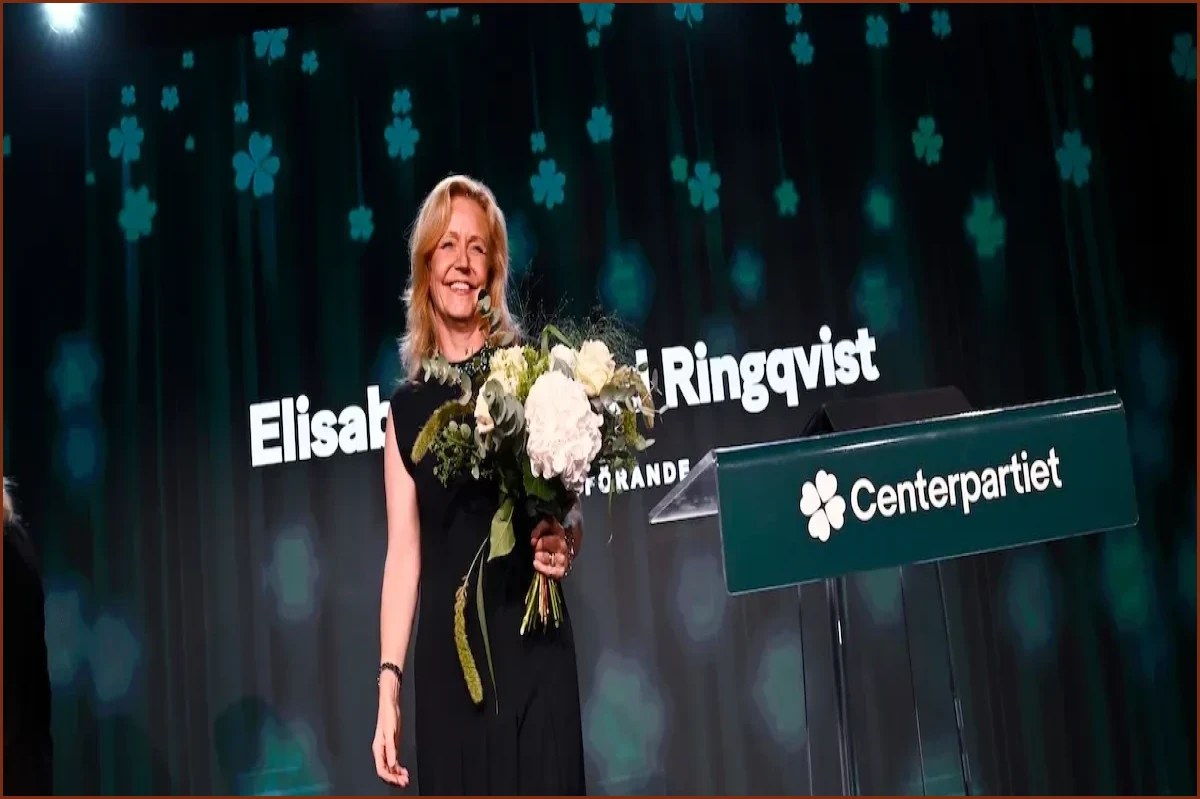
Party leader Elisabeth Thand-Ringqvist, who assumed leadership in November of last year, made this stance her defining promise to the electorate. She positioned the Centre Party as the sole political force capable of advancing pro-business, economically liberal policies while simultaneously locking out Sweden Democrat influence. This strategy successfully attracted former supporters of both the Moderate Party and the Liberal Party. Among them was Abhishek Mishra, who abandoned his support for the Moderate Party specifically over the issue of transitional citizenship rules. In the month preceding the election, this distinct positioning helped elevate the Centre Party to 8 percent in public opinion polls, while the ideologically similar Liberal Party hovered at just 2 percent.
Throughout her tenure, Thand-Ringqvist faced weekly inquiries from journalists regarding her political red lines. While she occasionally specified ministers or direct cabinet participation by the Sweden Democrats, her standard response firmly ruled out enabling any government that depended on far-right support in any form. So when she abandoned this position last Friday, it was already a betrayal of all the voters who took her at her word—many of those foreign-born, and many of them readers of The Local.
During the announcement, Thand-Ringqvist requested competing total packages of policies and government configurations from prime ministerial candidates, yet omitted any requirement to soften or reverse the stringent immigration reforms enacted over the previous four years. Observers note that if the Centre Party ultimately decides to support or enter a government headed by Moderate Party leader Ulf Kristersson, critics will regard the move as one of the most substantial political reversals in modern Swedish history.
The party leader nonetheless finds herself in a challenging tactical position. Acceding to the Left Party's demand for cabinet posts would alienate right-leaning Centre Party supporters. Proponents of aligning with Kristersson argue it represents the least illiberal path available, given that Thand-Ringqvist previously pledged never to support a government featuring Left Party ministers. Under such an arrangement, the Sweden Democrats would not hold cabinet positions, although they would retain the parliamentary power to bring down a minority Kristersson administration and block legislation.
Critics counter that this framing overlooks the fundamental premise of the Centre Party's campaign, which explicitly backed Social Democrat leader Magdalena Andersson for prime minister. Voters who chose the Centre Party were largely voting for an Andersson-led government coupled with centre-right economic governance. Without that prime ministerial endorsement, questions remain over whether the party would have captured even half of its ultimate vote total, prompting concerns that around one hundred thousand economically liberal, anti-Sweden Democrat voters have seen their support redirected toward the conservative block.
Precedent for complex coalition maneuvering exists in Swedish politics. In 2019, following the 2018 general election, the Centre Party and the Liberal Party facilitated a Social Democrat prime minister taking office despite having campaigned for Kristersson, securing substantial policy concessions in exchange. A similar outcome could theoretically yield manifesto wins for the Centre Party today, such as securing grandfathering clauses so citizenship applications submitted prior to legislative tightening are evaluated under older, less restrictive rules.
However, the absence of an absolute majority leaves such compromise vulnerable to far-right leverage. Sweden Democrat leader Jimmie Åkesson, well-versed in Danish political history, recognizes how the Danish People's Party exerted parliamentary influence over minority governments in Denmark during the 2000s and after 2015. Through that leverage, the Danish far right secured some of Europe's strictest immigration laws without formally assuming ministerial responsibility. In Sweden, the Sweden Democrats could similarly threaten to block future government budgets unless ministers proceed with contentious proposals, including the potential revocation of existing permanent residency permits.
This sudden realignment highlights the rapid shifts occurring within Sweden's "åsiktkorridor"—the traditionally narrow range of acceptable public debate. Political stances once considered outlandish and ruled out by commentators are quickly becoming accepted practice. Should Thand-Ringqvist clear the path for Kristersson's return as prime minister, the Swedish political system may rapidly adjust, though foreign-born and newly naturalised voters who trusted the party's initial pledges are unlikely to view the turn of events lightly.