Spanish fisheries giant Nueva Pescanova has officially abandoned its controversial €65 million (£56 million) plans to build the world's first industrial-scale octopus farm in the Canary Islands. The decision, which came to light at the end of July 2026, ends years of intense ethical and environmental debate.
The company had initially announced the project in 2022, aiming to construct the farm and processing plant near the port of Las Palmas on Gran Canaria.
Nueva Pescanova had projected that the facility would produce 3,000 tonnes of octopus annually by 2025, despite the well-known difficulties of farming these highly intelligent marine creatures.
While the company did not respond to requests for comment, it cited "business and regulatory" reasons in a letter sent to the Canary Islands' port authority. Port authority sources confirmed that no construction work had ever commenced on the site, and they had not been recently contacted by the company.
Spain's animal rights party, Pacma, celebrated the cancellation as a major victory, describing the proposed farm as an "ethical and environmental atrocity" that collapsed under social, scientific, and political pressure.
The project had faced hostility from its inception. In 2023, Roberto Romero Pérez, the marine biologist overseeing aquaculture at Nueva Pescanova, admitted that the public mood was "a bit more hostile than expected." However, local journalist Silvia Fernández Díaz of Canarias7 noted that protests on the island were relatively small, rarely drawing more than a few dozen participants.
Beyond public protests, scientific hurdles remain a massive barrier to octopus aquaculture. Ian Gleadall, a marine biologist at Tohoku University in Japan with 50 years of experience, compared the situation to Japanese fisheries firm Nissui, which previously claimed to have mastered octopus farming but never achieved commercial production.
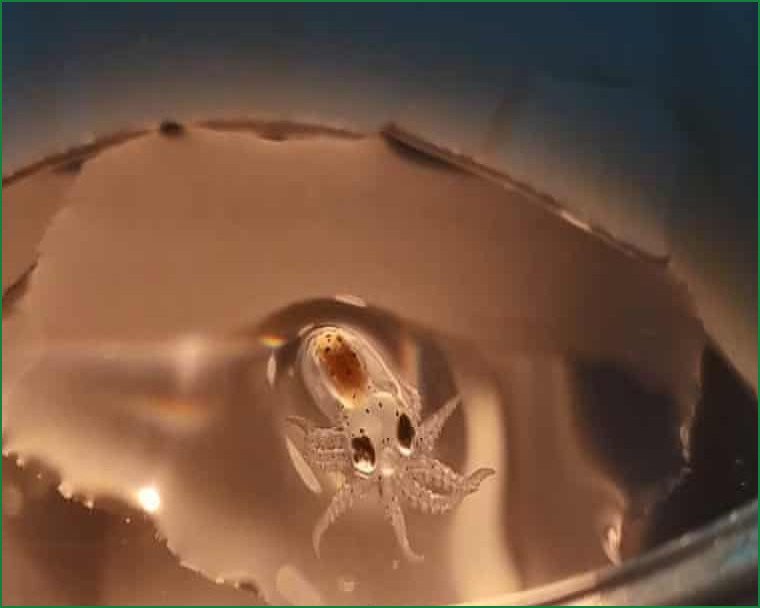
Gleadall, who spent two years trying to get updates from Nueva Pescanova, explained that common octopus larvae must float in water for at least 20 days before settling on the seabed. During this phase, the hatchlings are incredibly delicate and highly prone to dying if any environmental factor fluctuates.
Feeding also presents a major obstacle. Gleadall noted that while octopuses can be fed a fish paste, they are highly finicky eaters that refuse to consume the same food repeatedly. Furthermore, the cost of feed would likely exceed the market value of the octopus itself.
Currently, the only successful octopus cultivation occurred in a small-scale Mexican project, which farmed a different species than the common octopus (Octopus vulgaris) found in the Atlantic and Mediterranean.
Ethical concerns have also driven opposition, bolstered by studies showing strong evidence of octopus sentience. Richard Schweid, author of "Life on the Octopus Farm," pointed out that many marine biologists believe octopuses possess nine brains and a distinct mind, traits usually linked to higher mammals like dogs, cats, primates, and humans.
This perception was amplified five years ago by Craig Foster's Oscar-winning documentary, "My Octopus Teacher," which depicted a reciprocal relationship with a female octopus. Schweid observed that humans easily anthropomorphize octopuses because they are highly responsive and intelligent, yet fundamentally different from us.
Conversely, Schweid noted that octopuses grow rapidly, have short lifespans, and offer high-protein, low-fat meat. Their feed-to-meat conversion rate is superior to land-based livestock, making them a potentially more sustainable alternative to beef, pork, or poultry in a warming world.
Currently, the UN Food and Agriculture Organization estimates that 370,000 tonnes of wild octopus are caught annually, primarily off Morocco and Mauritania.
China and Japan are the largest markets, while Spain consumes about 40,000 tonnes annually, averaging nearly 1 kilogram per person. Warming oceans are also shifting distributions, with the UK experiencing its largest octopus bloom since 1950 over the last two years.
Despite these market incentives, animal welfare advocates remain firmly opposed to any future farming attempts. Charlotte Reid, a campaigner for Compassion in World Farming, emphasized that octopuses are highly intelligent, solitary wild animals.
She argued that they belong in the wild rather than being confined to "underwater prisons," ensuring that the ethical debate will continue to challenge any future aquaculture ventures.