South Carolina has been officially designated by the Democratic National Committee to host the party's first presidential primary in 2028, a significant shift from the traditional leadoff states of Iowa and New Hampshire. This decision, confirmed on August 15, aims to better reflect the Democratic Party's diverse electorate.
The state's history shows a strong track record of selecting the eventual Democratic nominee, having backed Bill Clinton, Barack Obama, and Joe Biden in their successful presidential runs. Since 1992, whenever a Democrat has won the White House, South Carolina voters have chosen the winning candidate in the primary.
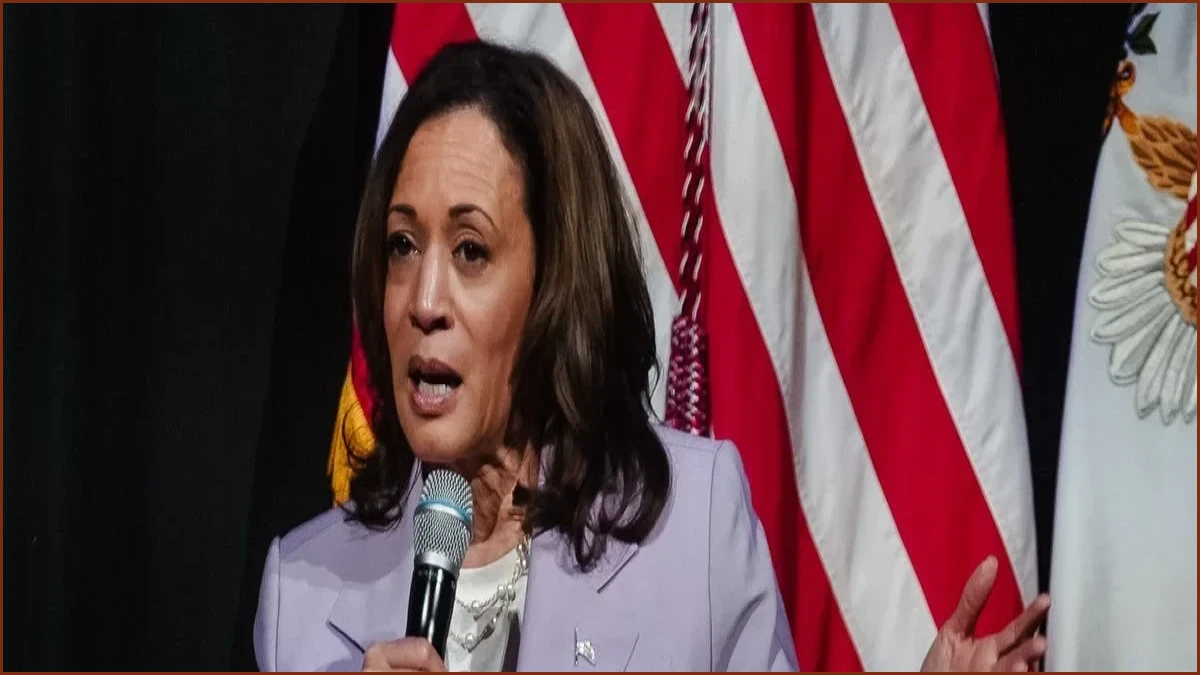
The upcoming January 22, 2028, primary date has already drawn considerable attention from potential presidential hopefuls. Figures like California Gov. Gavin Newsom have made multiple trips to the state as part of the South Carolina Democratic Party's "On the Road" series, designed to connect national and regional Democrats with local communities. Arizona Sen. Mark Kelly participated in a state party town hall in 2025, while Kentucky Gov. Andy Beshear spoke at an SCDP event earlier in 2026. Former Vice President Kamala Harris, the party's 2024 nominee, attended a private fundraiser this year. Maryland Gov. Wes Moore and New Jersey Sen. Cory Booker, a 2020 presidential candidate, also participated in the "On the Road" series.
Political experts view South Carolina as a crucial testing ground for candidates. "Everybody comes here to test the water," said Brent Nelsen, a political science professor at Furman University. "Because we have a significant African American population, it is a great place for Democratic candidates to test their message with one of the main foundational blocks of the Democratic coalition." African Americans constitute over 60% of South Carolina's Democratic primary electorate, representing the party's most reliable voting bloc.
Democratic leaders and political experts in the state suggest that candidates who can appeal to voters' concerns about faith and affordability, and who present a moderate image, are likely to perform best. Christale Spain, chair of the South Carolina Democratic Party, noted that voters tend to be conservative and deeply religious. "It is a part of how you have to campaign in the Deep South. It’s the Bible belt," Spain said, emphasizing that while faith communities are central, candidates from diverse religious backgrounds, like Catholic Joe Biden, can also succeed.
Bakari Sellers, a former member of the South Carolina House of Representatives and political commentator, agreed that being "rooted in faith" is important, highlighting the strength of Black Christianity. He believes candidates need to understand the "power of prayer." Sellers pointed to Pennsylvania Gov. Josh Shapiro, who is Jewish, and Wes Moore, a Southern Baptist, as examples of individuals who can connect with voters on this level.
Rep. Jim Clyburn, South Carolina's sole Democratic congressman and an influential figure, stressed the importance of Black voters not being taken for granted. In an August 3 interview, he stated, "The fact of the matter is you want to win in November. So you ought to put people on the field who demonstrate that they can appeal to all those corners that make up this party." Clyburn also highlighted the need for candidates to inspire turnout, noting that only about 59% of eligible Black voters cast ballots in 2024.
Spain added that successful candidates will be those willing to connect with voters and actively help South Carolina Democrats achieve their goals, such as breaking the Republican supermajority in the State House or electing Democratic candidates to statewide offices. Affordability is another key issue for South Carolina voters. "The candidate that wants to help South Carolina Democrats break the Republican supermajority of the State House. The candidate that wants to help Dr. Anna Andrews become the next junior senator from South Carolina. The candidate that wants to help elect the next Democratic governor in South Carolina," Spain stated. "That's who does well in South Carolina." She also mentioned that candidates need to address issues like the cost of gas, groceries, and access to affordable healthcare and education.
Among candidates generating buzz, Spain mentioned Newsom for his national profile and Booker for his established relationships from his 2020 presidential run. Melissa DeRosa, a national Democratic strategist, called the decision to place South Carolina first a "smart strategic move" by the DNC, rewarding candidates who can build the core Democratic coalition rather than just excite a fringe faction. She believes success will favor candidates who start early, have funding and organization, build relationships, can win over Clyburn, and understand that social media buzz is not a substitute for working-class support.
Sellers expressed skepticism about far-left progressive candidates like Rep. Alexandria Ocasio-Cortez succeeding in South Carolina, stating, "South Carolina is going to cull the herd extremely early." He believes a progressive movement is unlikely to sweep the state. Ocasio-Cortez has not yet announced a 2028 run, while Rep. Ro Khanna, another progressive, has spoken at the state convention this year.
Gibbs Knotts, a political science professor at Coastal Carolina University, noted that South Carolina has often served as a tiebreaker when Iowa and New Hampshire chose different candidates. However, he believes the state's electorate, which tends to be more conservative, will likely favor a moderate Democrat. "Most progressive candidates, I think, will struggle some in South Carolina, given the Democratic electorate and the political culture in the state," Knotts said. Sellers characterized the progressive movement as a "suburban, white, upper crust type of movement" that "doesn't mesh with what we have here in South Carolina."
Sellers' top picks for potential success include Wes Moore, Andy Beshear, and Georgia Sen. Jon Ossoff, all seen as mainstream, pragmatic Democrats. He described Newsom as a "somewhat unknown quantity," questioning if his perceived confidence would resonate well in the state. Nelsen, however, noted an "appetite for change" and a "hunger for something different" among voters, suggesting that candidates like AOC or others could emerge. He would be surprised if a Democratic Socialist of America candidate won but wouldn't rule out a strong showing that could propel them in later primaries.
Spain, who worked on Bernie Sanders' 2016 campaign, remains optimistic about progressives' chances but stressed the need for them to invest in South Carolina and address issues important to the Black community. Potential complications arise from threats by Iowa and New Hampshire Democrats to hold their contests first, despite the DNC's decision.
While early polls suggest Kamala Harris might have an advantage, Knotts questioned her ability to connect with Southern voters, citing the DNC's 2024 autopsy report which identified her inability to energize voters as a key factor in the loss. Sellers and Spain see potential for Harris, but Nelsen is less optimistic, citing a lack of enthusiasm on college campuses and a generally "wide-open field." His top picks are Josh Shapiro, Wes Moore, and Gavin Newsom. Knotts also sees potential for Moore.
With 524 days remaining until the primary, "potential" remains the key descriptor for candidates vying for the South Carolina Democratic nomination.
Spain said while faith communities are part of the political landscape, dominated mostly by Baptists and Methodists, it doesn’t mean that people from other denominations or religions would be at a disadvantage.