A striking new documentary titled NAZA has sparked intense international debate by presenting first-hand accounts from Israeli soldiers and intelligence personnel who detail their roles in the devastating military campaign in Gaza. Directed by Israeli filmmakers Yuval Abraham and Rachel Szor, the 77-minute film offers a rare, behind-the-scenes look at the technical and bureaucratic systems driving the airstrikes that have claimed tens of thousands of Palestinian lives since the conflict escalated on October 7, 2023.
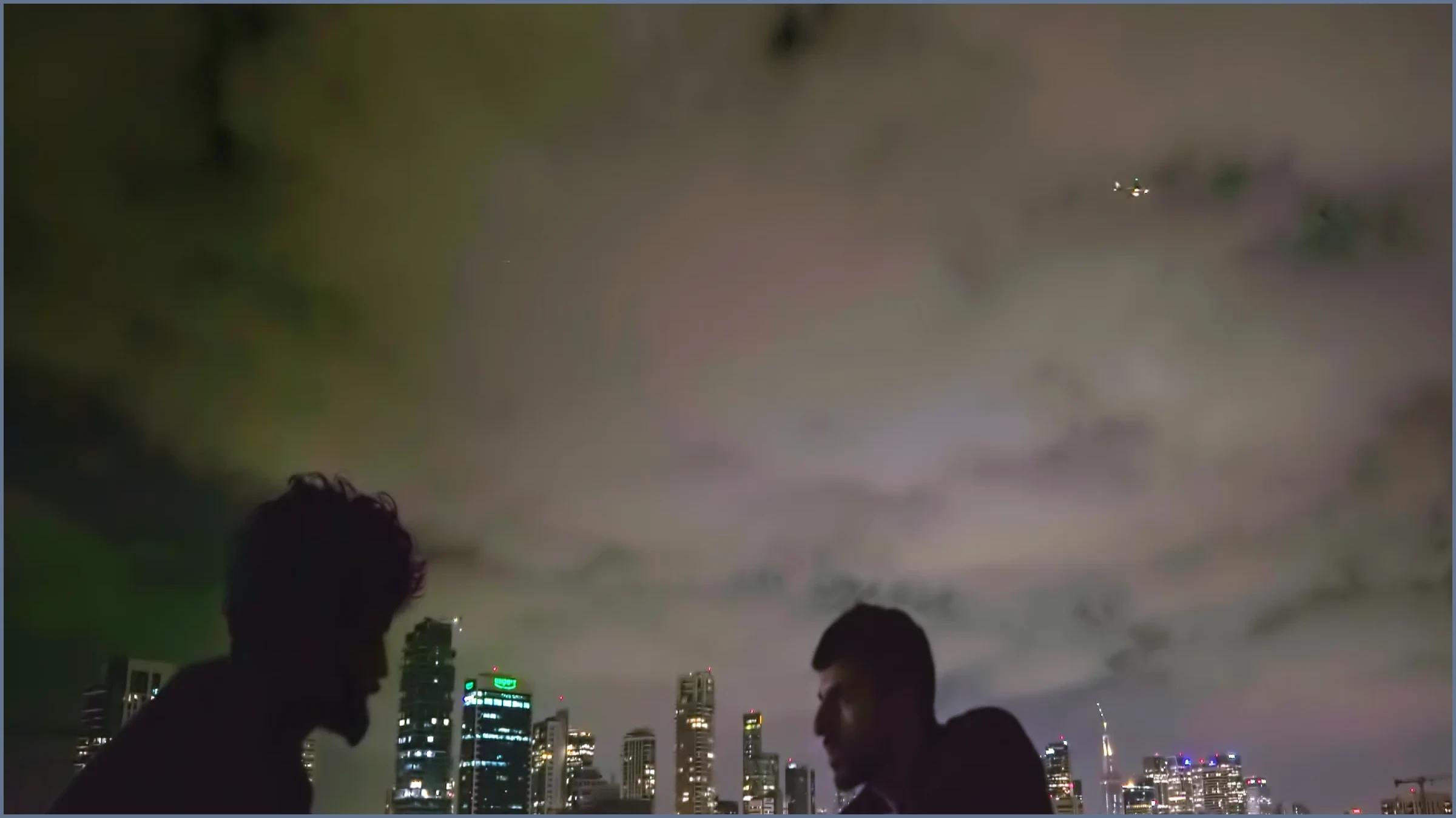
Filmed primarily at night on the rooftops of Tel Aviv, the documentary consists of intimate, one-on-one interviews conducted by Abraham. The 24 subjects featured in the film are cloaked in darkness, with their faces and voices digitally altered to preserve their anonymity. Despite these protective measures, they speak with chilling precision about the mechanics of remote surveillance and targeted killings. These operations were launched in the wake of the Hamas-led attacks on Israel, which resulted in approximately 1,200 deaths and the taking of 250 hostages.
The release of NAZA has triggered widespread outrage, drawing fierce condemnation even from critics who have not viewed it. In Israel, Abraham and Szor have been branded as traitors, and Prime Minister Benjamin Netanyahu has threatened to strip them of their citizenship. The decision to anonymize the military sources has also become a major point of contention. Supporters of Israel argue that the hidden identities discredit the testimonies, while pro-Palestinian advocates criticize the filmmakers for shielding individuals who have admitted to participating in war crimes.
While the film presents these testimonies in a cinematic format, the underlying investigative reporting is already well-documented. Much of the evidence and testimony featured in the documentary was previously published in investigative pieces by Abraham and various Palestinian journalists. These reports appeared in outlets such as the Israeli-Palestinian publication +972 Magazine, the Hebrew-language site Local Call, and The Guardian, which also served as a co-producer for the film.
The title of the documentary, NAZA, is an acronym for nezek agavi, the Hebrew term for "collateral damage." In the context of the Israeli military, the term represents a calculated threshold for acceptable civilian casualties during a strike. For example, a designation of "Twenty NAZA" indicates that up to 20 civilian deaths are authorized to eliminate a single target. For certain high-value targets, the military approved a limit of "500 NAZA"—a figure Abraham points out is equivalent to the entire population of a small Israeli town.
The film methodically explains the logistics behind these operations, highlighting the military's near-total surveillance capabilities. Because Israeli intelligence can hack into any Palestinian mobile phone in Gaza, tracking is constant. Interviewees describe a deliberate practice of targeting suspected Hamas operatives at night, bombing their homes while their wives and children were inside with them. The soldiers also reveal a heavy reliance on artificial intelligence systems to gather intelligence, noting that much of the data generated by these systems was deeply flawed.
One of the most disturbing revelations in the documentary involves a tracking program known as "Where's Daddy?" This system monitors children's communications to confirm if their targeted fathers have returned home. In one segment, a soldier describes using this technology on a 12-year-old girl, explaining the process: "You hack her phone and then you kill her." Later in the film, Abraham asks an interview subject directly if Israel is committing genocide in Gaza. Without hesitation, the subject replies, "Yes. Completely." The film notes that more than 73,000 Palestinians have been killed in Gaza since October 7, with the death toll continuing to rise.
In addition to the modern rooftop interviews, the documentary incorporates archival footage tracing the early days of Israeli intelligence and the development of Tel Aviv in the 1920s. However, Szor's camera focuses heavily on the glittering skyline of contemporary Tel Aviv at night. By capturing ordinary scenes of Israeli citizens exercising, dining, and watching television through their apartment windows, the filmmakers create a quiet, powerful contrast. This imagery serves as a subtle indictment, urging viewers to reflect on the thousands of Palestinian lives cut short—people who were also once simply going about their daily evenings.