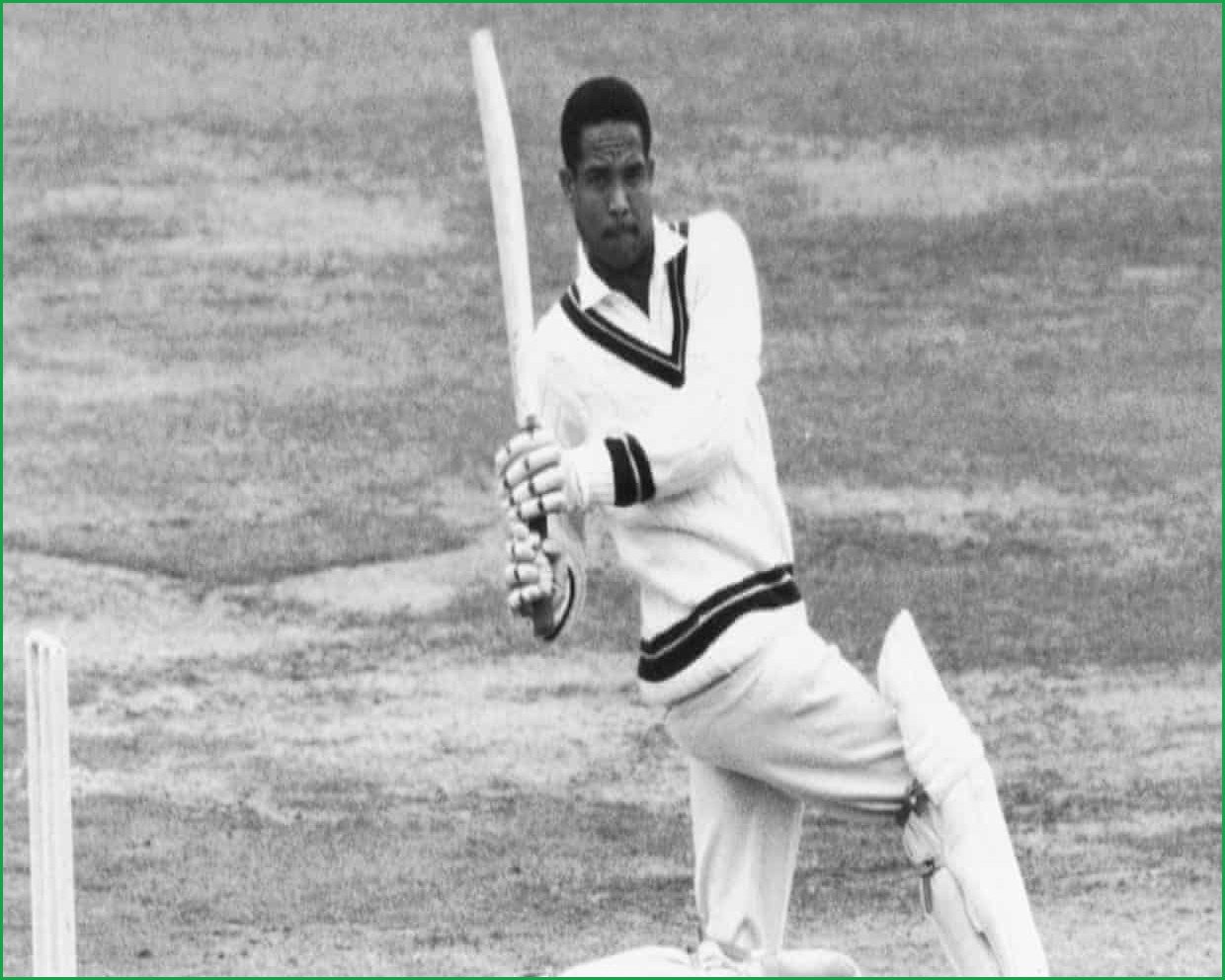
Sir Garry Sobers, an undisputed titan of cricket and a West Indian widely regarded as the greatest all-rounder in the history of the Indian and global game, has died at the age of 89. His illustrious career remains a benchmark for excellence, defined by extraordinary skill across all facets of the game.
Perhaps the most enduring image of his career occurred in 1968 at St Helen’s ground in Swansea. Playing for Nottinghamshire against Glamorgan, Sobers became the first batsman to strike six sixes in a single over of six consecutive balls in first-class cricket. Beyond that singular feat, his contributions to the sport were immense. The late Richie Benaud, a revered broadcaster and former Australia captain, famously hailed him as “the greatest all-round cricketer the world has seen,” praising his brilliance as a batsman, his prowess as a close-in fielder, and his versatility as a bowler capable of delivering both new-ball pace and deceptive spin. Vic Marks noted that Garry Sobers was the greatest of all time.
Sobers’ journey began early, making his first-class debut for Barbados in 1953 at just 16 years old. His talent was so evident that he earned a call-up to the West Indies Test side the following year. By 1958, he had firmly established himself on the global stage, scoring his maiden Test century against Pakistan. That performance evolved into a record-breaking 365 not out, which stood as the highest individual score in a Test innings for 36 years until Brian Lara surpassed it in 1994.
In 1974, at the age of 38, Sobers retired from the game. Reflecting on his departure, Wisden noted that he had become both physically and mentally exhausted. The publication observed that as a victim of his own unique range of talents and the advent of the jet age, he was frequently required to perform at the highest level across the globe without the restorative gaps provided by the long sea voyages of previous eras. Over his career, he played 93 Tests for the West Indies, amassing 8,032 runs at an average of 57.78 and claiming 235 wickets at an average of 34.03. Across 383 first-class matches, he scored over 28,000 runs and took more than 1,000 wickets.
Knighted in 1975 for his services to the sport, his legacy continues to be honored by the International Cricket Council, which awards the Sir Garfield Sobers Trophy to the men’s cricketer of the year.