A fresh wave of overnight attacks between Russia and Ukraine has left seven people dead on the Ukrainian side and injured civilians in both countries, coming immediately after high-level diplomatic discussions between American and Russian officials. Authorities confirmed Thursday that the casualties in Ukraine included three fatalities in Zaporizhzhia, two in Donetsk, one man in Sumy, and one woman in Kharkiv.
In the capital city of Kyiv, Mayor Vitali Klitschko stated on social media that 15 people were wounded during the strikes, with eight requiring hospitalization. The bombardments also inflicted damage on metro infrastructure at the Pivdenny Bridge, forcing officials to limit traffic movement between different parts of Kyiv. Throughout the early morning hours, Ukraine's Airforce issued repeated warnings on Telegram regarding ballistic missiles heading toward Kyiv and sightings of fighter jets, urging residents to seek cover in emergency shelters. By Thursday morning, military officials confirmed shooting down 181 Russian unmanned aerial vehicles (UAVs) overnight, while noting that additional strike drones were still active in the airspace.
Simultaneously, Russian regions were targeted by heavy drone barrages. Moscow Mayor Sergei Sobyanin reported that two people were injured as air defenses intercepted the vast majority of 630 drones directed toward the region, including 163 aimed directly at the capital. Elsewhere in Russia, the governor of Tula announced that air defense systems destroyed 70 drones, while the governor of Lipetsk reported that one man sustained injuries during the attacks.
The rapid military escalation unfolded shortly after US special envoy Steve Witkoff met with Russian President Vladimir Putin in Saint Petersburg to explore pathways toward ending the war. Witkoff characterized the discussions as "constructive" while noting that "important work" remains to be done. Following the meeting, US President Donald Trump remarked that the opposing sides were "maybe now the closest we’ve been" to resolving the conflict, although no formal diplomatic breakthrough was reached.
Following the Saint Petersburg summit, the Kremlin indicated that it is "in principle" prepared to resume trilateral negotiations with Ukraine and the United States, potentially scheduling a meeting for mid-November following the US midterm elections. Ukrainian President Volodymyr Zelenskyy expressed strong backing for renewed trilateral talks, emphasizing that Kyiv desires a meeting as soon as possible.
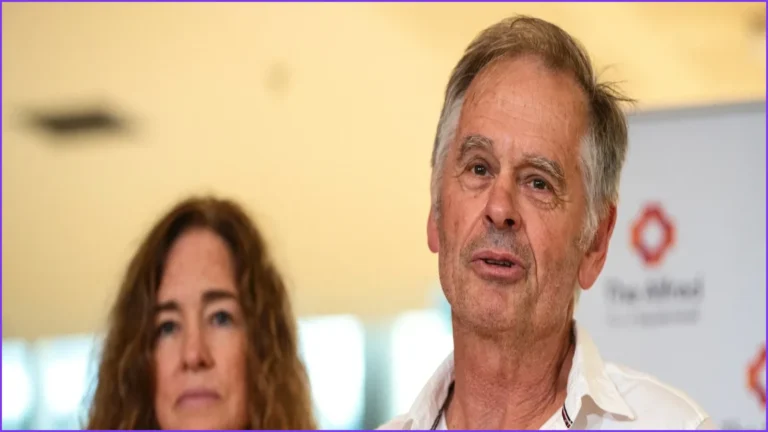
The diplomatic engagement yielded an immediate concrete outcome, as Russia agreed to release US citizen Stephen Hubbard. The retired American teacher had been convicted by Russian courts on charges of fighting as a mercenary for Ukraine, allegations that Hubbard has consistently denied. Trump stated that his decision to delay additional economic sanctions against Russia was instrumental in securing Hubbard's release.
In a separate development, Trump reached a new agreement with Moscow to purchase Russian diesel in an effort to stabilize global fuel prices that have escalated due to the broader Middle East conflict. The energy deal has drawn sharp criticism from officials in Kyiv as well as several European governments.