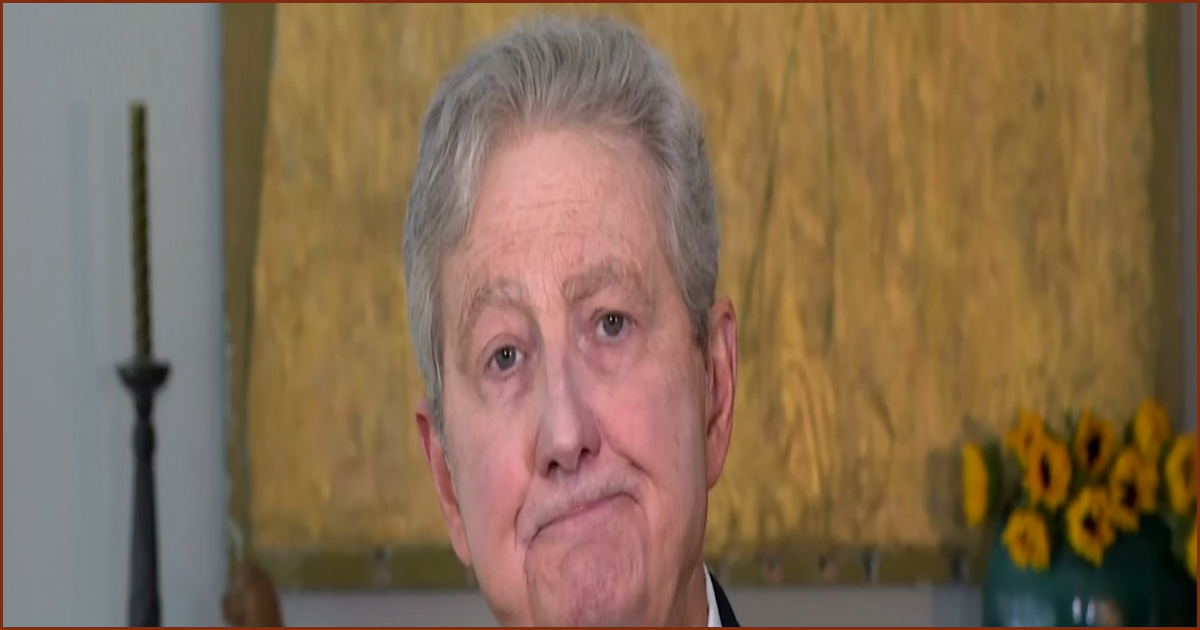
Speaking from Madisonville, Louisiana, in an interview on Sunday, July 26, 2026, Republican Senator John Kennedy addressed a wide range of critical legislative and foreign policy issues facing Congress. The senator offered candid thoughts on the war in Iran, the upcoming Senate schedule, and election integrity measures as lawmakers prepare for the summer recess.
One of the most prominent topics of discussion was the ongoing conflict in Iran. Defense Secretary Pete Hegseth recently requested $67 billion in funding for the war, prompting sharp questioning from Kennedy. Pointing to public sentiment, Kennedy noted that a recent poll showing 67 percent of Americans want the war to end now "looks about right." He announced that he is scheduled to have breakfast next Wednesday with General Caine, the chairman of the Joint Chiefs of Staff, to seek a more detailed, classified briefing on the situation.
While Kennedy emphasized that he supports the president regarding Iran, he criticized the administration’s messaging strategy. "I may end up with a sombrero on my head by saying this, but we all know the president," Kennedy remarked. "He exists loudly. He grows anxious when he has an unexpressed thought. He's not always disciplined in his messaging." Kennedy suggested that rather than relying solely on the president's remarks, the administration should put officials like Marco Rubio, General Caine, John Ratcliffe, and Pete Hegseth forward in major speeches or lengthy press conferences to clearly explain the U.S. presence in Iran, why the military entered, and why troops remain there.
Kennedy also rejected calls from progressive lawmakers, such as Senator Bernie Sanders, who advocate for an immediate withdrawal from Iran. "Bernie wants to just come home," Kennedy said. "He wants to turn out the lights, make sure the cat's inside, and go to bed. That would be a huge, huge mistake." When asked about his own questioning of General Caine regarding a potential halt to the blockade and bringing troops home, Kennedy clarified that he was not advocating for that course of action, but was simply exploring the potential consequences of such a move.
The conversation also touched on broader Middle Eastern diplomacy, specifically Saudi Arabia's willingness to engage in a deal if a pathway is established for Palestinians. Kennedy acknowledged that current Israeli politics make such a pathway unlikely. He noted that while the U.S. has 26 of these "one-two-three agreements" with other nations, the timing for this specific deal is currently unfavorable.
Turning to domestic legislative matters, Kennedy paid tribute to the late Senator Lindsey Graham, who is scheduled to be laid to rest in a memorial service this week. Before his death, Graham championed a bill to impose financial restrictions on the largest buyers of Russian oil. The legislation currently has 62 signatories, representing a filibuster-proof majority. Kennedy expressed uncertainty about whether the bill would receive a vote before the Senate breaks for the summer, but argued that the Senate should add Iran to the Graham Russian sanctions bill and vote on it immediately.
Kennedy expressed frustration with the Senate's current pace, dryly noting, "doing nothing is hard because you never know when you're finished." He urged Senate Republican Leader John Thune to act more decisively, calling him "too cautious." While praising Thune as a leader with a "big brain" who is "better looking than me," Kennedy criticized the focus on negotiating with Senate Democratic Leader Chuck Schumer to prevent a government shutdown. Kennedy predicted that Schumer will ultimately shut down the government, noting that the "Graham Platner wing" of the Republican party is highly resistant to Schumer. "They already want to give Schumer a bathrobe, a popsicle, and an early bedtime, and have him retire," Kennedy said, adding that he doubts Schumer can reach an agreement with Republicans.
Instead of caution, Kennedy advocated for putting the House budget resolution on the Senate floor, calling it the only viable path to secure funding for national defense, farmers, and the SAVE Act. He also called for a vote on the cryptocurrency market structure bill, suggesting the Senate should extend its session by a few days if necessary to complete this business.
Finally, Kennedy defended the controversial SAVE Act, which aims to alter election procedures less than 100 days before the upcoming election. Responding to criticisms that pushing a partisan, Republican-only policy could damage public faith in the election process, Kennedy argued that election credibility depends on just two simple measures. First, voters must prove their identity to register and to vote. Second, states must transition back to having a single election day rather than an "election month" so that results are known on election night or shortly thereafter. Kennedy expressed confidence that the SAVE Act could pass and be structured to survive a Senate "Byrd bath" challenge, potentially using federal grants to incentivize state compliance alongside other strategies suggested to him by outside experts.
MARGARET BRENNAN: — All in two weeks?–
MARGARET BRENNAN: Grants, in other words–