Saudi Minister of State and Cabinet member Bandar bin Ibrahim Al-Khorayef has praised Türkiye's defence industry as "pioneering and worth learning from," underscoring the importance of enhanced cooperation between the two countries to localize defence production amidst ongoing regional challenges.
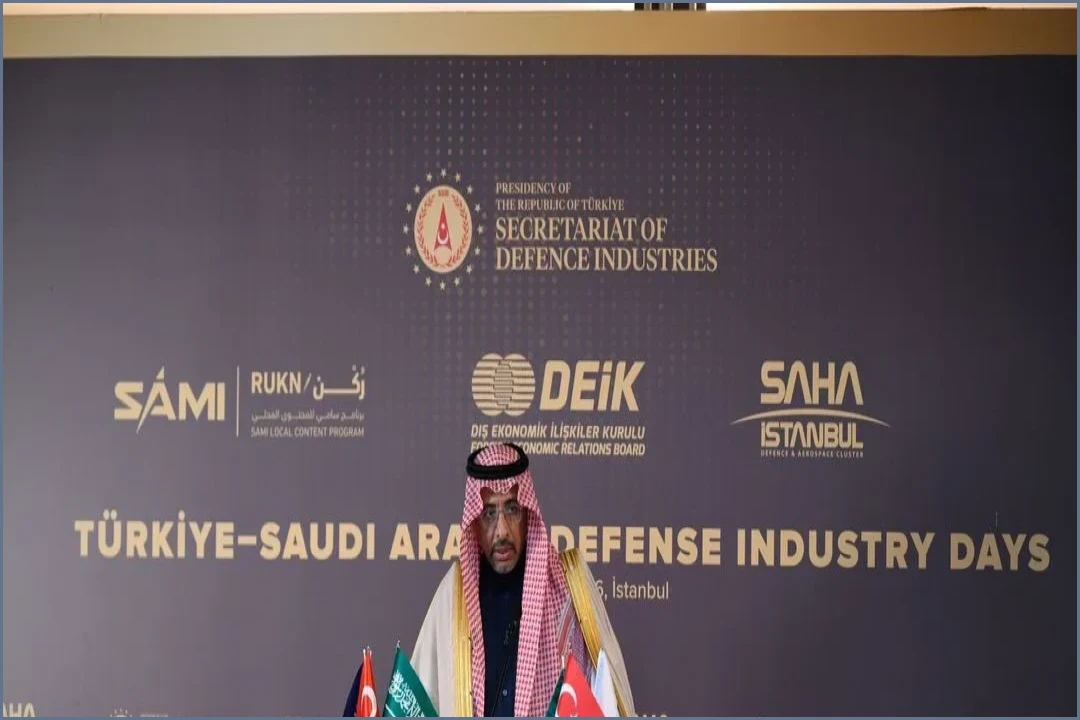
Al-Khorayef, who also serves as the acting governor of Saudi Arabia’s General Authority for Military Industries, conveyed these sentiments in an interview with Anadolu on the sidelines of the Türkiye-Saudi Arabia Defence Industry Days. The event, held on Wednesday and Thursday in Istanbul, brought together over 100 companies from both nations to explore opportunities for collaboration and investment. It was jointly organized by Türkiye's Foreign Economic Relations Board, the SAHA Istanbul defence and aerospace cluster, and Saudi Arabia's General Authority for Military Industries.
The Saudi minister reiterated, "We are witnessing very significant work in the defence industry sector. Without a doubt, the Turkish experience in defence industries is pioneering and is something we in the Kingdom can also learn from." He added that "The challenges facing the region require us to work closely together to localise many industries."
Al-Khorayef highlighted the growing industrial ties and expanding cooperation between Saudi Arabia and Türkiye, particularly following the launch of the Kingdom’s industrial and mining strategies and rapid advancements in the defence sector. He noted Saudi Arabia's considerable progress in attracting investment and its ambition to draw more through partnerships with Türkiye. He welcomed the convergence of interests in the defence industry, stating both sides are committed to continuing joint efforts to deepen their ties.
The cooperation, according to Al-Khorayef, is built on shared interests, with both governments facilitating the private sector to lead investment and development. He outlined three main pillars guiding private-sector engagement: identifying Riyadh's industrial development priorities, fostering a supportive environment for private companies through infrastructure, financing, and support programs, and ensuring contract availability with a clear view of expected demand to aid investment planning and production expansion.
Addressing the future of the defence industry, the Saudi minister stressed the critical role of advanced technologies and qualified human resources. "The future of the sector is changing significantly, and the introduction of technologies into military and defence industries is a key pillar," he remarked. He further stated, "I believe that both Saudi Arabia and Türkiye have strong youth capabilities, and the human resources and education systems in both countries will be among the most important foundations on which the future of this industry will be built."
Saudi Arabia is actively seeking to attract companies with expertise and development capabilities, with initiatives like Saudi Arabian Military Industries and the Rukn programme showcasing available opportunities. The significant participation of Turkish companies at the event demonstrated their commitment to understanding the Saudi market's needs and exploring avenues for joint work, Al-Khorayef observed.
On Thursday, Haluk Gorgun, Secretary of the Turkish Presidency of Defence Industries, affirmed Türkiye's readiness to expand defence cooperation with Saudi Arabia. Speaking at the Istanbul event, Gorgun noted that Türkiye manages over 1,400 defence industry projects with a combined portfolio valued at approximately $120 billion. He confirmed that Turkish defence companies are engaged in joint projects with their Saudi counterparts, supporting Saudi Arabia’s Vision 2030 goal of localizing at least 50 percent of its military spending.
In a broader regional context, Türkiye, Pakistan, and Saudi Arabia have also signed the Mecca defence pact. This pact saw its first institutional decision in August during a meeting in Istanbul, where an agreement was reached to establish a secretariat. Since then, the three nations have made positive strides towards institutionalizing the pact, including its ratification in their respective countries.