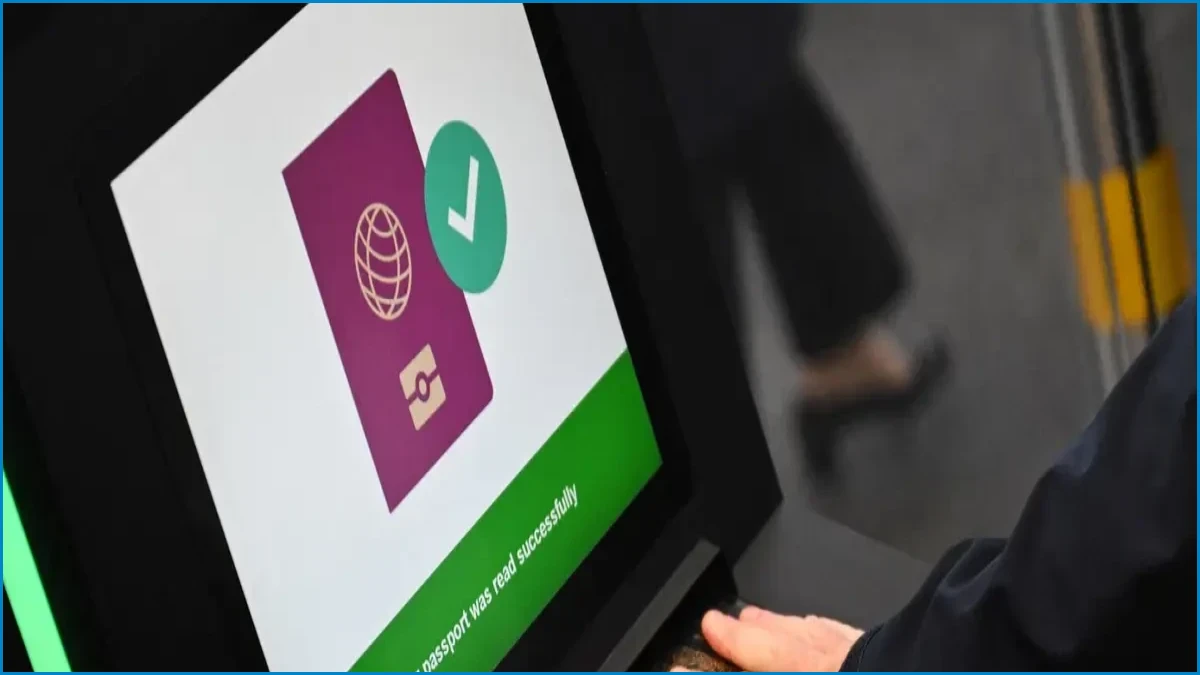
A growing number of British travellers have reported being incorrectly accused of violating the EU’s 90-day allowance rule as a direct result of technical failures in the newly introduced EES biometric border system. While the rollout of the digital passport checks has been widely associated with significant queues at airports, the consequences for some individuals have proven far more severe, manifesting as erroneous records that falsely flag them as having overstayed their permitted time in the Schengen zone.
Author Jojo Moyes is among those who have spoken out about the issue. She reported that while departing from her second home in France, French border guards at Marseille accused her of exceeding her 90-day limit. The error stemmed from a previous trip to Portugal, where her exit from the Schengen zone was not properly registered in the system.
The border control officer warned her that she could face a €10,000 fine and a two-year travel ban if she attempted to re-enter Europe before the discrepancy was rectified.
The consumer organization Which? has confirmed that it has been contacted by dozens of individuals sharing similar experiences. One traveller reported that her elderly parents were left terrified after their exit through Bilbao airport was not recorded, causing their allowed days to continue ticking down after they had already left the zone.
Another traveller described being temporarily detained for two hours at the Serbian-Romanian border because their journey through the Channel Tunnel to Calais had not been logged in the EES system at Folkestone.
Concerns remain high regarding the inconsistent implementation of the EES. At key transit points such as the Port of Dover and Eurostar, the system is still not being applied to the vast majority of travellers. In some instances, the system has been suspended entirely to mitigate long delays, further contributing to the likelihood of entry and exit data being recorded inaccurately.
When an entry is logged but the corresponding exit is missing, the system defaults to assuming the traveller remained in the Schengen zone for the entire duration, which automatically triggers an overstay flag.
The issue has also impacted residents. A British holder of a French carte de séjour residency permit reported being incorrectly registered in the EES, which resulted in him being identified as an overstayer. Under current regulations, non-EU citizens who hold residency permits or long-stay visas are exempt from EES checks and should instead present their documentation at manned border control points.
The 90-day rule permits citizens from several non-EU nations—including the UK, US, Canada, Australia, New Zealand, Brazil, and Japan—to spend up to 90 days in every 180-day period within the Schengen zone without a visa. Breaching this limit can result in severe penalties, including fines, entry bans, or deportation.
To address these errors, the EU has launched an online calculator for travellers to monitor their remaining days. If a calculation is found to be incorrect, individuals are advised to challenge the data by contacting the relevant national data commissioners.
The Local has contacted the EU Commission for comment.
READ ALSO: How to check your EES 90-day allowance, and what to do if it's wrong