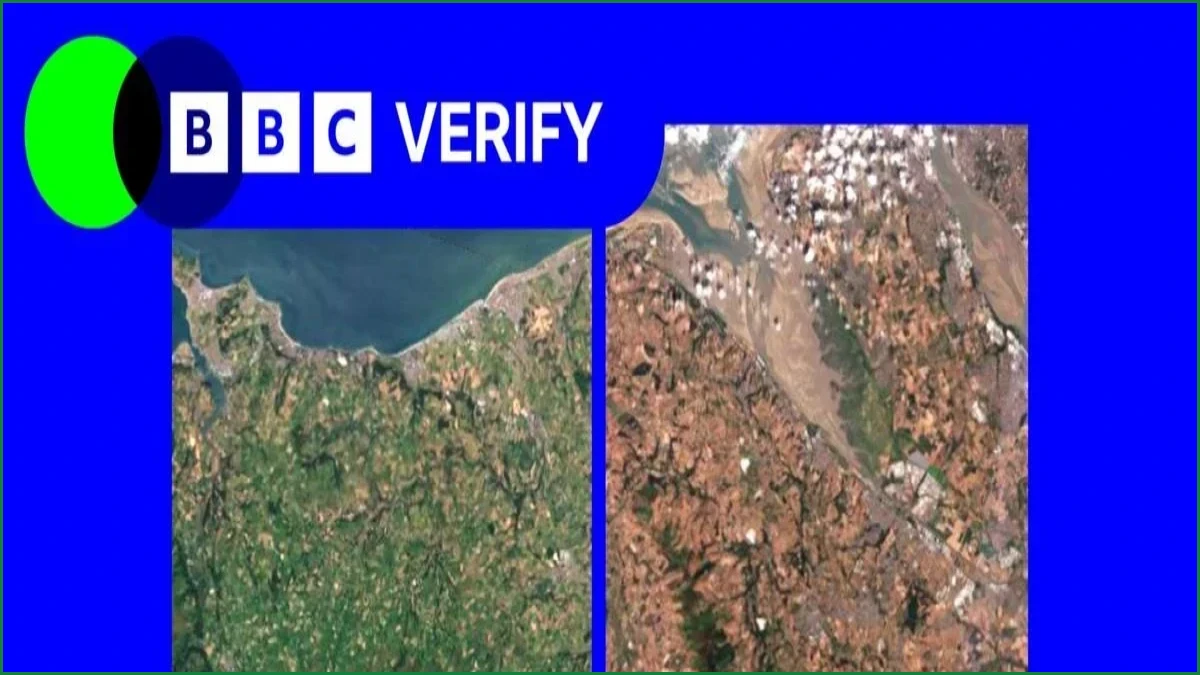
Satellite imagery has provided a stark visual record of the toll taken on the UK landscape during this year's long, hot summer. Analysis of satellite data reveals the specific regions most affected by a combination of persistent heatwaves and a lack of rainfall. Large parts of the country are currently suffering from what experts describe as "vegetation stress," a condition where the growth and development of crops, grass, and plants are severely hampered.
Scientists warn that this combination of next-to-no rainfall and prolonged heat is likely to cause significant issues for the farming industry, potentially impacting agriculture and food supplies.
To assess these changes, researchers used the Normalised Difference Vegetation Index (NDVI), a metric that measures the greenness and health of vegetation. A comparison of satellite imagery from May and July highlights the dramatic shift in plant health. The most significant changes are visible across Conwy, Flintshire, Denbighshire, and Merseyside. Areas that were previously a patchwork of green fields and grassland are now covered by light brown tones, indicating extensive vegetation stress.
Similar localized hotspots of stress are evident around Peterborough, Lincolnshire, and parts of mid and east Devon, where fields appear significantly browner than they did a year ago. In contrast, upland Britain, including much of the Welsh mountains and the Scottish highlands, has remained closer to normal, with some areas appearing slightly greener.
While the browning of vegetation is widespread, experts note that it does not necessarily mean the plants have died. Grass, shrubs, and some trees can recover once rainfall returns, provided their root systems remain intact. However, falling groundwater levels during prolonged dry periods can remove an important backup water source for deep-rooted vegetation.
Counter-intuitively, this dry weather can also raise the risk of flash flooding. Because parched, rock-hard ground struggles to absorb water initially, rainfall may simply run off the surface rather than soaking into the soil.
Dr. Jess Neumann, an associate professor at the University of Reading, noted that while some browning is expected in summer, the large expanses of dry grass in parks, lawns, and gardens are particularly noticeable this year. She added that British plants are not adapted to prolonged summer droughts and hot weather, unlike vegetation in Mediterranean climates.
This summer's "flash" drought is also notable for how quickly it developed, given that river flows, soil moisture, and reservoir levels were generally around or above normal in early spring following a very wet start to 2026.
The repeated heatwaves have sapped moisture from soils and vegetation via evaporation, increasing demand for water for farming, industry, and household use. Dr. Pauline Scheelbeek, an associate professor at the London School of Hygiene and Tropical Medicine, warned that the drought could have a direct knock-on effect on food supplies. She suggested that there may be less British produce available and at higher prices in supermarkets because less reliable access to water may reduce crop yields.
Furthermore, low grass stocks are forcing some farmers to use winter feed for their livestock during the summer, leaving supplies short for later in the year. Prof. Michael Singer from Cardiff University expressed concern about the effect on wildlife, noting that many animals and plants in the UK are not well adapted to extreme drought conditions.
Despite the visible impact on plant life, data shows that reservoirs have not been as significantly affected as they might have been, thanks to a particularly wet winter. Satellite imagery shows the banks of the Clywedog reservoir in mid-Wales are more exposed this July compared with last year. While low reservoir levels are not the primary cause of recent hosepipe bans and drought declarations, which are triggered by a lack of rain, reservoirs remain lower than is typical for this time of year.
The Environment Agency (EA) reports that reservoir storage is now at 75% in England, which is below the long-term average of 83% for this time of year but higher than during last year's drought.
Reservoirs are vital for water supply, especially in northern England, Wales, and Scotland, while south-east England relies more heavily on groundwater. Levels are currently lowest in the South West, with Wimbleball and Blagdon reservoirs classed as exceptionally low, while reservoirs in Scotland, Wales, and Northern Ireland remain reasonably stocked. Scientists warn that the UK faces a growing risk of water shortages in the decades ahead, driven by human-caused climate change and increased demand.
Reservoirs are vital for water supply because they store excess rainwater from wetter months and hold it for use during drier summer periods. They are one of the UK's three main water sources, alongside rivers and water from deep underground.