On the 73rd anniversary of the Korean Armistice Agreement, South Korea’s Minister of Unification, Chung Dong-young, formally declared that it is time to conclude the armistice regime and transition toward a peace regime. Adopting a new mindset for peacebuilding on the peninsula requires preserving what works while targeting individual issues that remain unresolved. This sentiment aligns with a pledge made in July by South Korean President Lee Jae-myung, who informed the Peace Unification Advisory Council that his administration aims to shift the peninsula's political framework. These statements have reignited debate over what a "peace regime" entails and whether such a transition is feasible given the current climate with North Korea.
For decades, the "peace regime" concept has been a central pillar of South Korean policy, designed to foster inter-Korean relations by reducing foreign involvement and building interdependencies that could eventually lead to reunification. Different South Korean administrations have operationalized that idea in different ways. It was a topic of the four-party talks in the mid-1990s with the two Koreas, China, and the United States. During the Sunshine Policy under presidents Kim Dae-jung and Roh Moo-hyun, efforts focused principally on establishing economic interdependence through projects like the Kaesong Industrial Complex and Kumgang Tourist Resort. However, this approach has faced persistent challenges, largely due to a fundamental mismatch between Seoul’s goals and Pyongyang’s policy preferences. Furthermore, treating the peace process as a series of discrete, sequential phases has often created artificial friction and missed opportunities for cooperation.
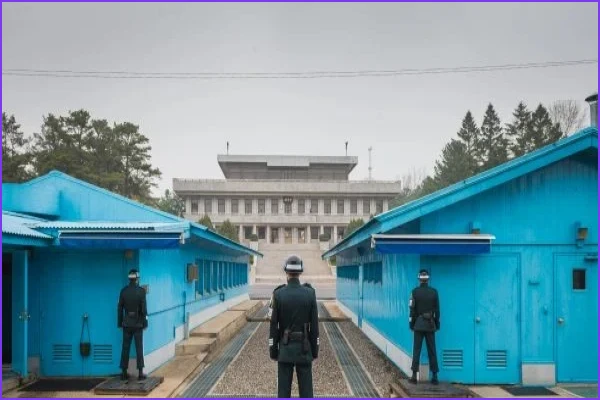
The Korean Armistice Agreement, which has governed the peninsula for 73 years, was intended as an interim measure to stop hostilities and provide space for long-term peacebuilding. Far from being an obstacle, the agreement provides a critical foundation for stability. It established the demilitarized zone (DMZ) and created oversight mechanisms, such as the United Nations Command Military Armistice Commission (UNCMAC) and the Neutral Nations Supervisory Commission (NNSC). These bodies, staffed by representatives from countries including the United States, Denmark, New Zealand, Switzerland, and Sweden, continue to facilitate essential communication.
Even when broader inter-Korean channels have gone silent—such as North Korea’s cessation of communication in April 2023—the hotline between the UNCMAC and the Korean People’s Army (KPA) Panmunjom Mission has remained operational since September 2019. These mechanisms have proven vital in de-escalating incidents, including the drone incursions of 2022 and 2024, as well as the 2020 exchange-of-fire within the DMZ.
Critics of the current armistice highlight its limitations, such as the lack of defined maritime boundaries, the fading of 1950s-era boundary markers, and North Korea’s refusal to allow the NNSC to operate in the northern half of the peninsula. While these are significant, they stem from the fact that the armistice was never intended to be the final resolution. A political conference held in Geneva in 1954 failed to reach a settlement, leaving the armistice as the primary mechanism for maintaining the status quo.
Obstacles to a new peace regime are compounded by South Korea’s internal political landscape. The lack of consensus between conservative and progressive parties has led to volatile policy swings, such as the status of the September 2018 Comprehensive Military Agreement, which was negotiated by the Moon Jae-in administration, scrapped by the Yoon Suk-yeol government, and is now being revisited by the Lee administration. Such inconsistency makes it difficult to convince Pyongyang that any agreement with Seoul will endure beyond a change in leadership.
Furthermore, there is a divergence of opinion within South Korea regarding whether the ultimate goal should be total reunification or simply peaceful coexistence. Debates over moving beyond the armistice often conflate peacebuilding with other interests, such as tourism, DMZ access, and the role of the United Nations Command. To move forward, policymakers may need to move away from viewing the peace process as a set of discrete phases. Instead, shifting toward a continuous process of engagement that addresses specific, actionable issues could offer a more effective path toward a comprehensive peace agreement than the current focus on a singular, fragile transition.