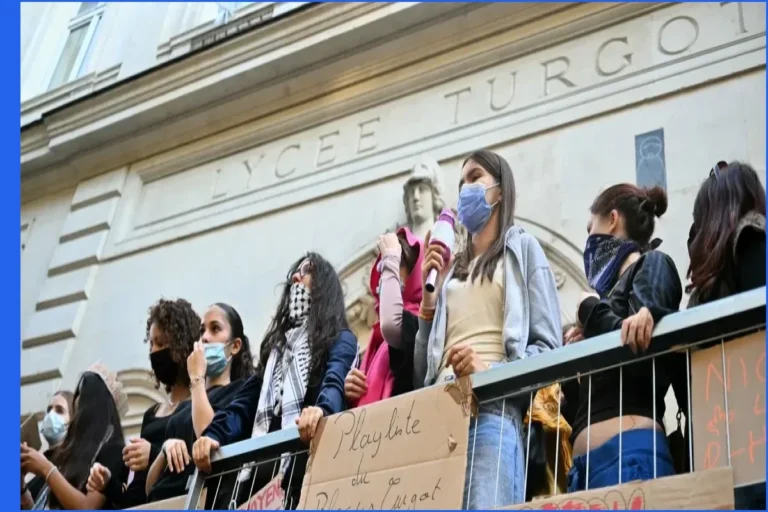
A localized protest in the Paris suburb of Créteil has ballooned into a nationwide crisis, shutting down hundreds of French schools and triggering clashes that have left hundreds of students, staff, and police officers injured. What began on September 17 as a demand by students and teachers for more resources and staff has expanded into a sweeping movement against France's struggling education system.
The momentum grew rapidly after videos of the initial Créteil demonstrations spread across social media. Students throughout France quickly identified with the grievances, pointing to overcrowded classrooms, unreplaced teacher absences, outdated school facilities, and systemic neglect. As the movement entered its third week, student unions called for a day of mass action on Tuesday. Ahead of the planned demonstrations, authorities completely or partially closed hundreds of schools on Monday, citing unsafe security conditions.
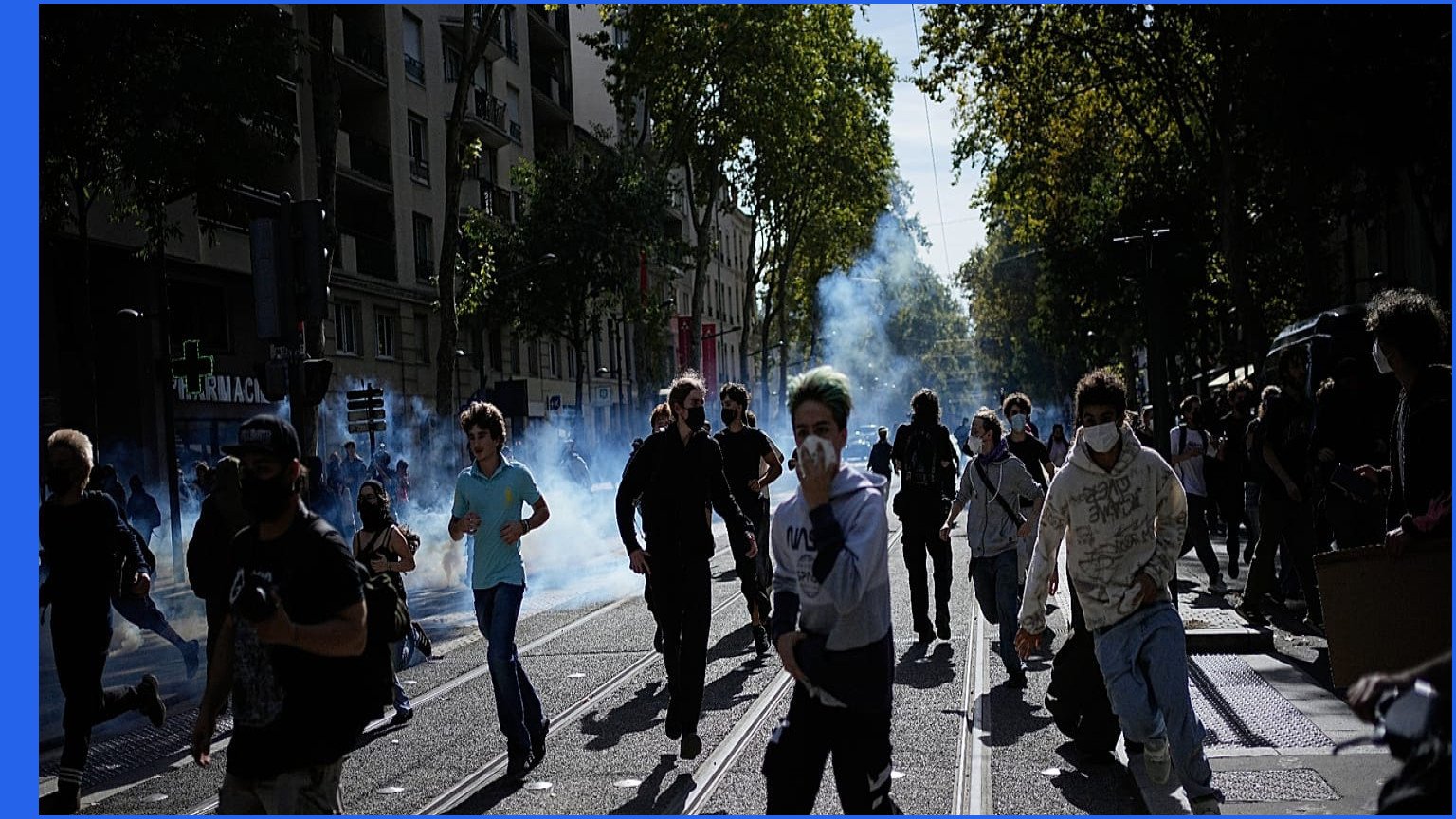
While many of the demonstrations have remained peaceful, the margins of the protests have been marred by severe rioting, clashes with law enforcement, and infiltration by outside agitators. The scale of the unrest is reflected in figures from France's Ministry of Justice, which recorded more than 5,060 arrests, with minors accounting for 87% of those detained. The human toll has also risen sharply: more than 170 pupils, 78 school staff members, and over 600 police officers have suffered injuries. Across the country, several schools have been targeted, with buildings damaged, ransacked, or set on fire.
The violence has resulted in life-altering injuries for several young demonstrators, prompting investigations into police conduct. In the northern town of Lens, a 15-year-old boy lost his hand on Monday after being injured by a police grenade. Public prosecutor Etienne Thieffry stated to the press that investigators have not yet definitively established whether the teenager picked up the grenade or if it was thrown directly at him.
In a separate incident in Tours, a central French town, the family of a 16-year-old schoolboy filed a formal complaint on Sunday alleging police violence. The teenager lost sight in his right eye during recent protests, with the state prosecutor noting that the injuries are consistent with being struck by a police rubber bullet. Investigations are currently underway for both cases.
These incidents have drawn sharp criticism from civil rights advocates. France’s Human Rights League (LDH) has strongly condemned what it describes as a widespread deviation from the rule of law and a blatant disregard for legal frameworks during police interventions at student protests. Nathalie Tehio, the president of the LDH, stated during a Monday press conference that international law was not only being disregarded but was being "completely trampled upon."
Conversely, police representatives have defended the actions of law enforcement. Stanislas Gaudon, the national secretary for the major police union Alliance Police Nationale, maintained that officers are focused on securing the perimeters of school buildings. He argued that the use of force is a matter of determining legitimacy and proportionality. Gaudon explained that if individuals are firing at officers or throwing acid, a forceful response to disperse them is necessary. He rejected terms like "repression" or "suppression" of student protests, asserting that if there is no public disturbance, law enforcement has no legitimate reason to use force.
The escalating crisis has forced French politicians and government officials to intervene. Education Minister Édouard Geffray held discussions on Friday with school unions, staff, and parent associations. On the same day, Justice Minister Gérald Darmanin revealed that violent protests had affected 735 of France's 3,700 schools in some capacity.
In response to the growing pressure, Prime Minister Sébastien Lecornu announced a five-point government action plan on Sunday. The strategy aims to prevent class cancellations, upgrade school facilities in coordination with regional authorities, better structure school days, increase the transparency of the Parcoursup university application platform, and offer broader support to students.
Meanwhile, the political debate surrounding the protests has intensified. The hard-left party France Unbowed, led by Jean-Luc Mélenchon, has offered vocal support for the student movement. Mélenchon stated on Thursday that he wants the country's youth to emerge from this period "with their heads held high." While his critics accuse him and his party of exploiting and manipulating young people for political advantage, Mélenchon has insisted that while France Unbowed supports the movement, it is not organizing the protests and advocates for non-violence.
Educators have warned about the dangers of using the crisis for political leverage. Jean-Rémi Girard, a teacher and president of the national union of schools and higher education (SNALC), urged caution, stating that politicizing the situation is highly dangerous for those on the ground. He emphasized that school staff need protection, warning that recruitment will become even more difficult if teachers do not feel safe. The threat to staff was highlighted on Friday when a teacher was sprayed with petrol during a protest near a school in southern France, leading to the detention of a 16-year-old pupil.
Girard noted that the underlying issues driving the protests are long-standing. He pointed to chronic difficulties in replacing absent teachers, classrooms that are among the most crowded in Europe, and facilities that lack adequate cooling during heat waves. He stressed that while the school system has been in a long-term crisis, the extreme violence is being driven by a minority of individuals who join the protests specifically to cause trouble. He added that teachers are actively engaging with students outside schools to keep dialogues open and prevent situations from escalating.
Parents remain divided on how to respond. While some have kept their children home or forbidden them from attending school, the Federation of Councils of Parents of Students (FCPE), one of France’s largest parent organizations, has backed the strike. Mustafa Ozcelik, the vice-president of the FCPE, affirmed that they support the calls for children to study under better conditions. He noted that while everyone wants a safe return to classrooms, students are capable of deciding whether to continue their protests, and that once concrete guarantees are secured, normal school operations will resume.
"We are the ones out there in the field, and we need to be looked after and protected. Because it’s already hard enough to recruit staff given the lack of appeal of our profession; if we aren't protected on top of that, it’s going to be even harder to find teachers in the years to come."
"They come here to cause trouble, and I've seen that."