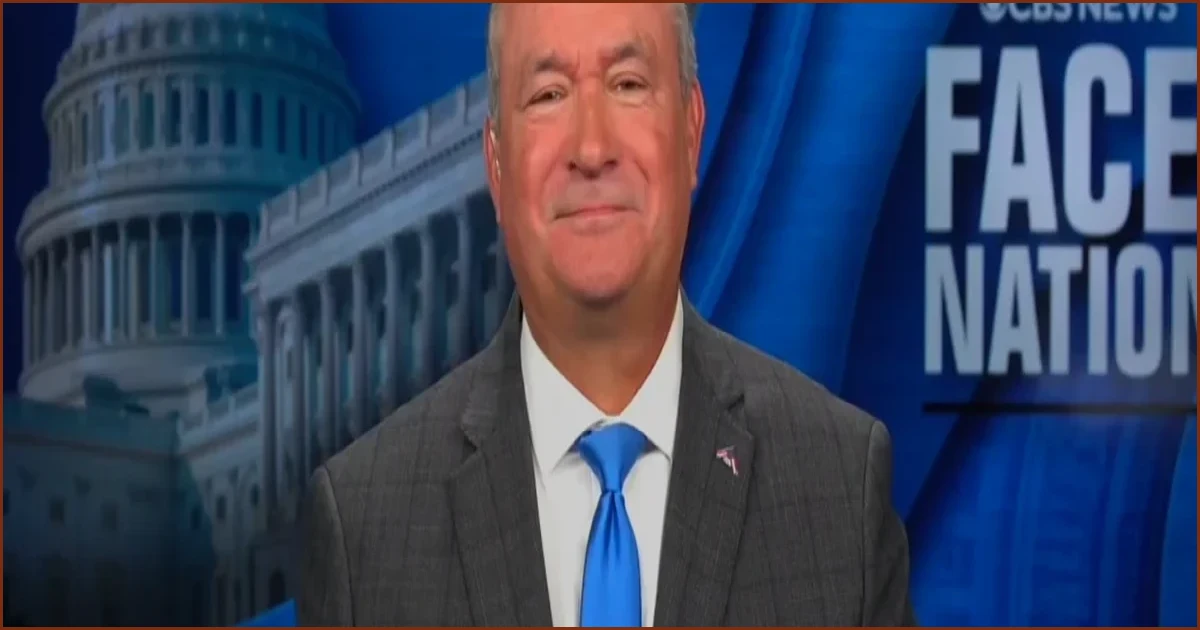
In an interview broadcast on August 16, 2026, retiring Republican Representative Don Bacon of Nebraska discussed a wide range of pressing national issues, including economic policy, military readiness, and the ongoing conflict with Iran. Speaking from Omaha, Nebraska, on his birthday, Bacon opened the conversation with a lighthearted joke, remarking that he felt like he was "nine years old and dog years" to make himself feel better. The congressman, who is not running for re-election in the upcoming midterm elections, offered a candid assessment of the current political and economic landscape.
Addressing the economic challenges facing the country, Bacon was asked whether the president's justifications for national gas prices are helpful to fellow Republicans on the ballot this fall. Bacon responded by criticizing the president's communication style, stating that he "doesn't communicate it well" and "makes light of the affordability question." According to Bacon, the United States is facing a severe affordability problem that must be addressed directly. He pointed out that the nation experienced 9% inflation under Joe Biden, and although inflation decreased toward the end of Biden's presidency, the American public has never fully recovered from that economic shock. Currently, inflation remains slightly higher than wage growth, leaving families struggling with high prices at the grocery store and the gas pump.
To resolve these economic pressures, Bacon advised that leaders must acknowledge the problem and work toward getting wages to climb faster than inflation. He suggested that one of the most effective ways to achieve this would be to change the president's global tariff policy. Bacon argued that tariffs have actively hurt inflation, describing them as a direct tax on consumers that forces Americans to pay more. While acknowledging that the war with Iran and rising gas prices are major factors, he emphasized that global tariffs have also had a significant negative impact and urged the president to review the policy.
The conversation then turned to military deployments and the USS Abraham Lincoln, following comments from Donald Trump that the carrier's deployment has been "not nearly long enough." When asked if the president was wrong to be dismissive of the concerns of those aboard the carrier, Bacon agreed. Drawing on his own 30-year career in the Air Force, which included a one-year deployment to Iraq and three other shorter deployments to Iraq or the surrounding region, Bacon emphasized that 10-month deployments on aircraft carriers are exceptionally grueling. He recalled that during his year-long deployment to Iraq, some Marines and soldiers were kept there for 18 months. Bacon argued that leaders must acknowledge the heavy toll these extended missions take on service members and their families, thank them for their willingness to defend the country, and validate their struggles rather than dismissing them.
With the USS George Washington now heading to the region to relieve the returning USS Abraham Lincoln as it heads to port, Bacon called for formal congressional oversight. He suggested that lawmakers bring in the Secretary of the Navy and the Service Chief of the Navy to explain the truth of what occurred aboard the carrier over the last nine months. To provide context, Bacon recalled serving on an aircraft carrier as an Air Force officer during his military career. He shared that during a deployment in 1996, when the U.S. was enforcing the southern no-fly zone over Iraq to deter Iran, two service members jumped overboard and committed suicide. Bacon described these incidents as terrible and sad, noting that such tragedies have occurred in the past and, unfortunately, are likely to happen again in the future, highlighting the persistent mental and physical strain of carrier service.
Discussing the ongoing war with Iran, which is now about five and a half months old, Bacon reiterated his concern that Iran believes it can drag the president along. Looking at the battlefield, Bacon raised major alarms about critical military shortages, expressing deep concern over reports that the U.S. is facing a shortage of key weapons, specifically cruise missiles and Patriot missile defense systems. He criticized the administration's lack of transparency regarding these operations, calling it a major issue. When asked to assess the performance of Defense Secretary Pete Hegseth, Bacon remarked that Hegseth has followed the wishes of the president. However, Bacon found it highly concerning that the president claimed he was unaware of the shortages of cruise missiles and Patriots, calling it a failure of management. He promised that when lawmakers return to Washington, D.C. on August 31, Congress will seek answers and demand transparency regarding these critical defense shortages.
Finally, Bacon addressed a recent poll indicating that 58% of registered voters describe the Republican Party as "extreme" more than anything else. As one of the few remaining mainstream moderates in the House of Representatives, and with his retirement looming, Bacon was asked how Republican leaders could steer the party back toward the center. Bacon suggested that there are key areas where Republicans can push back against the White House while aligning themselves with where most Americans actually stand on the issues, though he noted the administration has not been supportive of these efforts.
ED O'KEEFE: But do you get a sense he feels the pain of Americans, the economic pain?
ED O'KEEFE: Congressman, thank you so much.