A powerful earthquake with a magnitude of 7.1 struck the southern end of Japan's main Kyushu island at 4:27 p.m. local time (2:27 a.m. Eastern), according to the Japan Meteorological Agency. While the Japan Meteorological Agency recorded the tremor at 7.1, the U.S. Geological Survey measured the magnitude at 6.8. The event reached the highest possible level of seven on Japan's Shindo scale of shaking.
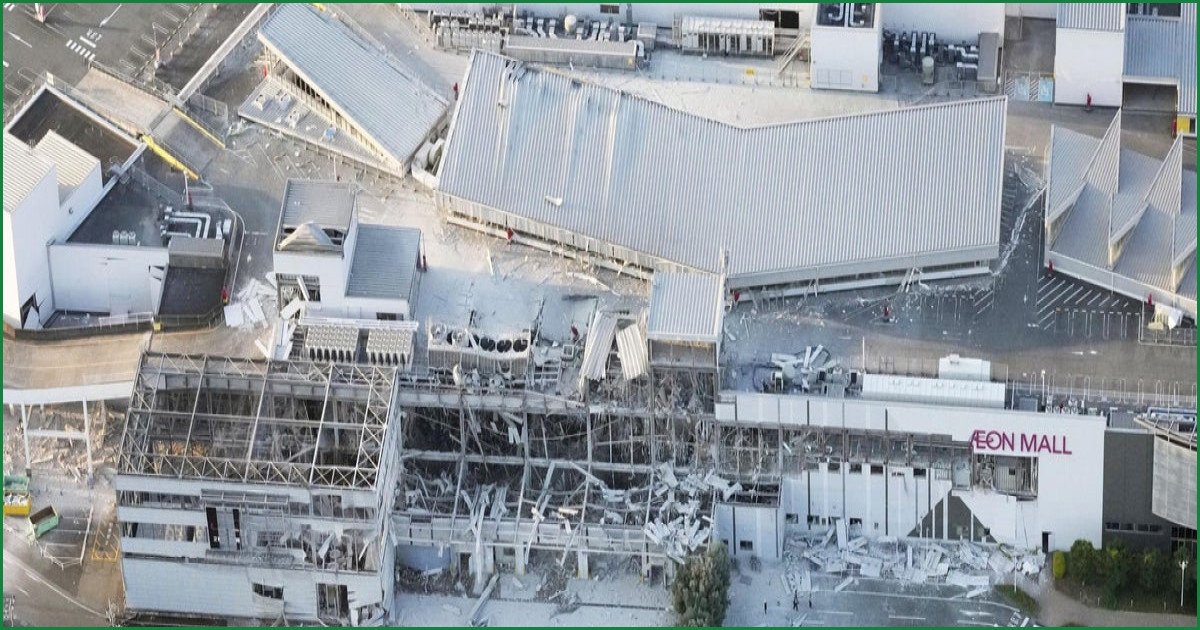
Authorities have received reports of significant casualties at a damaged mall in the city of Kashima. A local police source informed TBS, a Japanese partner network, that there were “a lot of deaths” at the site, though officials noted that confirming the exact number would take time. Police had previously received reports of sounds resembling an explosion at the Aeon Mall but have not publicly confirmed the fatality reports.
The impact of the quake was visible across the region, with NHK broadcasting footage of cracked roads, damaged bridges, a derailed cargo train, and several fires. At least 12 houses were reported collapsed. Takaichi confirmed that officials are currently assessing the extent of injuries and property damage. He noted that power outages and fires have occurred in several areas, alongside the reports of collapsed buildings and damaged infrastructure.
Utility provider Kyushu Electric Power stated that approximately 45,000 households and facilities in the Kumamoto region are currently without electricity. Regarding industrial safety, the Nuclear Regulation Authority reported no immediate abnormalities at nuclear power plants in the area, and the utility firm confirmed that three nuclear reactors operating at the time of the quake were functioning normally.
A tsunami alert for waves up to three feet was initially issued by the Japan Meteorological Agency but was withdrawn after a few hours. Meanwhile, residents have been warned of the possibility of aftershocks. A local NHK staffer reported that the shaking continued for roughly 30 minutes after the initial jolt, describing the movement as so violent that it was difficult to remain standing.
Japan is situated on the western edge of the Pacific "Ring of Fire" and is one of the world's most seismically active nations. The country accounts for approximately 18 percent of the world's earthquakes. The region of Kumamoto is particularly sensitive to such events, having been hit by two devastating earthquakes in 2016—measuring 6.5 and 7.3—which resulted in 273 deaths and over 2,800 injuries. Additionally, a 9.0-magnitude earthquake in 2011 triggered a massive tsunami that caused widespread destruction, including the Fukushima nuclear plant disaster, and left around 18,500 people dead or missing. More recently, a 7.7 tremor hit northern Japan on April 20, injuring at least 10 people, and a 7.2-magnitude quake occurred in the north on June 25, which caused no major damage or fatalities.
"When the quake struck, the shaking was so big that I could not stand up. Please be aware of possibility that shaking might continue after this."
The archipelago, home to around 125 million people, typically experiences hundreds of jolts every year and accounts for about 18 percent of the world's earthquakes. The vast majority are mild, although the damage they cause varies according to their location and the depth below the Earth's surface at which they strike.