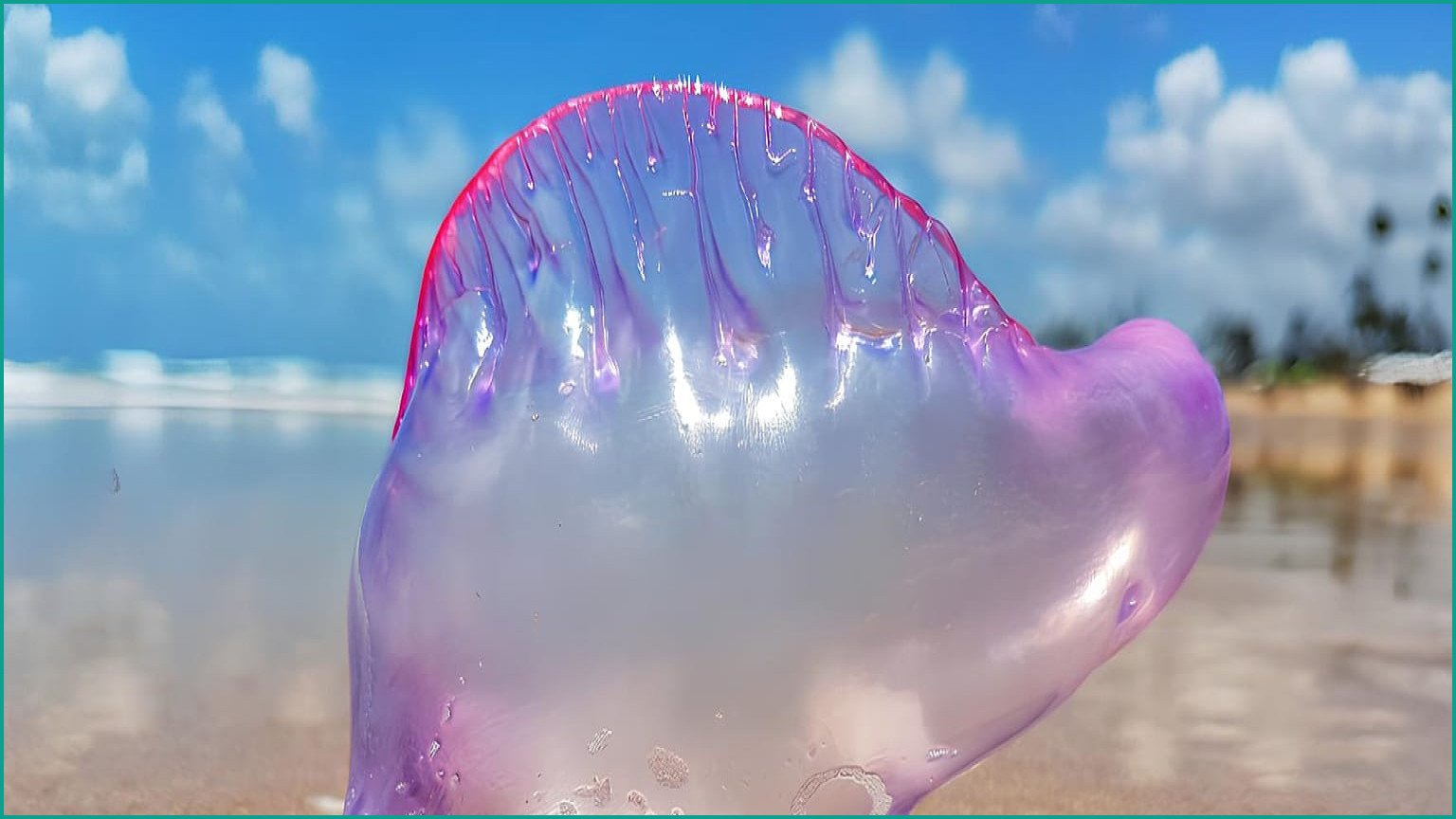
The presence of Portuguese man o' wars—venomous marine organisms often mistaken for jellyfish—has risen sharply this summer across northern Spain. Authorities in the Basque Country and Cantabria have been forced to implement swimming restrictions and temporarily close several beaches following reports of more than a hundred stings occurring within a single day.
Despite the high volume of incidents, the San Sebastián city council noted that the majority of injuries treated were minor, and the total number of cases remained low relative to the overall number of beachgoers. The Portuguese man o' war, scientifically known as Physalia physalis, is actually a colonial organism rather than a jellyfish. Its long tentacles are equipped with stinging cells that can cause intense pain and, in certain individuals, trigger serious reactions. Officials strongly advise the public to avoid any physical contact with the creatures, even if they appear to be dead or have washed up on the sand.
For those who are stung, the Basque Government's Department of Health advises leaving the water immediately and heading to a lifeguard post. If severe symptoms emerge, individuals should seek professional medical care. Official safety guidelines state that the affected area should be rinsed only with seawater or a saline solution. The use of fresh water is strictly discouraged, as it can trigger the release of additional venom. Any remaining tentacles should be removed using tweezers or a similar tool, never with bare hands. To manage pain, experts recommend applying an ice pack wrapped in a cloth. Medical attention is considered necessary if a victim experiences difficulty breathing, dizziness, nausea, or exceptionally intense pain.