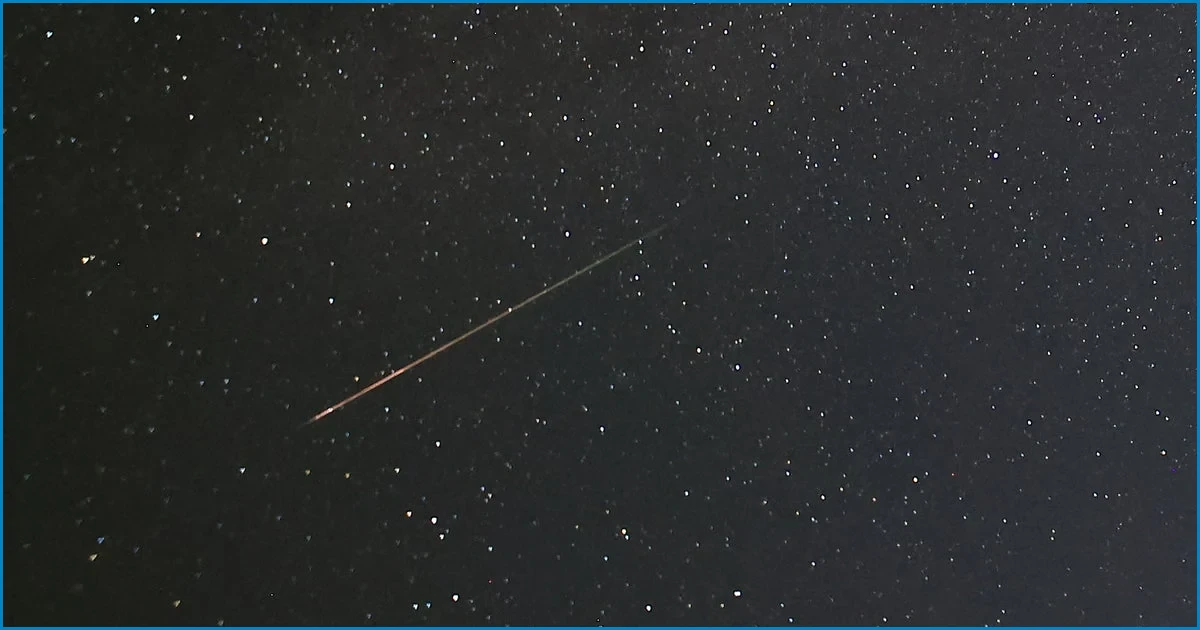
The annual Perseid meteor shower is illuminating the skies over the United States, offering a spectacular late-summer display that NASA describes as the best meteor shower of the year, according to reports from August 11, 2026, at 10:05 AM EDT. The event is scheduled to reach its peak intensity on August 12 and 13.
According to NASA, the Perseids are known for their swift, bright meteors that frequently leave long, colorful wakes of light as they traverse the Earth's atmosphere. Observers can expect to see roughly 50 to 100 meteors per hour during the peak. These shooting stars are actually the result of Earth passing through debris left behind by the comet 109P/Swift-Tuttle. This icy object orbits the sun every 133 years and is not expected to return until 2125, though records of the resulting meteor shower date back over 2,000 years.
For those in the Northern Hemisphere hoping to catch the display, the optimal viewing window is during the predawn hours of August 13. However, the meteors may also be visible as early as 10 p.m. on the night of August 12. Astronomer Zach Vanderbosch of the McDonald Observatory in Texas noted that these summer showers are particularly pleasant because observers do not have to endure cold winter temperatures to enjoy the view.
Viewing conditions are expected to be especially favorable this year because the moon will be in its new moon phase. Astronomer Aparna Venkatesan of the University of San Francisco explained that the absence of moonlight prevents the sky from being flooded with light, which allows for a much higher number of visible meteors. Venkatesan, who plans to travel to the Sierra Nevada to observe the event, emphasized that the moon is a "diva" that can obscure the view when it is bright.
To maximize the experience, experts recommend heading outside well after dark to a location away from city lights and cloud cover. The best views typically occur between midnight and dawn, as the constellation Perseus rises high in the northern sky, which is the point from which the meteors appear to radiate. Look up and give your eyes a half hour to adjust to the darkness. Vanderbosch recommends picking a patch of sky to focus on until a quick, bright streak passes by — even in your peripheral vision — and to avoid looking at your phone. As Vanderbosch remarked, "There's just something magical about it."