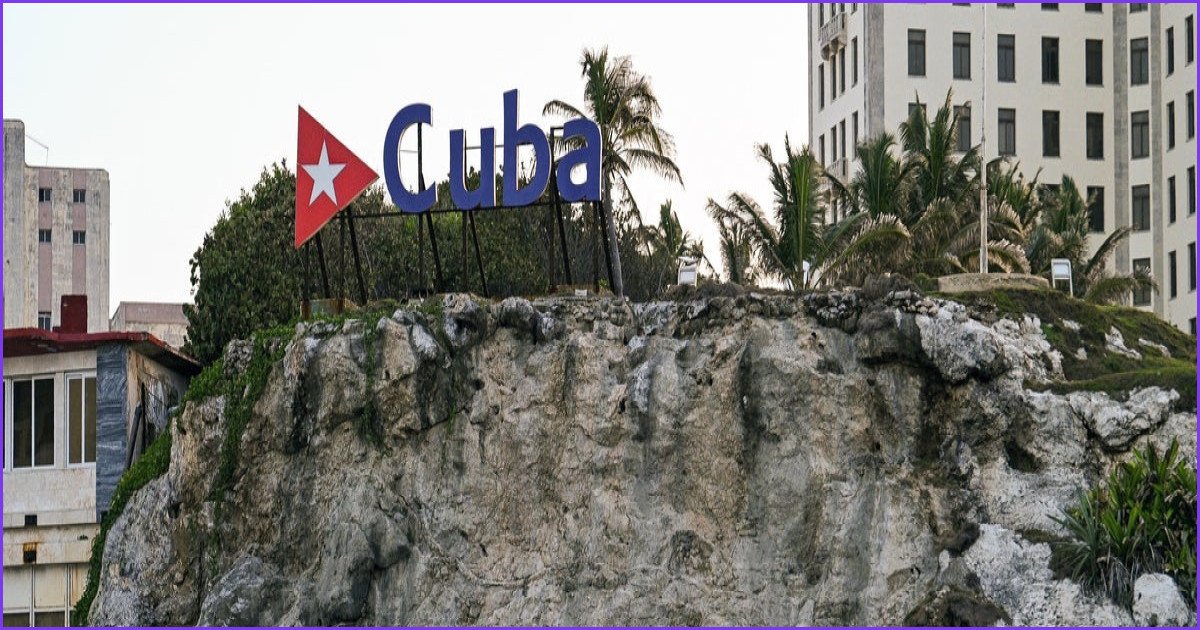
As the United States remains deeply engaged in the ongoing conflict with Iran following the collapse of a weeks-long ceasefire, senior Pentagon officials have quietly begun examining potential military contingencies involving Cuba. According to multiple U.S. officials familiar with the discussions, military planners have recently reviewed a variety of options for possible action against the island. These considerations include an Army-led air assault, which would involve thousands of soldiers from the 101st Airborne Division—the only unit currently trained for such a specific task. The officials, who spoke on the condition of anonymity to discuss sensitive national security matters, emphasized that these briefings do not signify that President Trump or the Pentagon have reached a decision to execute an operation.
Any potential military action against Cuba would present significant logistical and strategic challenges, as much of the U.S. military's focus and key offensive capabilities are currently committed to operations elsewhere, particularly in the Middle East. Secretary of State Marco Rubio has maintained that the administration prefers a diplomatic transition toward a government led by technocrats willing to implement economic reforms. However, this process has stalled, despite increasing financial pressure on the Cuban military and GAESA, the military-controlled holding company that the U.S. characterizes as an $18 billion trust fund. In a statement on July 11, Rubio accused the regime and its "corrupt elites" of refusing reform and perpetuating a "morally bankrupt Marxist ideology" to maintain total control. The State Department has further tightened financial restrictions on state-owned entities that support the regime and paramilitary forces, including rapid response brigades tasked with internal repression.
The Pentagon recently conducted a concept-of-operations briefing to discuss early-stage military planning for various contingencies. Such briefings are standard practice for the Defense Department and combatant commands, covering mission objectives, required troop levels, logistical needs, and risk assessments. While the military has shifted intelligence assets and aircraft to the Middle East to sustain the war against Iran, officials noted that a shift in focus toward Cuba is unlikely at the current time. Internal friction has reportedly surfaced within the administration regarding the ongoing war with Iran. Sources familiar with the matter indicate that President Trump has expressed frustration with the progress of Operation Epic Fury, believing that earlier opportunities to limit Iran's nuclear program were missed. While the president has publicly praised Secretary of State Marco Rubio and military leadership, he has privately shown dissatisfaction with the protracted nature of the conflict. Reports suggest that Hegseth advocated for a more confrontational approach toward Iran, despite reservations from Gen. Dan Caine, the chairman of the Joint Chiefs of Staff. Furthermore, some within the Defense Department have expressed concerns that Navy Adm. Brad Cooper, the commander of U.S. Central Command, may have overestimated the military's capabilities against Iran.
White House spokeswoman Anna Kelly defended the administration's leadership, stating that the president is proud of the work done during Operation Epic Fury, which she claimed destroyed Iran's ballistic missiles, navy, and air defenses. She added that recent strikes prove the U.S. can attack anywhere at any time. Acting Pentagon press secretary Joel Valdez declined to comment on hypothetical military operations or private conversations between the president and his staff. Cuba continues to present distinct security challenges, with reports indicating the island has acquired attack drones of unknown origin. During a visit to the U.S. Naval base at Guantanamo Bay on June 10, Hegseth issued a warning to the Cuban government, stating it would be unwise to procure weapons capable of reaching the base or the U.S. homeland, as such actions would invite a confrontation they could not withstand. Despite this, Hegseth also expressed a desire for a more peaceful future, noting that the U.S. hopes to eventually be a friend to the Cuban leadership. The dispute over the base remains ongoing, as the Cuban government has refused to cash lease checks since the 1959 revolution, claiming the 1903 agreement is invalid.
Intelligence assessments from 2026 suggest that Cuba is primarily viewed as an enabling environment for larger geopolitical competitors, such as Russia, China, and Iran, rather than as an independent strategic threat. In May, CIA Director John Ratcliffe visited Havana to deliver a message regarding potential economic and security engagement, contingent upon fundamental changes by the Cuban government. During that trip, Ratcliffe was accompanied by a paramilitary operator involved in the January capture of Venezuelan leader Nicolás Maduro, and he pointedly introduced the operator to Cuban officials as the person who had killed their people in Venezuela. Shortly after, the Justice Department indicted 95-year-old former leader Raul Castro in connection with the 1996 shootdown of two U.S. planes, sparking speculation regarding potential legal or security actions. The Trump administration has spent the past 18 months dismantling the engagement policies of previous administrations, replacing them with a campaign of economic and legal pressure intended to force political change on the island. This includes the reinstatement of restrictions on GAESA and visa restrictions on medical missions, which Deputy Foreign Minister Carlos Fernandez de Cossio has criticized as an attempt to discredit Cuban doctors. Despite these tensions, the administration has continued to utilize existing migration agreements for deportation flights, even as it has declared Cuba an "unusual and extraordinary threat" and expanded sanctions to include foreign entities supplying oil to the island.
"It would be unwise for the government of Cuba to try to procure or get access to the types of weapons that could reach this base or the American homeland. They would be inviting the kind of confrontation not only do they not want, but they could not stand," he vowed.