North and South Korea continue to exist in a state of division, separated by one of the most heavily militarized borders on the planet. This ongoing separation serves as a stark reminder that the Korean War, which spanned from 1950 to 1953, concluded with an armistice rather than a formal peace treaty. Consequently, the two nations remain technically at war more than seven decades after the conflict first erupted.
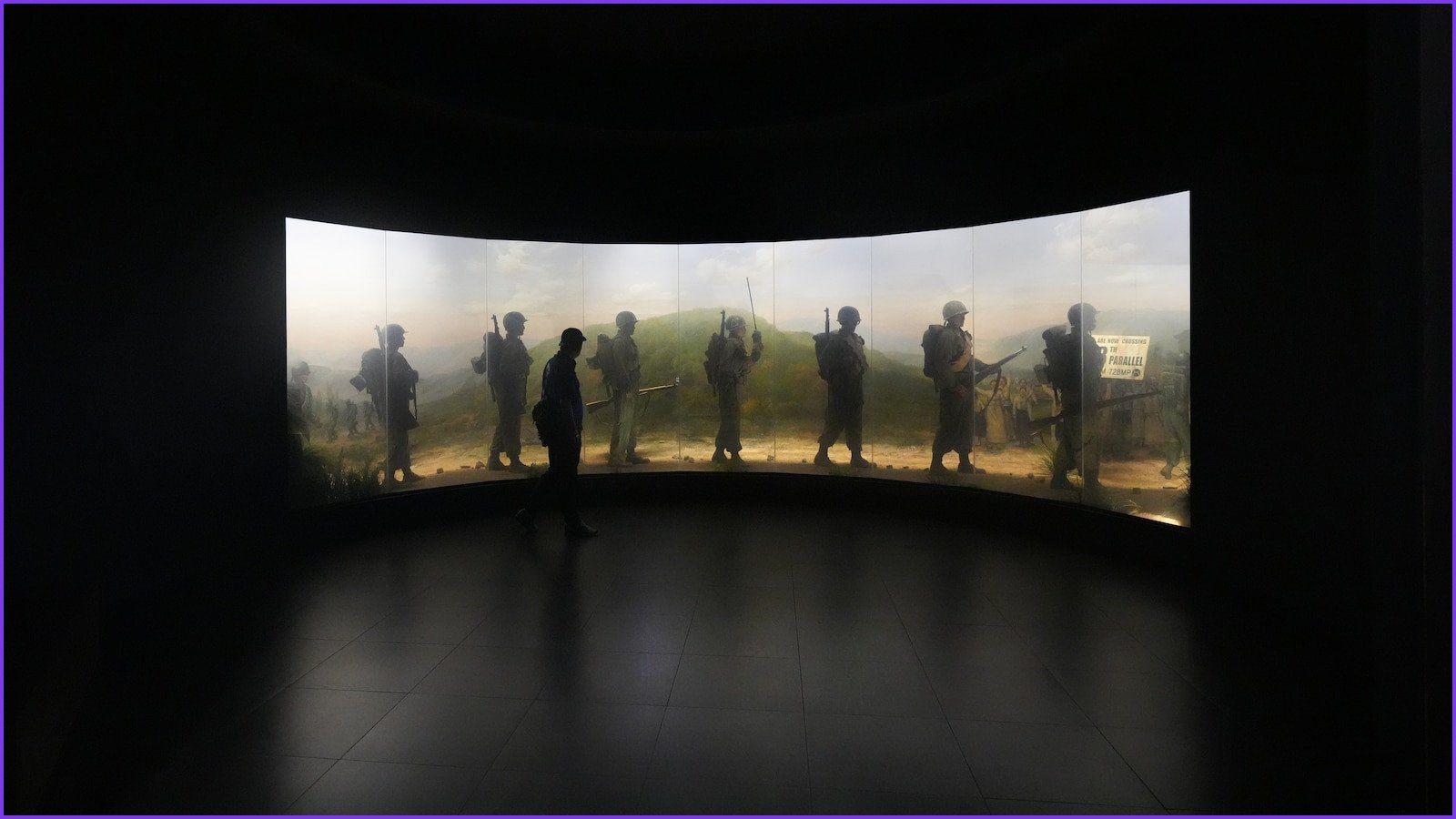
The impact of this long-standing division is visible across the peninsula. Beyond the physical fortifications lining the border and the various war memorials, the conflict continues to shape the lives of survivors and separated families who carry deep memories of loss and longing. While the fighting officially ceased with the signing of the armistice agreement on July 27, 1953, the traces left by the war persist as enduring markers of the past. These remnants ensure that the history of the conflict is not only remembered by the current generation but is also passed down to those who follow.
It's a lasting reminder that the 1950-53 Korean War ended with an armistice, not a peace treaty, leaving the countries technically still at war.