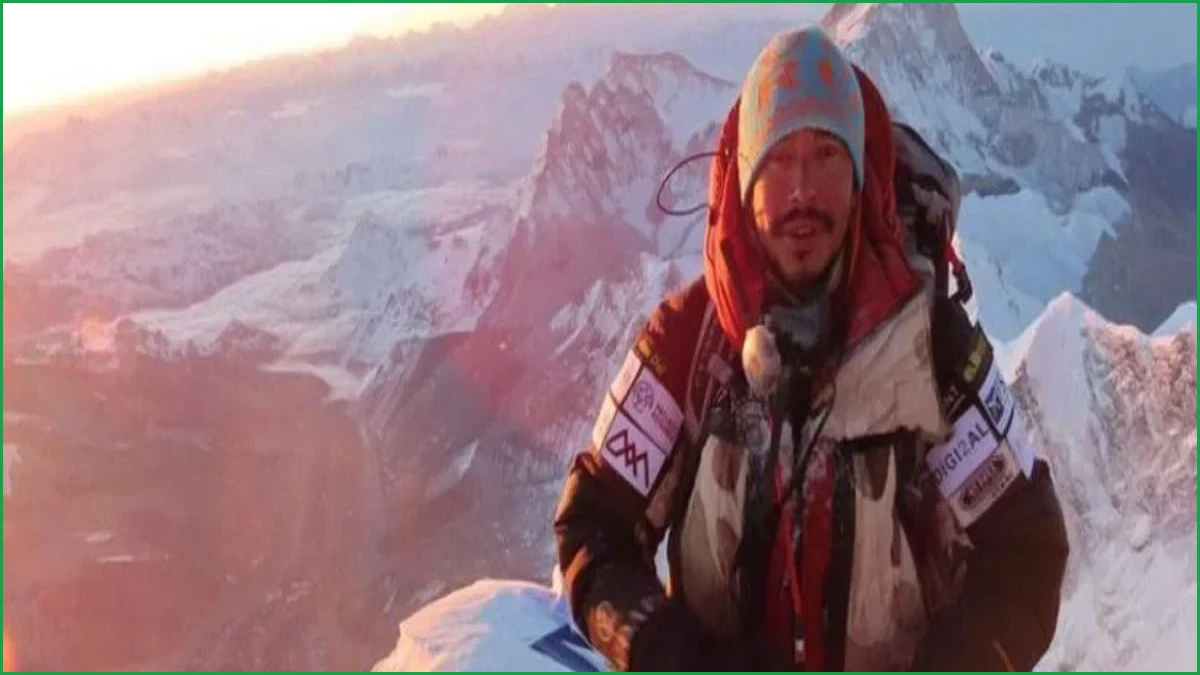
Renowned mountaineer and former British Army soldier Nirmal Purja has died following an avalanche on Broad Peak in Pakistan, according to his company, Elite Expeditions. The organization shared the news with what it described as "profound sadness and immense heartbreak," confirming that none of the other nine members of the expedition survived the incident.
The tragedy occurred on the 8,047m (26,400ft) summit, located in the Karakoram mountain range. Rescue teams had been conducting a search for the multinational group after the avalanche struck. Pakistani officials previously reported that the bodies of three climbers—American Mallory Geis, Nadhira Ahmed Abdullah Al Harthy from Oman, and Nepal’s Pur Bahadur Gurung—had been recovered from the site.
Nepal's Prime Minister, Balendra Shah, confirmed the deaths of the six Nepalese and four foreign climbers. In a statement on social media, he expressed that the nation was shocked by the event, noting that the "history of their courage, dedication, and contributions will always remain inspiring."
Purja, often known as Nims, gained global fame in 2019 for his record-breaking feat of climbing all 14 of the world’s mountains over 8,000m in just 189 days. This achievement surpassed the previous record by more than seven years. He reached a wider international audience through the 2021 Netflix documentary, 14 Peaks: Nothing Is Impossible, which chronicled his journey. Reflecting on that experience, he had stated that the grueling climb proved that anything is possible through determination and self-belief.
Before his career as a professional mountaineer, Purja served in the British military for 16 years, including 10 years in the special forces. He was awarded an MBE by the late Queen in 2018 for his contributions to high-altitude mountaineering and was the first Gurkha to summit Everest while serving in the military.
In his final post on X, shared on Monday, Purja revealed that the climb of Broad Peak was an unplanned addition to his itinerary. Initially, he had intended only to climb Gasherbrum II. However, he noted that he realized he could attempt to climb Broad Peak while in the region, which would have put him on track to become the first person in history to climb all 14 eight-thousanders twice without supplemental oxygen. "This wasn't planned," he wrote, adding, "But opportunities don't scream: they whisper to those already working in silence." He concluded the post by asking for safe passage, stating, "I take zero mountains for granted."
Broad Peak is widely considered one of the more challenging summits for climbers. Since the first successful ascent in 1957 by an Austrian expedition, dozens of climbers have lost their lives on the mountain, including a particularly deadly year in 2013 when at least six fatalities were recorded.