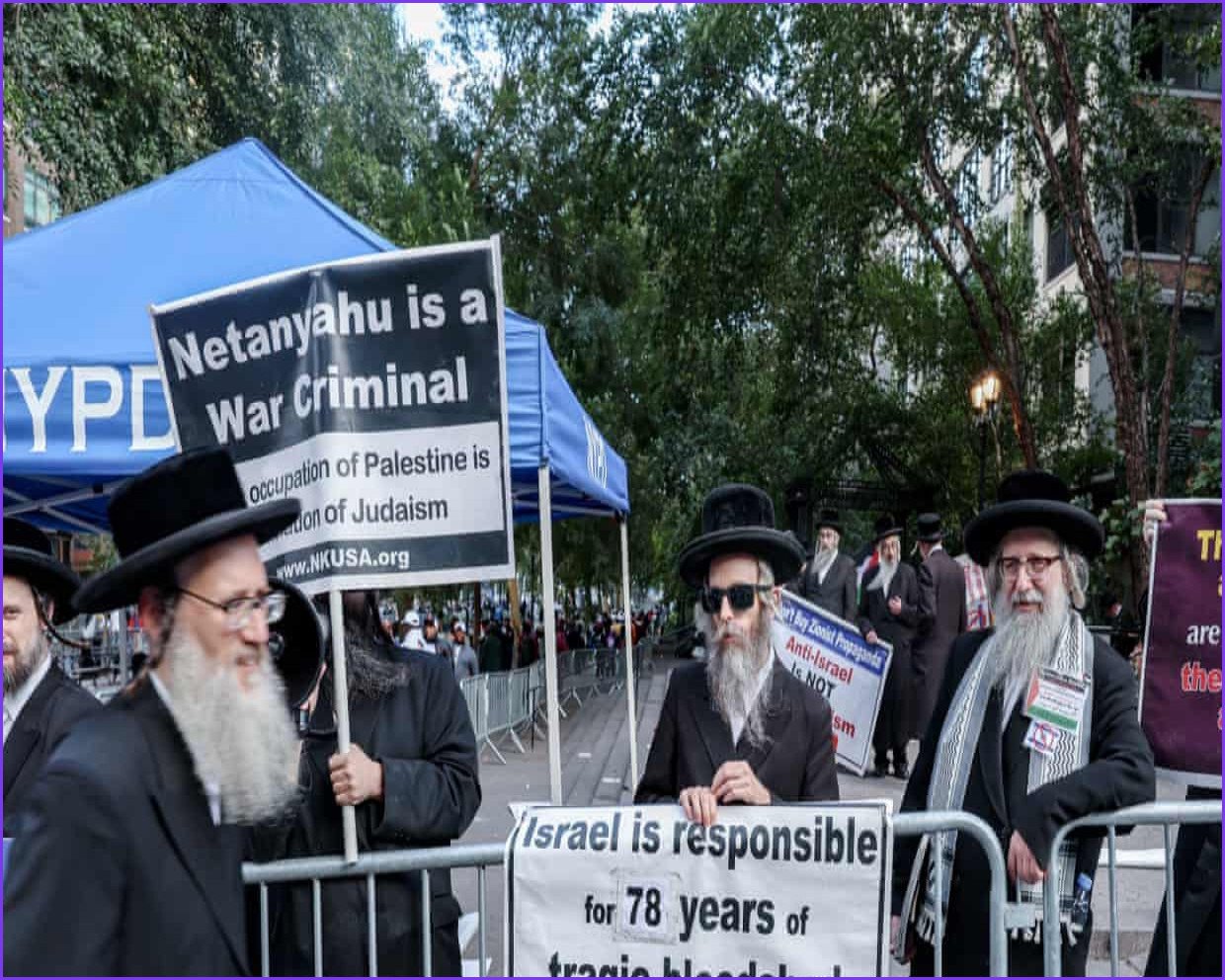
Israeli Prime Minister Benjamin Netanyahu is set to take the stage at the United Nations in New York on Thursday, where he is expected to deliver a message of defiance despite mounting international pressure and severe political isolation. Netanyahu is currently managing his most difficult re-election challenge in a career spanning decades, compounded by ongoing conflicts in Gaza, Lebanon, and Iran, alongside a surge in violence by Israeli settlers in the West Bank.
International criticism of the Israeli government is intensifying. The United Kingdom, France, and Canada have signaled plans to sanction Israeli settlements in the West Bank. Furthermore, British foreign secretary Ed Miliband has publicly accused Israeli settlers of engaging in the ethnic cleansing of Palestinian communities. Public opinion in the United States has also seen a historic shift; a July Pew poll revealed that 62% of respondents held a negative view of Netanyahu’s government, while a separate poll released this week indicated that 60% of American Jews hope to see him voted out of office in October.
Protests are anticipated both inside the UN general assembly hall and across New York City. Mayor Zohran Mamdani has assured demonstrators of their right to protest in the city, despite previous rhetoric regarding the Prime Minister. Activists from groups such as Jewish Voice for Peace Action have organized marches from Bryant Park to the UN headquarters in Turtle Bay. Beth Miller, the political director of the organization, stated that Netanyahu is arriving in an environment where he is clearly unwelcome, citing a broader public rejection of Israel’s military actions.
Palestinian representatives have also called for diplomatic staff to walk out during the speech to signal opposition to the government's policies. In response to the criticism, Israel’s ambassador to the UN, Danny Danon, defended the government in a telephone interview. Danon characterized the international backlash as a product of misinformation and bias, stating that Israel remains proud of its achievements over the challenging three years since October 7. He indicated that Netanyahu would use his speech to highlight these accomplishments and discuss the verification of war goals, though he did not provide specific details.
Netanyahu’s visit is expected to last less than 24 hours, and he has no scheduled meetings with Donald Trump or other top US officials. While his delegation reportedly sought high-level meetings, none were organized, and Netanyahu cited the upcoming Israeli elections and the holiday of Sukkot as reasons for his rapid departure. Observers suggest the Prime Minister’s address is aimed at both his right-wing base in Israel and potential supporters in the United States, as he attempts to project control amidst political instability.
The diplomatic strain is evident as some top US Republicans and Democrats have expressed criticism, raising concerns about the future of arms sales and long-standing diplomatic support. Despite this, Ambassador Danon maintained that the US and Israel continue to share fundamental values. Tensions remain high over humanitarian concerns in Gaza, the lack of reconstruction efforts, and the expansion of settlements like E1 in the West Bank, which the UK has strongly opposed. On Wednesday, members of the Democratic Socialists of America protested at John F. Kennedy International Airport against the shipment of weapons to the Israeli military, with activist Aber Kawas noting that thousands of New Yorkers oppose the Prime Minister’s presence in the city.
She described a “mainstreaming” of public opinion that “Americans do not want to be supporting Israel’s genocide. We do not want to be supporting Israel’s apartheid. We do not want to be arming Israel or supporting Israel.”
He did not elaborate on those specific measures before the speech, but the White House and US policymakers will be listening as they calibrate their message to voters – as well as the backlash of public anger – ahead of the upcoming midterm elections.