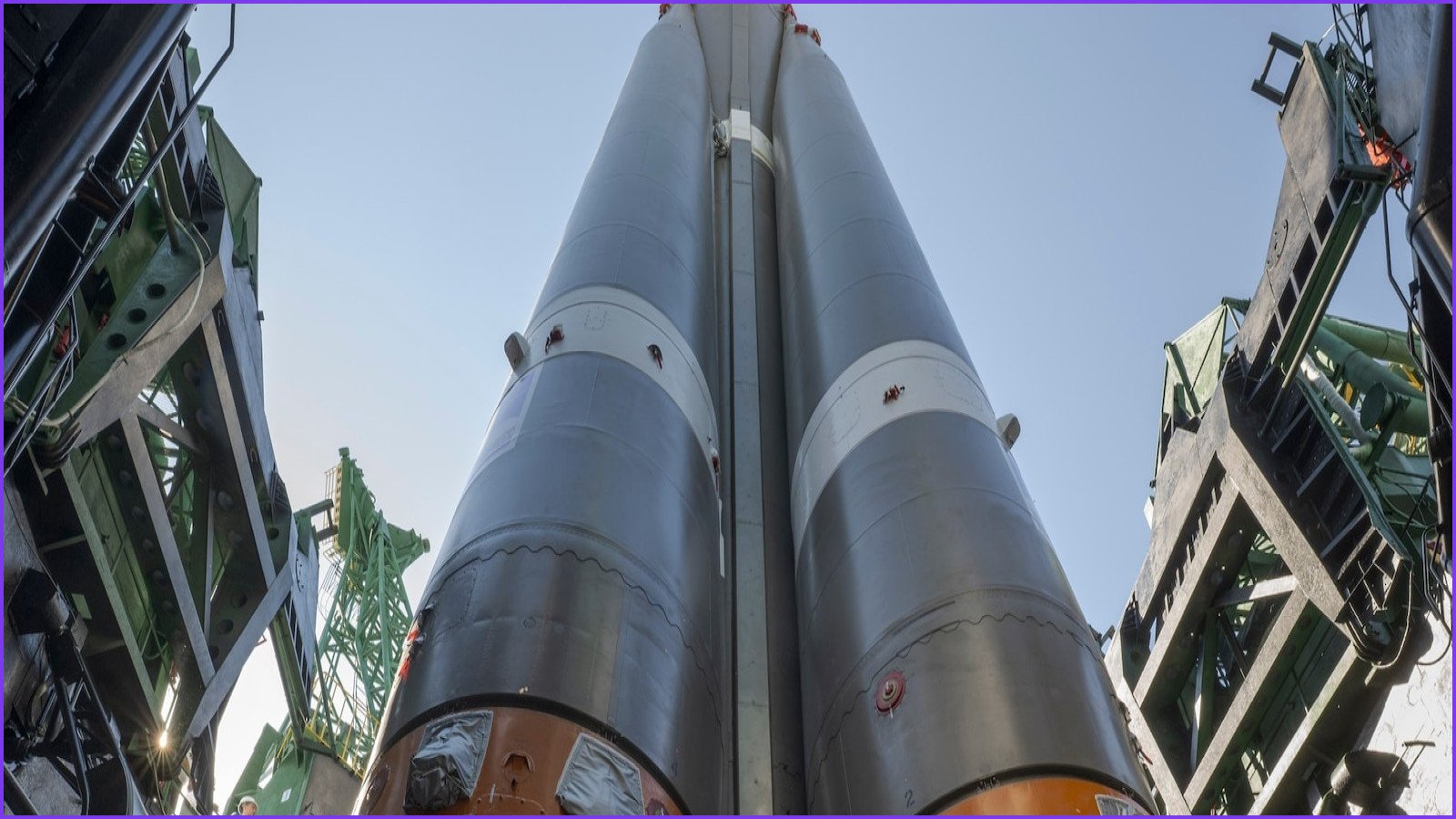
NASA Administrator Jared Isaacman arrived at the Russia-leased Baikonur cosmodrome in Kazakhstan on Tuesday to attend the scheduled launch of a joint U.S.-Russian crew to the International Space Station. The visit, which marks the first time a NASA chief has traveled to the site in eight years, highlights the persistent cooperation between Washington and Moscow in orbit, even as diplomatic relations remain strained by the ongoing military conflict in Ukraine.
During a meeting with the crew on Monday, Isaacman expressed his gratitude to Roscosmos, Russia's state space corporation, for their mission preparations. He noted that the integrated work conducted over the previous months serves as a testament to the professionalism and dedication of all participants involved. Isaacman also held discussions with Roscosmos head Dmitry Bakanov prior to the mission's liftoff.
The mission features NASA astronaut Anil Menon alongside Russian crewmates Pyotr Dubrov and Anna Kikina. The trio is set to travel aboard the Roscosmos Soyuz MS-29 spacecraft for an eight-month mission aboard the orbiting laboratory. This flight represents the first space mission for Menon, while serving as the second for both Dubrov and Kikina. Upon arrival, they will join a diverse crew already stationed on the outpost, including NASA astronauts Jessica Meir, Jack Hathaway, and Chris Williams, European Space Agency astronaut Sophie Adenot, and Roscosmos cosmonauts Sergei Kud-Sverchkov, Sergei Mikaev, and Andrei Fedyaev.
Although the United States and Russia were once intense rivals during the Cold War space race, the two nations have maintained a partnership on the International Space Station. While this relationship faced significant pressure following the 2022 invasion of Ukraine, both countries have continued to exchange crew members on their respective spacecraft. However, broader collaborative efforts, such as potential Russian participation in NASA’s Artemis lunar program, have stalled. As Russia faces Western sanctions and shifts its focus toward deeper cooperation with China on future lunar missions, the space station remains a rare point of ongoing bilateral collaboration.