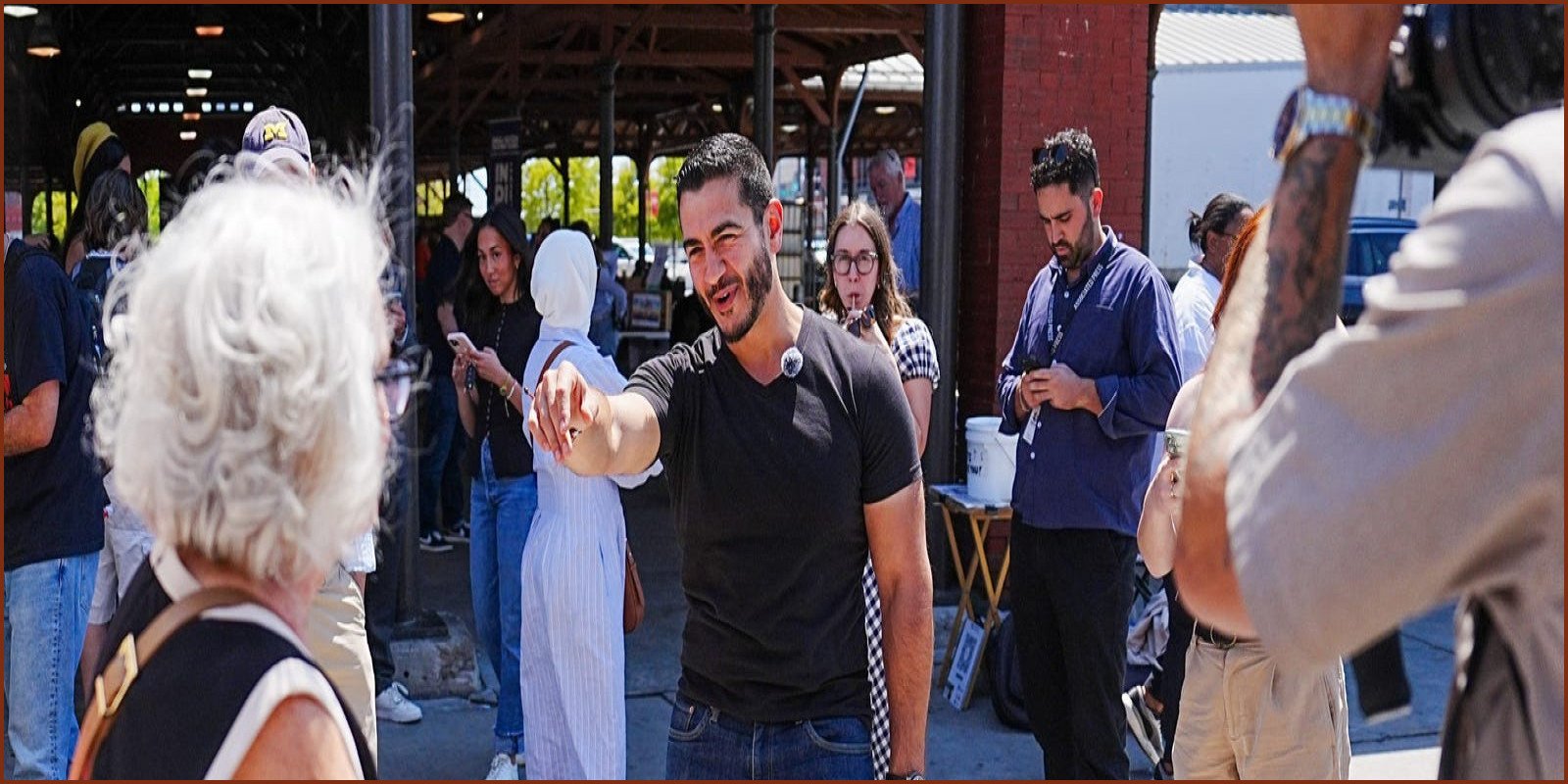
In a high-stakes contest that exposed deep ideological rifts within the Democratic Party, progressive insurgent Abdul El-Sayed has narrowly won the Democratic nomination for Michigan’s critical U.S. Senate race. Following the August 4 primary, the vote count stretched into the next morning before El-Sayed was declared the winner over establishment favorite and centrist U.S. Representative Haley Stevens. The razor-thin victory immediately set off a debate over the party's direction as Democrats prepare to face Republican Mike Rogers in the November general election.
The final tally showed El-Sayed leading by approximately 15,000 votes out of more than 1.5 million ballots cast. This tight margin defied several recent statewide polls that had predicted a double-digit lead for the progressive candidate. As the final votes were counted, El-Sayed reached out to his opponent's camp, urging supporters to "begin to mend fences" to unite against the Republican opposition. He noted that despite disagreements during the primary, "there is so much more that unites us than divides us."
However, achieving unity may prove challenging. El-Sayed's victory represents a direct challenge to the Democratic establishment. His campaign overcame a heavy influx of opposition spending from outside groups and defeated a candidate backed by powerful party figures, including Michigan Governor Gretchen Whitmer and Senate Minority Leader Chuck Schumer. The result leaves Michigan Democrats with a narrow mandate to shift their strategy just three months before Election Day.
The Michigan primary served as a crucial test of two competing theories for Democratic success in the upcoming midterms and the 2028 presidential race: whether to target moderate swing voters or to mobilize younger, progressive-leaning voters. This internal debate comes at a time when the Republican Party remains aligned under Donald Trump, while Democrats grapple with a visible identity crisis. According to a CNN/SSRS poll from July, nearly six in ten Democrats and Democratic-leaning voters expressed a belief that their party requires major changes or complete reform.
The demographic breakdown of the vote highlighted a shifting Democratic coalition. El-Sayed built his winning margin by appealing to highly liberal voters, college-educated White voters, and younger demographics. He secured substantial support in college towns like Ann Arbor and East Lansing, as well as in Dearborn and other Arab American communities in the Detroit suburbs. Conversely, Stevens found her strongest base among Black voters in Detroit, senior citizens, suburban working-class communities, and more conservative, rural, predominantly White counties. Joel Payne, a Democratic strategist, observed that the party's coalition is undergoing a significant real-time transformation, suggesting that establishment leaders must adapt to working with newer, more progressive voices.
The background of both candidates further emphasized their political differences. Stevens, born in Rochester Hills in 1983, is a four-term congresswoman known for her combative style. El-Sayed, also born in Rochester Hills in 1984, is the son of Egyptian immigrants and a former public health official who built a strong online presence. Endorsed by prominent progressives like Vermont Senator Bernie Sanders and New York Representative Alexandria Ocasio-Cortez, El-Sayed would become the first Muslim member of the U.S. Senate if elected in November.
The primary campaign was marked by sharp personal and policy disputes. El-Sayed accused Stevens of being heavily funded by the American Israel Public Affairs Committee (AIPAC) and other pro-Israel groups that poured millions of dollars into the race. He ran on an unapologetically progressive platform, advocating for Medicare for All and labeling Israel’s military campaign in Gaza a "genocide." Stevens, in turn, criticized El-Sayed as an elitist seeking celebrity status, accusing him of blaming "American Jews" for his political difficulties.
With the primary concluded, El-Sayed faces the challenge of consolidating support while preparing for a tough general election. The seat is currently held by retiring Democratic Senator Gary Peters, and keeping it is vital for Democrats, who must hold all of their existing seats and flip four Republican-held seats to gain control of the Senate. Meanwhile, Republicans have already unified behind former Representative Mike Rogers, who ran unopposed in the Republican primary. Rogers has wasted no time targeting El-Sayed, calling him "radical" and mocking him in interviews, stating "Abdul, he has his own special sauce of crazy."
Rogers himself narrowly lost Michigan's other Senate seat in 2024 to Democrat Elissa Slotkin by less than half a percentage point. While Democrats faced national difficulties in 2024—including a late change at the top of the presidential ticket after President Joe Biden withdrew—the current political climate presents challenges for both parties. The GOP faces headwinds from a president with low approval ratings amid economic concerns and an unpopular war in Iran. However, Republicans hold a substantial financial advantage. Elon Musk has pledged that his super PAC will spend at least $100 million on the midterm elections, while Trump's super PAC, MAGA Inc., reports having $400 million in cash—equal to the combined resources of the national Democratic and Republican party organizations.
Republicans are also seeking to capitalize on fears surrounding the rise of the progressive left, particularly candidates associated with the Democratic Socialists of America (DSA). The DSA's platform includes calls to draft a new Constitution, abolish the Senate, and replace capitalism with a worker-led system. Trump has accused Democrats of being controlled by "hardcore, godless Communists," though El-Sayed has clarified that he is a capitalist, not a socialist, and only a small number of Democratic candidates are DSA members.
The ideological struggle within the Democratic Party now moves to neighboring Wisconsin, where progressive state Representative Francesca Hong is seeking the Democratic nomination for governor in the August 11 primary. Hong, a chef and restaurant owner who is a member of the DSA, has led the field in a late July Marquette University Law School poll with 38% of the vote. Efforts by moderate Democrats to block her candidacy have faltered after the early frontrunner withdrew due to campaign finance irregularities and another candidate dropped out following allegations of sexual misconduct, though one-third of primary voters remained undecided.
For better or worse, the Republican Party has a defining leader in President Donald Trump at a time Democrats are facing an identity crisis in full public view. In a CNN/SSRS Poll in July, nearly six in 10 Democrats and voters who lean Democratic said the party needed major changes or complete reform.
But it's one thing for Democratic officeholders to be uprooted by leftist candidates in New York City and a Denver-centered congressional district. In those deep blue precincts, newcomers affiliated with the Democratic Socialists of America seized nominations from the chair of the Congressional Hispanic Caucus and a 15