Newly uncovered investigative files have revealed critical details about a foiled drone attack targeting a Ukrainian aircraft at Germany's Leipzig/Halle Airport, with evidence strongly pointing toward the involvement of Russian intelligence. According to documents and security sources, German investigators have successfully identified two primary suspects and mapped their travel routes, providing the factual basis for Berlin's recent public accusations against Moscow.
The investigation centers on Oleg Le., a Russian citizen, and Andrei Ka., a Belarusian national. German security authorities believe Oleg Le. was responsible for coordinating the logistical preparations for the operation, while Andrei Ka. is suspected of physically executing the drone attack.
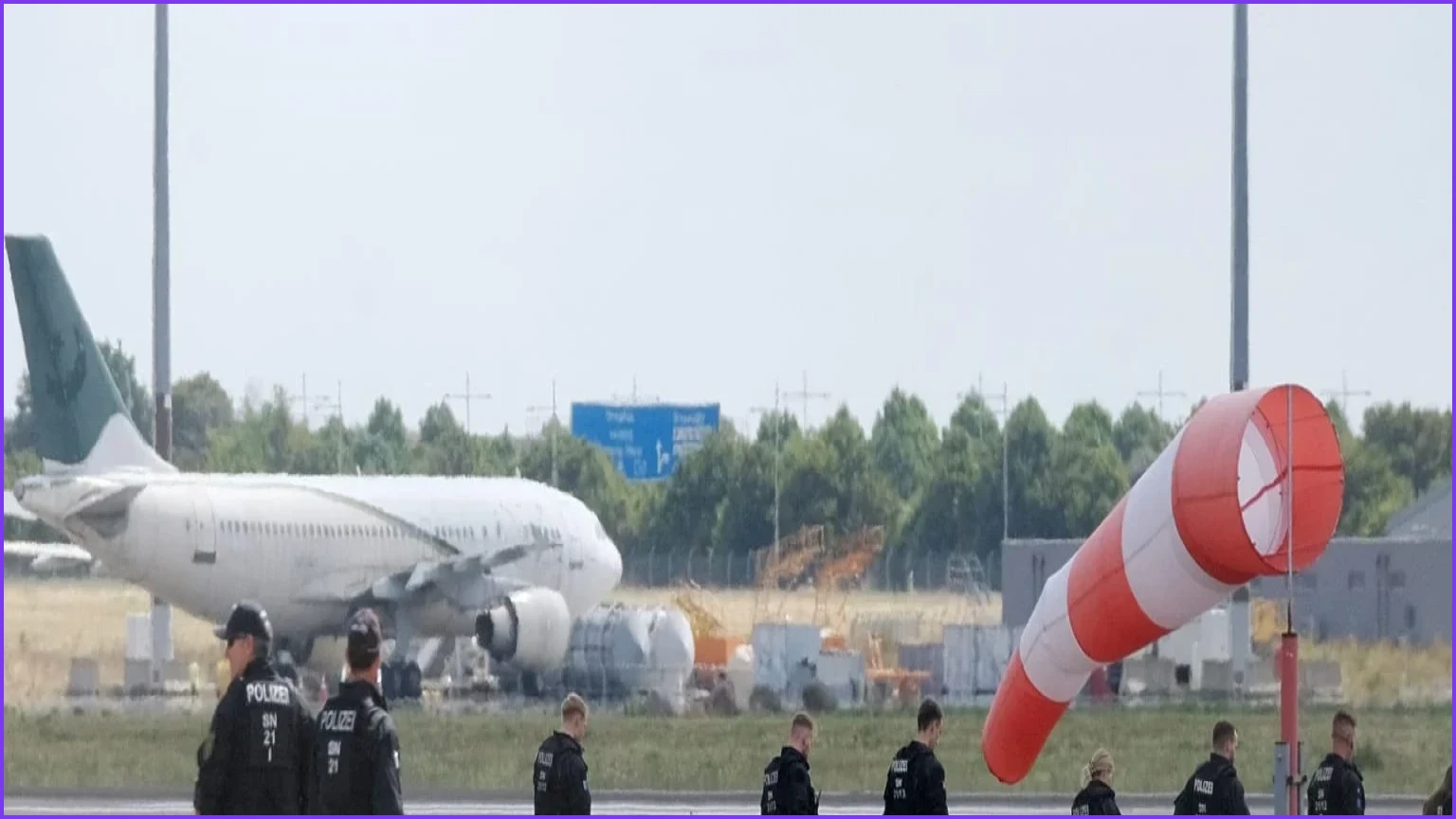
The incident occurred on August 4 at Leipzig/Halle Airport, when an explosive-laden drone approached a Ukrainian Antonov transport aircraft. While the drone managed to reach the aircraft, the explosive charge failed to detonate because the detonator apparently became detached. Closed-circuit television (CCTV) footage reportedly captured the moment the drone came to rest directly alongside the plane. The potential destruction was immense: the drone was carrying approximately 1.8 kilograms of Semtex, a highly powerful military and industrial plastic explosive, while the targeted Antonov aircraft was fueled with roughly 25,000 liters of highly flammable kerosene at the time.
Investigators believe the plot involved multiple devices. In addition to the primary drone, two other drones are thought to have failed or been destroyed before they could reach their target. Debris from these devices was subsequently recovered in the immediate vicinity of the airport.
A breakthrough in the investigation came from a DNA trace found on the remnants of a glove left on an antenna construction, which authorities believe was used to control one of the drones. The DNA profile matched existing records from Finland and Lithuania, which immediately directed investigators' attention to Andrei Ka. The Belarusian national was already known to law enforcement in both Baltic region nations for common criminal offenses, including property crimes in Finland. Furthermore, Polish authorities had previously linked Ka. to a major fire at a DIY store in Łódź during the summer of 2024, an incident currently being investigated as a potential act of sabotage.
European security officials view the Leipzig incident as part of a wider, coordinated campaign. Investigators have noted a recurring pattern across Europe where individuals with criminal backgrounds are recruited as "disposable agents" to execute specific sabotage operations, allowing the ultimate masterminds to remain hidden in the background.
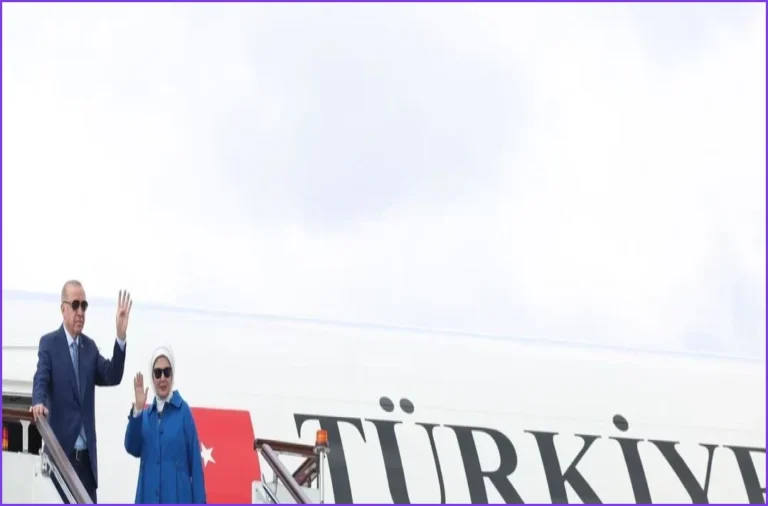
The logistical mastermind, Oleg Le., is believed to have deep ties to Russia's military intelligence service, the GRU. German security agencies were reportedly aware of his potential connections to the GRU when he entered Germany via Turkey. However, he was not placed under permanent surveillance. Following the attempted attack, Le. left Germany through Berlin-Brandenburg Airport, traveling first to Serbia before returning to Russia, where he is currently believed to be located.
German authorities have gathered substantial evidence pointing to a meticulously pre-planned operation rather than an impulsive act. This includes the deployment of multiple drones, the identification of potential equipment caches, and the utilization of various launch locations. Ten days after the Leipzig airport incident, investigators discovered another drone and a fire site in Kabelsketal, a municipality in Saxony-Anhalt near the airport, where specialists recovered an additional 50 grams of Semtex. Furthermore, search operations south of the airport near Schkeuditz revealed several locations suspected of being used to store materials or explosives. These searches were heavily aided by the forensic analysis of a rental car believed to have been used by the suspects.
The findings from these investigative files served as the catalyst for German Foreign Minister Johann Wadephul (CDU) and Interior Minister Alexander Dobrindt (CSU) to publicly hold the Russian state responsible during a joint press conference approximately one and a half weeks ago.
The allegations have triggered a severe diplomatic dispute between Berlin and Moscow. In response to the attempted sabotage, the German government ordered the closure of the Russian consulate general in Bonn and the Russian House in Berlin, while also summoning the Russian ambassador to the Foreign Office. Additional retaliatory measures are currently being considered at the European Union level.
Moscow has forcefully rejected the accusations, asserting that Germany has failed to produce sufficient evidence of direct involvement by Russian state authorities. In a series of reciprocal countermeasures, Russia ordered the closure of the German consulate general in St. Petersburg and announced the impending shutdown of Goethe-Institutes operating within Russia. German security agencies are now focused on further solidifying their evidence to clearly identify the masterminds behind the plot, an outcome that could carry profound implications for Germany's future security and foreign policy toward Russia.