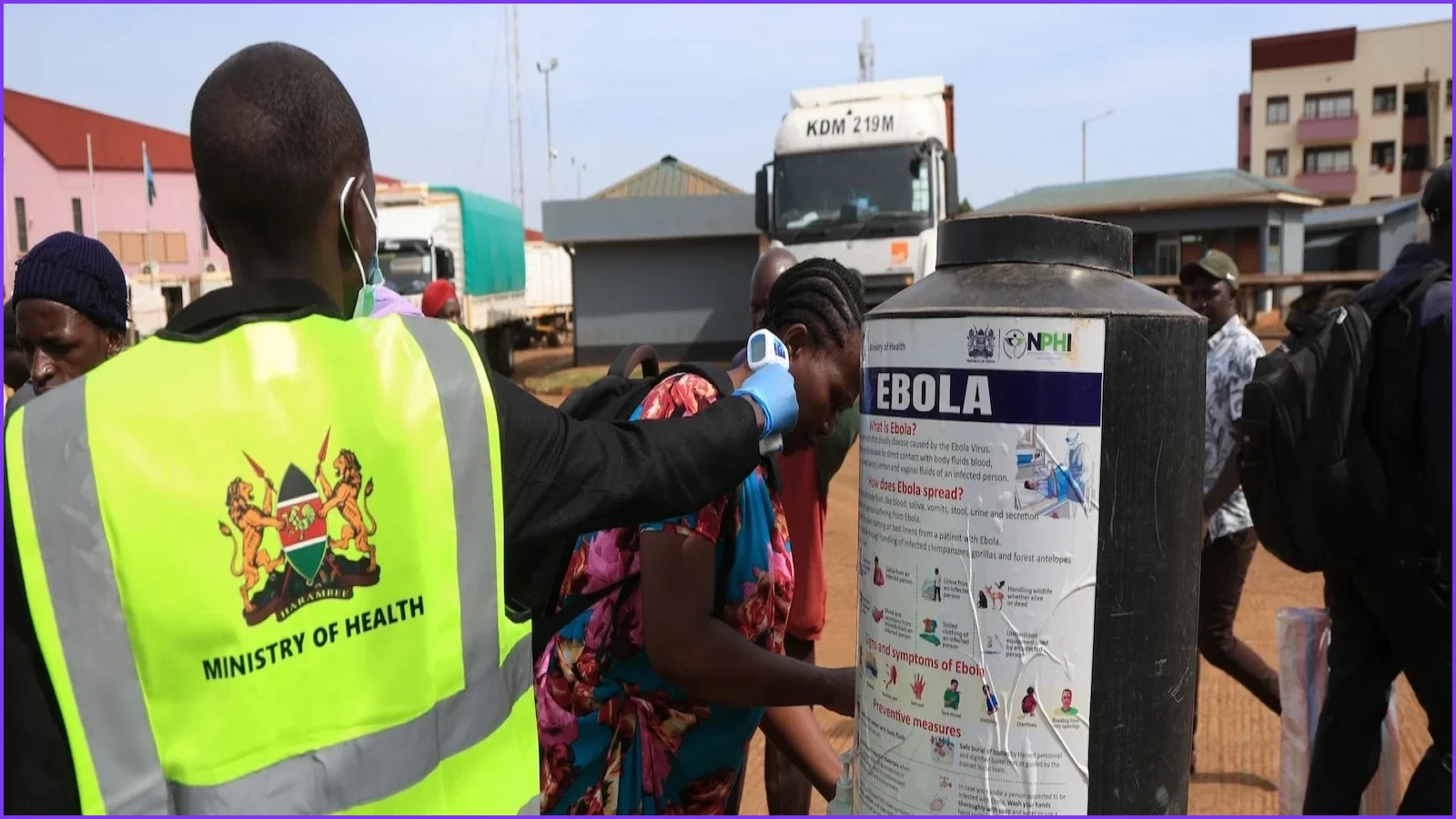
The number of confirmed Ebola cases in Kenya has climbed to eight, according to health officials. The latest patient, a 49-year-old medical attendant, tested positive for the virus while already in quarantine. Health Ministry Director-General Dr. Patrick Amoth confirmed that the individual had provided care to the country's first Ebola patient, who passed away at Nairobi Hospital on October 5, just two days after traveling to Kenya from the Democratic Republic of Congo via Uganda.
Dr. Amoth stated that the new infection was discovered during routine testing of quarantined individuals who had begun to exhibit symptoms. He noted that the other six patients currently under care are in stable condition and are receiving supportive treatment. Following the death of the index patient on October 5, authorities identified approximately 130 contacts, including various health workers. Of that group, 128 remain under mandatory quarantine.
Ebola is recognized as a highly contagious virus that transmits through direct contact with an infected person's bodily fluids—such as blood or vomit—or through exposure to contaminated materials like bedding and clothing. The Democratic Republic of Congo has been grappling with its most severe outbreak to date, which has resulted in at least 4,000 deaths since May.
The initial case in Kenya involved a 40-year-old man who arrived in the country on October 3. After being driven to the hospital by a relative, he died two days later. Subsequent testing confirmed that three of his close relatives and three health workers have also contracted the virus. In response to the outbreak, Kenya has moved to strengthen border screening procedures and established an emergency hotline for individuals who suspect they may have been exposed or are developing symptoms. Furthermore, the government has designated a specific gate at Nairobi’s main airport to process all flights arriving from 10 countries identified as high-risk areas.
Regional neighbors are also taking precautions, with Tanzania implementing stricter border screenings, mandatory health declarations, and a 21-day monitoring period for travelers arriving from countries with active outbreaks.