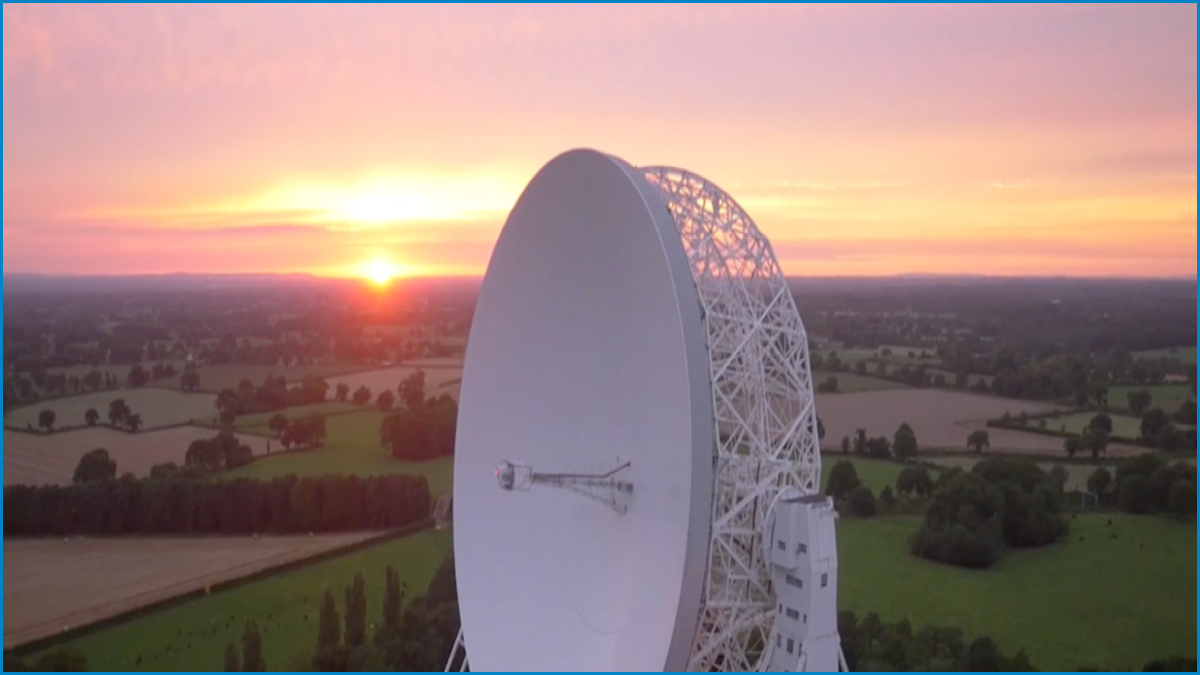
The iconic Jodrell Bank Observatory in Cheshire, which has been at the forefront of global radio astronomy for nearly seven decades, faces potential closure after its funding was cut. The UK Research and Innovation (UKRI) agency has decided to withdraw financial support, leading scientists to warn that all scientific observations at the historic site are expected to cease on April 1, 2028, unless alternative funding sources can be secured.
The decision has sparked widespread dismay within the scientific community, with experts describing the move as scientifically misguided and deeply damaging to the nation's research capabilities.
The funding withdrawal is part of a broader 2.7 percent reduction in UKRI funding for astronomy, nuclear, and particle physics research over the next four years. UKRI, which manages an annual budget of just under £10 billion, stated that it had to cut Jodrell Bank's £2.8 million annual budget due to escalating planned research costs for physics and laboratory operations. The agency explained that it must focus its resources on projects that deliver the greatest long-term impact.
However, the cuts will also affect several other major international space projects. The UK will withdraw from research at the James Clark Maxwell Telescope in Hawaii, which images supermassive black holes. Additionally, funding will be cut for the UK's involvement in two instruments on the Extremely Large Telescope in Chile, and support for the newly launched Vera Rubin Telescope, also in Chile, will be slashed by 20 percent.
Established in 1945, the Jodrell Bank site pioneered the study of distant galaxies and radio astronomy. During the Cold War, the observatory played a vital defense role, tracking Soviet missiles during high-stakes nuclear tensions between the USSR and NATO powers. Its massive contributions to global science earned the site Unesco World Heritage status in 2019.
At the heart of the facility is the Lovell telescope, the third largest steerable radio telescope in the world. Despite its age, regular upgrades have kept the telescope at the cutting edge of research. It serves as the primary instrument in the e-Merlin network, which links seven telescopes across central England.
Joined together these UK telescopes can zoom into objects in deep space and see them in incredible detail – with similar resolution to the Hubble space telescope. This image from Nasa's Hubble telescope shows star formation. Using radio waves the Lovell network provides even clearer details.
This network is crucial for studying planet and star formation, galaxy evolution, supermassive black holes, and the dark matter and dark energy that constitute over 95 percent of the universe. It also forms a vital part of a pan-European telescope network.
The impending closure puts 28 jobs at risk at the Cheshire site and threatens to disrupt the research of nearly 3,000 scientists who rely on the observatory. Prof Simon Garrington, associate director of Jodrell Bank Observatory, expressed that everyone at the site was "devastated" by the announcement. He emphasized that the observatory and its network have served as a national capability and a "beacon for science in the north-west" of England, inspiring young people to pursue careers in science and engineering.
Prof Garrington stated that the leadership team plans to challenge the UKRI decision. If those efforts fail, they will attempt to find alternative funding to keep the Lovell Telescope and its network operating, though he admitted that establishing a new funding model without UKRI support is "a huge hill to climb."
The decision has drawn fierce criticism from leading astronomers. Scotland's Astronomer Royal, Prof Catherine Heymans, speaking on behalf of the UK's astronomy community, characterized the funding cut as "a real act of national self-harm." Prof Michael Kramer, executive director of the Max Planck Institute for Radio Astronomy in Bonn and a scientist at the University of Manchester, called the decision "scientifically, technologically as well as economically short-sighted." "Internationally, people will look at that and will hardly believe it.
You're cutting off the radio astronomy capability in the country," Prof Kramer said. He warned that international observers would find it hard to believe that the UK is cutting off its pioneering radio astronomy capabilities, particularly at a time when other nations are investing heavily in the field. This includes global preparation for the Square Kilometre Array (SKA) in South Africa and Australia, which will feature 197 dishes and 131,072 antennas respectively, marking a new golden age of radio astronomy.
Defending the cuts, Prof Michele Dougherty, executive chair of the science and technology branch of UKRI, stated that the agency had protected core discovery research after listening to the scientific community. However, she noted that the situation required "tough, but necessary, decisions" to establish a sustainable financial position by the 2029/30 financial year.