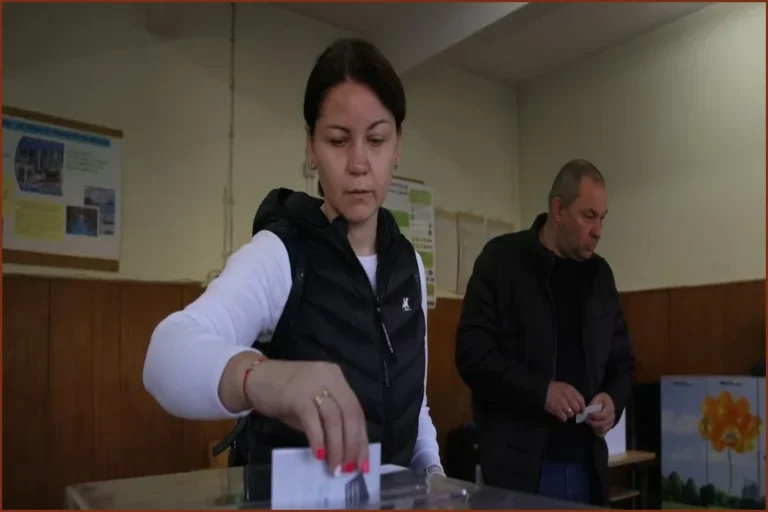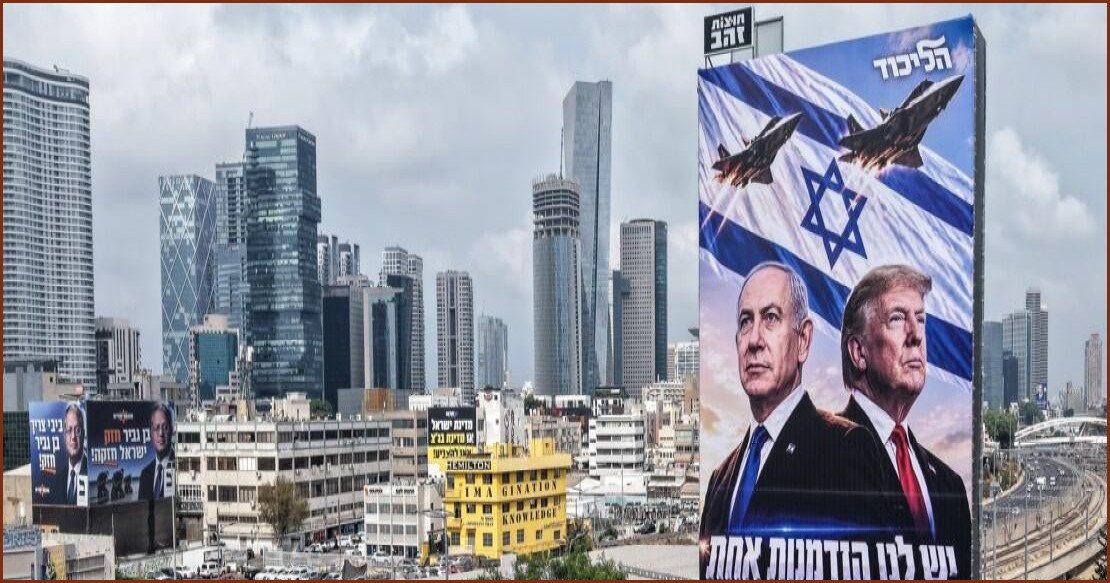
Israelis are casting their ballots on Tuesday in a high-stakes parliamentary election that will determine the country's next government after three years of sustained military conflict across several fronts. With opinion surveys reflecting a virtually split electorate, Prime Minister Benjamin Netanyahu faces an uncertain path to retaining his office, while his political rivals remain equally unassured of securing a swift or decisive victory.
The electoral landscape remains divided, as right-leaning pollsters project an edge for the right-wing and religious bloc headed by Netanyahu, whereas left-leaning polling outlets indicate an advantage for the opposition change bloc. Most projections suggest that neither faction is likely to capture a clear majority of the 120 seats in Israel's parliament, the Knesset, which is necessary to independently construct a new administration. As a result, the narrow margins could result in a political deadlock, potentially leading to prolonged negotiations across contrasting ideological factions, the establishment of a minority government, or another snap election. Yohanan Plesner, president of the Israel Democracy Institute, observed that an indecisive outcome is the most likely outcome.
This election marks the first national vote since the October 7, 2023 attack by Hamas, an assault recognized by Israeli officials as the nation's most catastrophic security breakdown since its founding in 1948. Citizens are heading to polling stations while military operations continue in Gaza, Lebanon, and Syria, following two direct confrontations with Iran and amid Netanyahu's public advocacy for a third round of engagement.
Against this backdrop of ongoing security crises, the race centers on two primary political groupings. Netanyahu, who stands as Israel's longest-serving prime minister and heads the Likud party, is attempting to construct a coalition similar to his current government, which depends heavily on alliances with ultranationalist and Jewish religious parties. His campaign rests on two central arguments to the electorate. First, he asserts that he is the sole leader capable of forming a governing coalition without relying on Arab political parties, which he claims would endanger national security if granted power to shape military decisions. Second, he argues that because military campaigns in Gaza, Lebanon, and Iran are actively underway, voters should grant his government additional time to conclude what it began.
Netanyahu's platform received significant external backing last week when former U.S. President Donald Trump offered an explicit endorsement. Trump reiterated his administration's strong support for the joint military campaign launched against Iran nearly eight months ago, while warning that American involvement could wane if Netanyahu were to lose power. Trump explicitly stated that if Israel has the wrong leader, which would be anyone other than Bibi, America will have to do this work ourselves, and he is not inclined to do so. Following this endorsement, Netanyahu has emphasized to voters that he is uniquely qualified to collaborate with Trump to prevent Iran from acquiring nuclear weapons, a prospect widely regarded by Israelis as an existential threat.
To reinforce his posture on national defense, Netanyahu's campaign has deployed a rhyming Hebrew slogan stating: Either right wing or Palestine, either right wing or a nuclear bomb. Over the weekend, the prime minister shared an AI-generated image depicting a nuclear mushroom cloud above Tel Aviv on social media, accompanied by a caption reiterating his claim that Iran represents an existential danger to Israel. Among his base, Netanyahu maintains strong support from voters who view him as an indispensable global strategist. Tel Aviv restaurant owner Benny Abraham expressed this sentiment, remarking that Bibi can handle the whole world, describing him as charismatic with a strong voice, and adding that he is the king of Israel.
Opposing Netanyahu is an array of Arab, right-wing, left-wing, and centrist parties united by a single objective: removing the incumbent prime minister from office. Should this diverse change bloc secure a combined majority in the Knesset, former military chief Gadi Eisenkot has emerged as the leading figure to helm a potential coalition. Eisenkot heads the centrist Yashar party and brings deep military background into the campaign.
Eisenkot, who lost his son and two nephews while they were serving with the Israeli military in Gaza, previously served in Netanyahu's war cabinet during the initial year of the Gaza conflict. In contrast to Netanyahu's male-dominated coalition, roughly half of the candidates on Yashar's election slate are women. Presenting himself as a pragmatic military veteran, Eisenkot has campaigned on a promise to heal internal political divisions, which he attributes to Netanyahu's tenure.
On Monday, Eisenkot pushed back against the prime minister's security warnings, accusing Netanyahu of relying on a campaign of fear-mongering, lies, and threats, including images of nuclear bombs in the heart of Tel Aviv. Eisenkot asserted that this time it will not work for him. A core pledge of Eisenkot's platform is the establishment of an official state commission of inquiry into the intelligence and security failures surrounding the October 7 attack, an investigation that Netanyahu has repeatedly blocked. Tel Aviv resident Uzi Aharoni, a 73-year-old engineer, voiced support for Eisenkot, describing him as not left or right, but straight and honest, calling him the kind of leader who will take care of the people of Israel rather than himself or his corrupt family.
Several critical variables could ultimately tip the balance toward either faction, with voter turnout serving as a major unpredictable factor. Historically, participation rates among Likud supporters and Arab-Israeli voters have shown significant fluctuation, leaving room for turnout shifts that could alter seat distribution. Arab Israelis, who make up approximately 20 percent of the national population, play a pivotal role in these dynamics. Plesner noted that higher turnout among Arab voters directly reduces the probability of Netanyahu assembling another government with his existing coalition partners. Jehad Abomoch, a cafe owner in Baqa al Gharbiya, noted that many Arab citizens feel compelled to vote to prevent another far-right coalition, describing the past four years as a real catastrophe both socially and in terms of wars, leaving many feeling without hope or future under current leadership.
The election outcome may also be influenced by two newly formed political parties that are currently hovering near the minimum vote threshold required to enter the Knesset. Both emerging parties focus heavily on challenging Netanyahu's relationship with ultra-Orthodox partners by advocating for mandatory military conscription for ultra-Orthodox Jewish citizens, an issue that creates significant tension within Netanyahu's traditional base of support.
If the election results in a parliamentary deadlock where neither side commands a majority of the 120 Knesset seats, several potential paths remain open. Individual lawmakers or whole parties could choose to abandon campaign pledges and switch alignments during coalition negotiations, a tactic with deep roots in Israeli political history. Alternatively, weeks of intense bargaining could ensue without resolution, leaving a snap election as the only remaining choice. Israel previously endured five national elections between 2019 and 2022 due to parliamentary deadlocks. Plesner cautioned that if candidates firmly adhere to their pledges and refuse to cross coalition lines during a stalemate, the country will inevitably roll into another election, though he noted that most politicians are not interested in that scenario.