The recent landslide victory of the far-right Alternative for Germany (AfD) in the eastern state of Saxony-Anhalt, where it secured a preliminary 43.8 percent of the vote, has drawn global attention. This historic outcome aims to position the party to lead a state government for the first time since the Nazi era. However, the AfD faces a significant obstacle in Germany known as the "Brandmauer" or "firewall," a pact among other political parties to exclude the far right from governing partnerships.
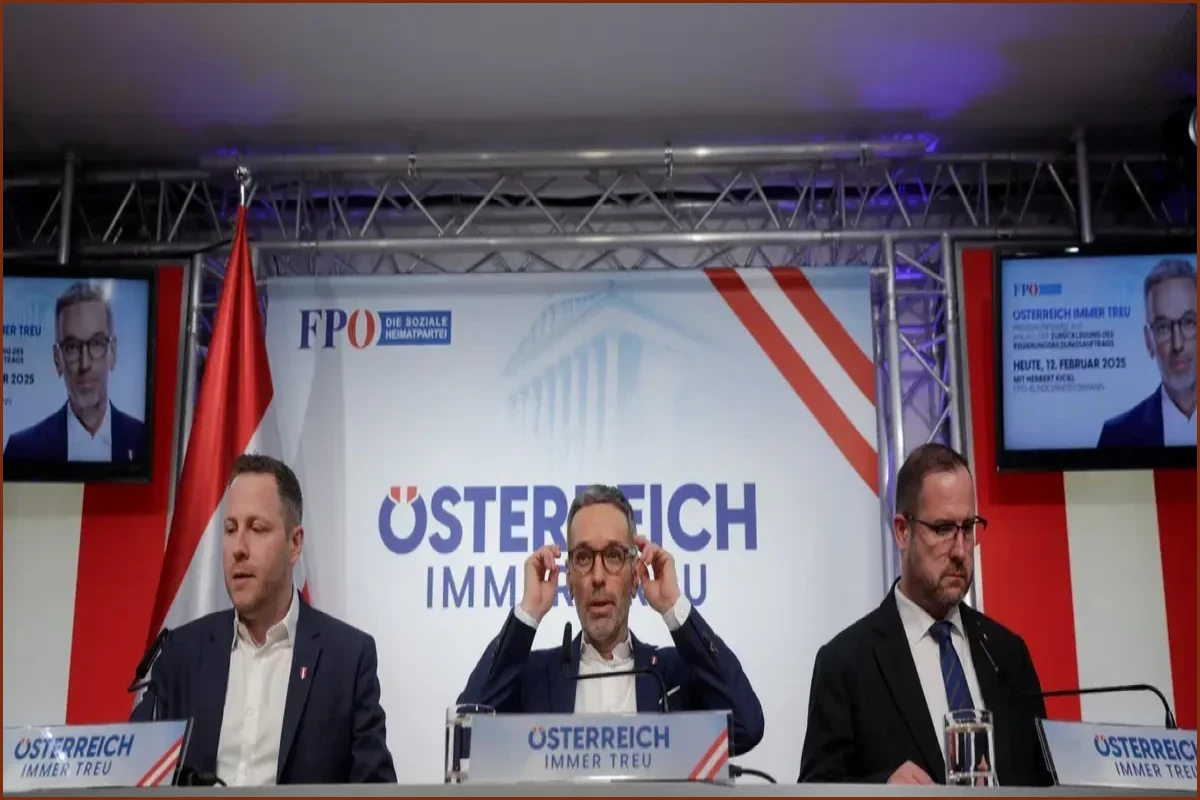
Austria presents a notably different political landscape, where no such formal agreement exists to exclude the far right from power, particularly at the state level. The Freedom Party of Austria (FPÖ), a populist party widely characterized as far-right due to its stances on Austrian nationalism, immigration, asylum policies, and opposition to multiculturalism, has been a fixture of the nation's political establishment for decades.
Historically, the FPÖ has served as a junior partner in the federal government four times, including periods in the 1980s, the 2000s, and between 2017 and 2019. Despite this, the party has never held the chancellorship. In the 2024 federal election, the FPÖ achieved a significant breakthrough by winning 28.8 percent of the vote, though it ultimately failed to find the necessary coalition partners to form a government. The country is currently led by a coalition consisting of the conservative People's Party (ÖVP), the centre-left Social Democratic Party (SPÖ), and the liberal NEOS.
While excluded from federal leadership, the FPÖ currently participates in government in five of Austria’s nine federal states, typically in partnership with the ÖVP. Most notably, the party leads the government in Styria, where Mario Kunasek assumed the role of governor in December 2024. The party is also active in coalition governments in Lower Austria, Upper Austria, Salzburg, and Vorarlberg.
Political experts observe that the party's influence extends beyond its formal coalition roles. By participating in state governments, the FPÖ has successfully shifted the boundaries of acceptable political discourse in Austria. This influence is reflected in the broader rightward movement of the national political landscape, which is currently visible in the federal coalition's legislative efforts to tighten citizenship laws.