A significant strategic realignment is underway in South Asia as India deepens its diplomatic and economic relations with Taliban-led Afghanistan. This shift in New Delhi’s policy, which has gained momentum throughout 2025 and into 2026, marks a departure from the anti-Taliban stance India maintained during the group’s initial rule from 1996 to 2001 and its support for the Afghan Republic between 2001 and 2021.
The warming of relations between New Delhi and Kabul coincides with a period of intense friction between Afghanistan and Pakistan. Long considered the Taliban’s primary ally, Pakistan now finds itself in a strained relationship with the regime. The central point of contention is the Tehreek-e-Taliban Pakistan (TTP), which Islamabad accuses of using Afghan territory as a sanctuary for cross-border terror operations. The Taliban have rejected these claims, characterizing the TTP as an internal Pakistani issue.
India’s diplomatic outreach accelerated following a meeting in Dubai on January 8, 2025, between Indian External Affairs Secretary Vikram Misri and Taliban Foreign Minister Amir Khan Muttaqi, facilitated by the United Arab Emirates. Prior to this, senior-level contact had already begun, with Indian Joint Secretary J. P. Singh meeting Muttaqi and Defense Minister Mohammad Yaqoob in November 2024. The engagement has since expanded to include high-level ministerial calls and multiple visits by Taliban officials to India.
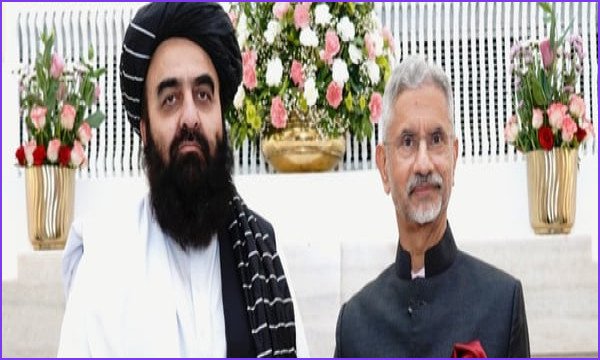
A major milestone occurred in October 2025, when Muttaqi made a six-day visit to India—the first by a senior Taliban minister—following a temporary lifting of travel restrictions by a U.N. committee. Following this visit, India handed over the Afghan embassy in New Delhi to the Taliban, with Mufti Noor Ahmad Noor assuming the role of chargé d’affaires in January 2026. India also deployed its own chargé d’affaires to Kabul.
Economic cooperation has become a cornerstone of this rapprochement. In November 2025, Taliban Minister of Industry and Commerce Noorudin Azizi visited India, where he met with External Affairs Minister S. Jaishankar and other commerce officials. The discussions led to the reactivation of air freight corridors between Kabul-Amritsar and Kabul-Delhi in December 2025, restoring a vital trade route that had been dormant since 2020. This is particularly crucial as direct land trade via Pakistan remains obstructed.
Trade volume between the two nations exceeded $1.5 billion in the last fiscal year, a figure likely to grow as Pakistan-Afghanistan trade suffers from border closures and military tensions. In addition to trade, India has expanded humanitarian and healthcare support. Health Minister Noor Jalal Jalili visited India in December 2025, meeting with Indian Health Minister J. P. Nadda to coordinate long-term medicine supplies, a move that gained importance after the Taliban banned Pakistani pharmaceutical imports.
Most recently, Taliban Minister of Agriculture, Irrigation and Livestock Mawlawi Ataullah Omari led a delegation to India in July 2026, meeting with Indian Agriculture Minister Shivraj Singh Chouhan to discuss livestock and agricultural cooperation. Beyond bilateral ties, India has utilized international forums to signal its stance, becoming the sole nation to condemn recent Pakistani strikes within Afghan territory at the United Nations. As Pakistan’s policy of "strategic depth" faces domestic challenges, India’s growing footprint in Kabul represents a significant shift in regional dynamics.